2026 FIFA Men’s World Cup: A Grand North American Festival
The World Cup has come back to North America, only this time it’s bigger, louder and stretched across an entire continent.
Forty-eight teams. Three host nations. Eleven cities staging opening nights of their own. The 2026 FIFA Men’s World Cup kicks off with a scale the tournament has never seen, and from Mexico City to New York to Toronto, the sense is the same: this is not just a competition, it’s a takeover.
Three countries, three curtain-raisers
The first act belongs, fittingly, to the sport’s spiritual home in this region.
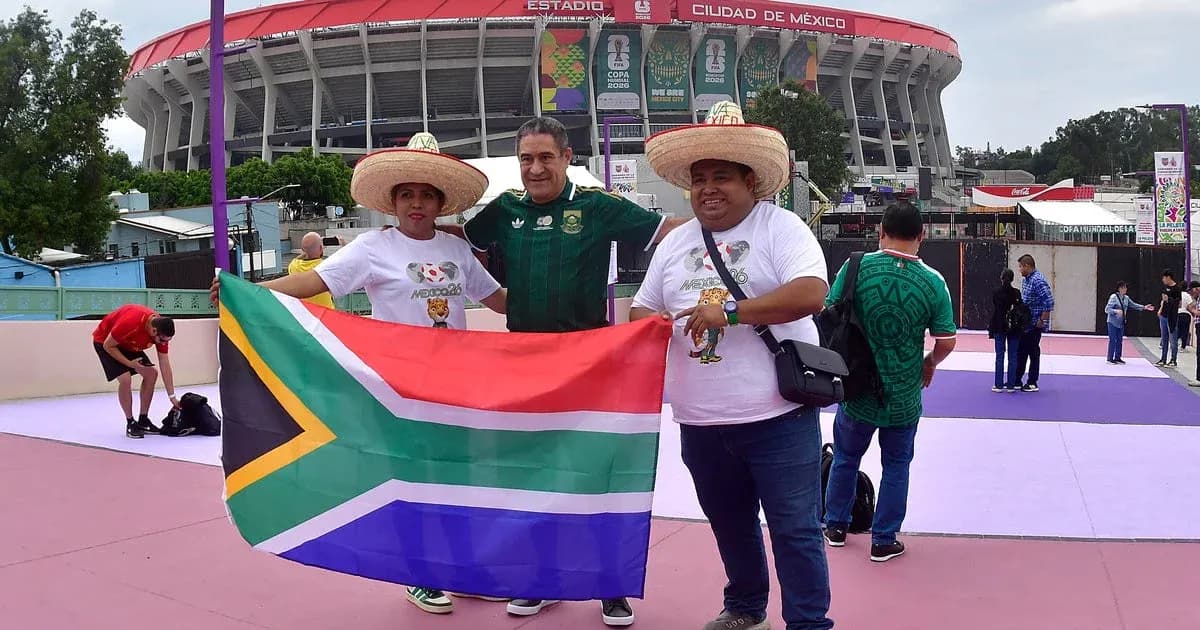
On Thursday at the Estadio Azteca, Mexico and South Africa reprise the pairing that opened the 2010 World Cup in Johannesburg. Same date, June 11. Different hemisphere, different power dynamic. Back then it finished 1-1. This time Mexico walk out in their own cathedral, with 80,000 voices behind them and an entire country expecting a statement.
Before a ball is kicked, the stadium turns into a concert hall. Shakira and Burna Boy lead the show, performing “Dai Dai,” the official song of the 2026 World Cup, as part of a full-scale opening ceremony starting at 11:30 a.m. local time (1:30 p.m. ET). Around them, an all-star Latin and global lineup—Alejandro Fernández, Belinda, Danny Ocean, J Balvin, Lila Downs, Los Ángeles Azules, Maná and Tyla—underscores what this tournament wants to be: a festival as much as a competition.
The football follows at 2 p.m. local (3 p.m. ET), Mexico vs South Africa in Group A. Later the same night, at Akron Stadium in Zapopan near Guadalajara, South Korea and Czechia close out the group’s first day with a 9 p.m. local kick-off (11 p.m. ET). One group, two games, three continents represented. The expanded format wastes no time showing its breadth.
On Friday, the spotlight shifts north.
Toronto hosts its first ever men’s World Cup match as Canada face Bosnia and Herzegovina at a newly bulked-up BMO Field. The stadium has grown from 28,000 seats to 45,000, a physical symbol of how the sport has swelled in the country since 1994 and 2015. Ninety minutes before the 3 p.m. ET kick-off, the “Great White North” stages its own opening ceremony at 1:30 p.m. ET, fronted by Alanis Morissette, Alessia Cara, Jessie Reyez, Michael Bublé and others. A hockey nation leans into football, and it wants the world to see and hear it.
Then comes Los Angeles.
SoFi Stadium hosts the United States’ opener against Paraguay on Friday at 6 p.m. local time (9 p.m. ET), and with it the third opening ceremony in as many cities. Katy Perry, Future, Anitta, LISA, Rema and Tyla headline a show set for 4:30 p.m. local (7:30 p.m. ET). For FIFA and U.S. Soccer, this is a chance to showcase not just a team, but a culture.
“The lineup of artists reflects the cultural diversity of the United States and the vibrancy of its many diasporas, highlighting the nation's rich influence on music, entertainment and pop culture, while showcasing the power of music to bring people together across the country,” FIFA president Gianni Infantino said.
The Americans will walk out in new kits that nod to the past, including striping inspired by the 1994 jerseys worn the last time the U.S. played a World Cup match on home soil—July 4, 1994, a 1-0 defeat to eventual champions Brazil in the Round of 16. Those scars linger. So does the opportunity.
The world comes, security tightens
Hosting the biggest World Cup in history also means absorbing its risks.
The FBI has deployed tactical teams to every U.S. host city: Atlanta, Boston, Dallas, Houston, Kansas City, Los Angeles, Miami, New York, New Jersey, Philadelphia, the San Francisco Bay Area and Seattle. Director Kash Patel described them as crisis response experts brought in to “help support the massive security work involved in protecting players, fans, and visitors.”
For fans, that will be visible. At Gillette Stadium in Foxborough, Massachusetts, supporters may need to arrive more than an hour early to get through security checks, CBS Boston reported.
Marlo Graham, special agent in charge of the FBI’s Atlanta field office, framed the operation as familiar in scope if not in length. The difference, he said, is that this tournament runs for 39 days. “Our tactical teams have been practicing commingled with other tactical teams from other agencies for months leading up to this,” Graham said.
Immigration and Customs Enforcement officers will also be part of the security apparatus. White House border czar Tom Homan told CBS News that ICE’s “primary focus” during the World Cup will be national security, not immigration enforcement.
All of this unfolds against the backdrop of a more-than-yearlong Trump administration push to tighten entry into the U.S., a policy shift that has already brushed up against the tournament. A Somali referee, Omar Abdulkadir Artan, who had been slated to officiate at the World Cup, was denied entry over the weekend. Customs and Border Protection cited unspecified “vetting concerns,” and FIFA confirmed the decision without detailing the reasons.
The message is clear: the doors are open, but they are heavily guarded.
What fans can carry, and what they can’t
The global party comes with a long list of rules at the gate.
FIFA’s stadium code of conduct bans nontransparent bags and any hazardous items—weaponry, body protection gear, helmets, umbrellas, strollers, chairs. Originally, the regulations also swept up almost every kind of container: “bottles, cups, jars, cans or any other form of closed or capped receptacle that may be thrown or cause injury,” as well as branded water bottles.
In a tournament played in the middle of summer, that last part hit a nerve.
Supporters’ groups pushed back, alarmed that fans might be forced to buy all their water inside stadiums in extreme heat. “What next? Suncream banned and fans forced to buy it in stadiums?” the Free Lions, an English fan group, wrote on X. “Naturally, the immediate thought from supporters is this is just the latest money-grab.”
The pressure told. Heimo Schirgi, FIFA World Cup 2026 Chief Operating Officer, later clarified on social media that each spectator in U.S. and Canadian stadiums may bring one soft, plastic, disposable, factory-sealed water bottle up to 20 ounces. Hard reusable bottles remain prohibited.
Inside the venues, drinks—water, sodas, juices—will be supplied exclusively by long-time FIFA sponsor Coca-Cola, The Associated Press reported. Even hydration has a brand.
A World Cup for the wealthy?
More teams and more stadiums mean more seats. That does not mean more affordability.
With matches spread across 16 venues, this World Cup should, in theory, open its doors to more fans than ever. Instead, many are staring at prices that one supporter called “absolutely egregious.”
“It’s an absolutely punishing number with regards to the ticket prices to get into a game,” said Phil Labas, captain of the Chicago chapter of the American Outlaws, a 30,000-strong U.S. supporter group.
Tickets for group-stage matches have climbed into the high hundreds and, for some games, thousands of dollars. Labas told CBS News he has attended nearly every U.S. Soccer event over the past four years. The World Cup at home, he said, has pushed even the most committed fans to the upper reaches of the stadium.
“We’re in the 300 section. We are upper deck in a corner ... It’s an absolute travesty,” he said.
The Outlaws will be far from the touchline, but not silent. “You’ll hear us, you’ll see us if they pan up, but we will absolutely be there,” Labas promised.
The atmosphere, then, may still be authentic. The question is who can afford to feel it in person.
The contenders, the numbers and the U.S. question
On the pitch, the expanded format has supercharged another industry: betting.
With 48 teams and an extended schedule, bookmakers expect 2026 to become one of the biggest gambling events in history. Punters are tracking the usual heavyweights—France, Spain, England, Brazil—but one voice with a recent track record is looking elsewhere.
German economist Joachim Klement, who has correctly predicted the past three World Cup winners, told CBS News’ Ramy Inocencio that his pick for 2026 is the Netherlands.
It is a bold call on paper. The Dutch have reached three World Cup finals—1974, 1978, 2010—without lifting the trophy. They lack a single global icon on the scale of Lionel Messi. Klement sees that as a strength.
“I think they have a team that doesn’t have real stars, like [Lionel] Messi for Argentina, but they are a team that is very, very leveled in the performance of every one of the players in the team. So there’s no real weak spot,” he said.
He points to defense as the decisive factor. “The second thing is they have a really good defense, and in soccer more so than in most other sports, is the saying that offense wins matches, defense wins tournaments.”
For the United States, his verdict is split.
The draw has been kind. In Group D, the USMNT line up against Paraguay, Australia and Turkey—opponents that sit in a similar tier, offering a realistic path out of the group and, in Klement’s view, a possible run to at least the quarterfinals.
The problem, he argues, lies deeper than tactics or talent.
“The U.S. has so many sports that compete for the talent pool that it isn’t really the dominating, most important sport in the U.S.,” Klement said. “While if you go anywhere in Europe or Latin America, it’s soccer and then there’s the rest.”
So the World Cup arrives on American soil again, larger and richer than ever, backed by pop stars, federal agents, and a global betting market. The stadiums are full, the ticket prices higher, the rules stricter, the expectations enormous.
Now the real test begins: in a country where soccer still fights for space, can a month and a half of the world’s game finally tilt the balance?