African Players Shaping the Premier League: 12 Key Storylines
The Premier League’s African core is as deep and varied as it has ever been. Established stars, restless talents, late bloomers and players on their final warning all converge on a season that could define careers across the continent.
Here are 12 storylines that will shape how Africa’s influence is felt in England this year.
Carlos Baleba – Brighton & Hove Albion
A year on, Carlos Baleba is stuck in the same holding pattern.
He is still a Brighton player, still heavily linked with Manchester United, still waiting for the move that never quite materialised last summer. That failed transfer bit hard. Head coach Fabian Hürzeler openly accused the Cameroon midfielder of letting the speculation derail his focus, and Baleba never rediscovered his outstanding 24-25 level.
The stakes are higher now. Casemiro has gone, United’s need for a central midfielder is sharper than it was 12 months ago, and Baleba, at 22, is no longer just an exciting prospect. He is a solution waiting to be bought.
If United finally pull the trigger, he will walk into an Old Trafford that feels more stable than last year’s chaos and into the orbit of Michael Carrick, an ideal tutor for a young holding midfielder. The question is simple: does Baleba take the next step, or lose another season to the transfer rumour mill?
Amad Diallo – Manchester United
The excuses have run out for Amad Diallo.
Fresh from an encouraging FIFA World Cup with Ivory Coast, where he scored a superb winner against Ecuador and grabbed the equaliser in the doomed last-16 clash with Norway, the winger returns to Manchester with momentum and expectation.
Some felt Emerse Faé underused him at the tournament. Even so, Diallo still produced big moments in limited minutes. Now 24, he can no longer hide behind the “promising youngster” label. Under Ruben Amorim he showed flashes, bursts of brilliance that teased what he could become. This season, those flashes must harden into a starting role.
Diallo is technically immaculate, slippery in tight spaces, capable of outrageous goals. United need a genuine attacking attraction. This is his chance to become one.
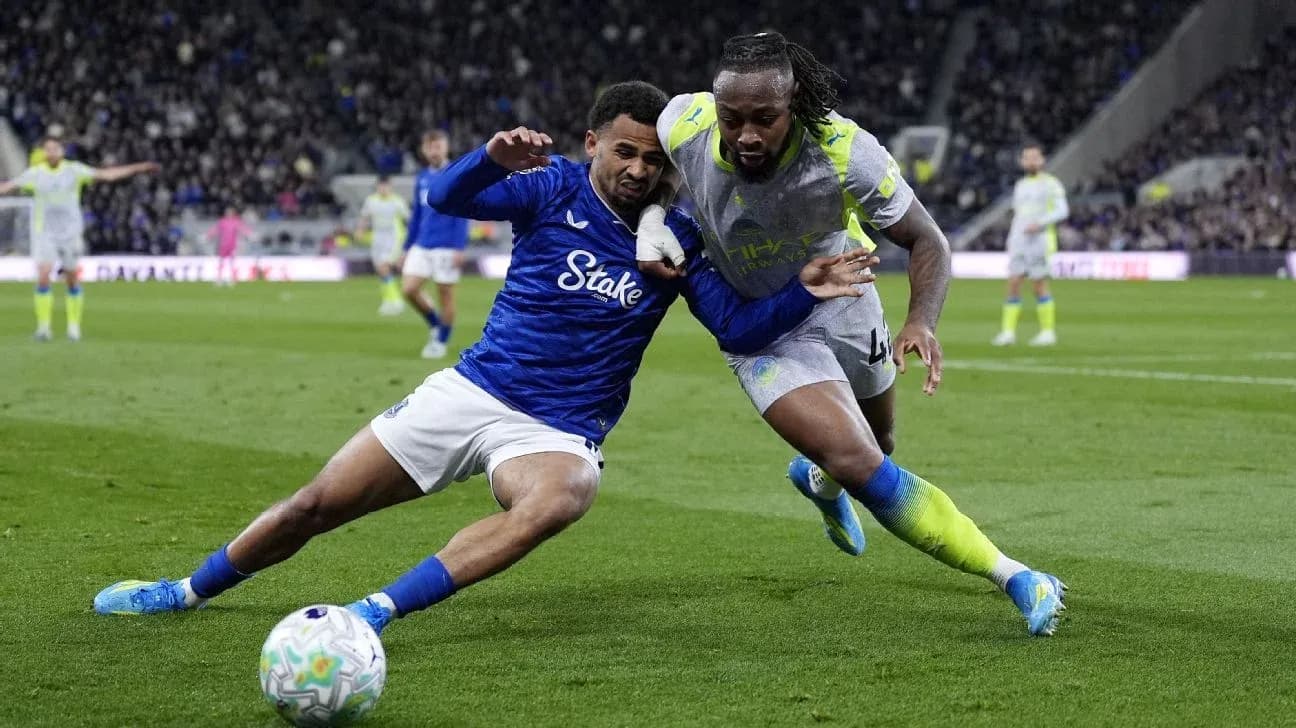
Iliman Ndiaye – Everton
Every time Iliman Ndiaye gets on the ball, something seems about to happen.
At the World Cup, he played just 113 minutes yet still scored once and provided two assists, hijacking games in short cameos and reminding everyone of his irresistible talent. Back at Everton, though, the story has been more complicated.
David Moyes still looks unsure how best to use him. As a No. 10? Wide? Second striker? The Senegal international remains one of the Premier League’s most watchable players, a technical magician with the ability to unpick any defence, but his numbers last season – nine direct goal involvements – felt light for someone of his gifts.
Rumours of Saudi interest swirl, reports claim he has turned down a new deal, and his future at Goodison Park hangs in the balance. If he stays, he needs a season that finally marries artistry with end product.
Nicolas Jackson – Chelsea
Nicolas Jackson’s Chelsea story is drifting towards an abrupt ending.
After a mixed loan spell at Bayern Munich, there was early hope he might return to Stamford Bridge and fight for a second chance. Xabi Alonso spoke warmly about him, yet his World Cup was underwhelming, and the mood has darkened since.
This week, reports claimed Jackson is among a dozen Chelsea players told to train away from the first team. That is as blunt as it gets. It screams: there will be no revival in West London.
At 25, the 6'2" striker stands at a crossroads. A move to Aston Villa, and a reunion with former Villarreal boss Unai Emery, has been heavily touted and would offer a reset in a system that suits his movement and physicality.
Wherever he lands, this season will either relaunch his Premier League career or nudge it towards the exit door.
Antoine Semenyo – Manchester City
Antoine Semenyo walked into Manchester City and looked like he had been there for years.
He adapted instantly to the demands of an elite side, scored a sumptuous winner in the FA Cup final and announced himself as a serious option in one of the most competitive squads in world football.
Now comes the hard part.
Pep Guardiola is gone, taking with him the detailed, relentless coaching that helped fast-track the Ghana forward’s development. Semenyo’s challenge is to show that his early form was not just a product of Guardiola’s system but of his own ceiling.
Competition for minutes will be brutal, as always at City, but a 20-goal season is not an unreasonable target for a player with his power, movement and finishing. His growing understanding with Erling Haaland could become one of the league’s most frightening partnerships – if he keeps his place in the pecking order.
Brandon Thomas-Asante – Coventry City
Some players are handed the Premier League. Brandon Thomas-Asante had to claw his way up to it.
From the lower leagues to a World Cup with Ghana, to a decisive assist against Panama in the group stage, and now, at 27, a first crack at the English top flight with Coventry City. He played just 51 minutes at the tournament and will feel he deserved more, but his journey has always been about patience and persistence.
Speaking recently, he made no attempt to hide his emotions about finally reaching this stage: a breakthrough he described as the product of “holding out and holding out, pushing, pushing,” and a dream he always believed he could reach.
Coventry will lean on his pace, aggression and eye for goal as they try to survive. The only unknown is whether he will get enough minutes to make his mark in a league he has chased his entire career.
Taiwo Awoniyi – Coventry City
If this is not Taiwo Awoniyi’s last chance at this level, it certainly feels like it.
Coventry have paid £9 million to take him from Nottingham Forest, banking on his intelligence, strength and penalty-box instincts to fire their survival bid. At 29, the Nigeria striker has to deliver.
He has not hit double figures in the Premier League since the 2022-23 season. Last term brought just four goals, with injuries cutting into his rhythm but not fully explaining the drop-off. Coventry need more than mitigation. They need goals.
Awoniyi has the profile to bully defences and dominate in both boxes. Now he has to turn that into numbers, or the top flight may finally move on without him.
Yoane Wissa – Newcastle United
Yoane Wissa’s first season at Newcastle was brutal.
The DR Congo forward arrived from Brentford for an initial £50 million fee, missed time early on with injury and never truly recovered his momentum. An EFL Cup goal in December briefly suggested a turning point, but he ended the league campaign with just one goal to his name.
For a 29-year-old signed to be a key figure, that return was nowhere near enough.
This year, the landscape around him has shifted. Eddie Howe has gone, the squad is being reshaped, and Newcastle are searching for a new identity. Wissa sits at the heart of that uncertainty.
Is he a central piece of the rebuild, or a costly misfit who fades further into the background? His response will define how his time in the North East is remembered.
Bryan Mbeumo – Manchester United
Bryan Mbeumo did not blink when he stepped up a level.
Leaving Brentford for Manchester United, he showed he belonged immediately, bringing intelligent movement, relentless work-rate and a stubborn consistency to a side wobbling through the final days of Ruben Amorim’s tenure.
He has already proved he can handle the weight of the shirt. Now the bar rises.
Mbeumo hit 20 Premier League goals for Brentford in 24-25. That has to be his target again. The worry is the dry spell he endured last season, when he failed to score from early February to late May. United cannot afford their main wide threat going cold for that long.
If he cuts out those barren stretches, he has the tools to become one of the division’s most reliable forwards.
Omar Marmoush – Manchester City
Omar Marmoush looked lost at times under Guardiola.
The Egyptian arrived with a strong scoring record from Eintracht Frankfurt and clear attacking qualities, but finished the league season with only three goals and just eight starts. In a squad that demands instant impact, he drifted towards the margins.
Guardiola’s exit could change everything.
Under Enzo Maresca, Marmoush has already hinted at a revival, scoring twice in a pre-season win over Atletico Madrid and reminding everyone why City signed him in the first place. At the same time, talk of a move to Tottenham Hotspur refuses to go away, leaving his future finely poised.
Stay and fight for a new role at City? Or jump to Spurs for a more central stage? Either way, this season will determine whether he becomes a Premier League force or a forgotten experiment.
Frank Onyeka – Coventry City
Frank Onyeka is back in the Premier League with a point to prove.
His first spell at this level, with Brentford, never quite caught fire. He was useful, energetic, but rarely indispensable, and never truly nailed down a permanent starting place under Thomas Frank.
The reset came in the Championship under Frank Lampard, where Onyeka finally imposed himself and helped drive Coventry’s rise. Now 28, he returns to the top tier as a more rounded midfielder, battle-hardened by promotion and previous relegation scraps.
Coventry will lean heavily on his experience of survival fights. Nigeria will be watching too, with the Africa Cup of Nations looming next summer. For Onyeka, this season is about proving he belongs among the league’s midfield anchors, not just passing through.
Ousmane Diomande – Nottingham Forest
Some defenders arrive with hype. Ousmane Diomande arrives with a reputation waiting to explode.
At Sporting Lisbon, he grew so comfortable that he appeared to be cruising through games in the Portuguese top flight. Nottingham Forest now offer him a far more ruthless test. The Premier League will examine every weakness, every decision, every lapse.
Forest’s recent stability has been built on a solid defensive base. That environment should suit Diomande perfectly. At 22, he has the physical tools, the composure on the ball and the reading of the game to become Africa’s next great centre-back.
If he adapts quickly, he will not just keep Forest secure. He will put himself on the radar of Europe’s biggest clubs and push Africa’s defensive standards to a new level.
The stage is set. Which of these stories becomes a breakout, and which becomes a cautionary tale, will go a long way to defining Africa’s footprint on the Premier League this season.