Africa’s Lost Final: The Senegal–Morocco Controversy
Seventy-seven days after the final whistle, Africa still has no champion. Just a trail of accusations, legal battles, and a match that refuses to end.
According to Spanish newspaper AS, the crisis did not begin with a disallowed goal or a disputed penalty. It started the moment Senegal landed in Morocco.
A Final Week That Never Felt Fair
Senegal’s “Lions of Teranga” arrived expecting a showpiece occasion. Instead, they say they walked straight into a stacked deck.
Their delegation was first housed in a luxury hotel in Tangier. Then, abruptly, they were moved to the Al-Rihab complex — a venue that, crucially, was not on CAF’s official list of approved accommodation.
Senegal protested. Officially. Loudly.
CAF’s response was a compromise: the Amfitrit Hotel on the outskirts of Rabat. Better, but not what the Senegalese considered worthy of a continental final. The sense of grievance deepened.
Then came the training issue. Senegal were assigned the Mohammed VI Sports Complex, the same high-performance base used by the Moroccan national team. For the Senegalese, this crossed a line.
They saw a violation of the principle of equal opportunity. They worried their sessions could be watched, their tactical plans observed, their preparations compromised. In a final of this magnitude, even the hint of such an imbalance felt unacceptable.
The mood darkened further on arrival in Rabat. Senegal complained of chaotic security and poor organisation, but it was the ticketing that really set tempers alight. They denounced what they called an “unfair distribution” of match tickets, arguing that their supporters had been squeezed out of the occasion.
Hours before kick-off, Senegal were already warning publicly of “irregularities”. The final had not yet started. The distrust had.
Chaos Under the Floodlights
Then came the night at Moulay Abdallah Stadium.
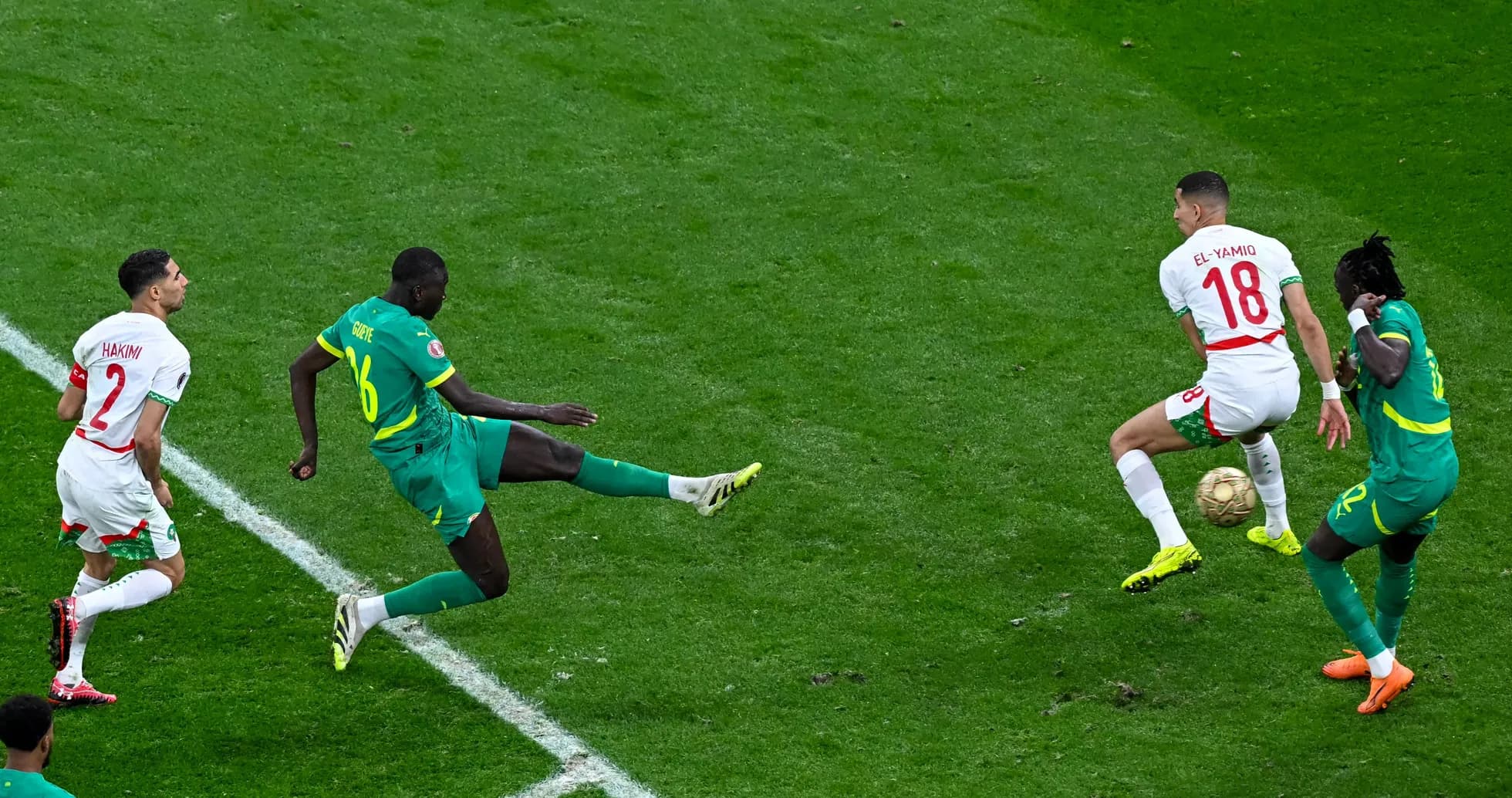
What should have been a celebration of African football descended into disorder. A controversial Senegalese goal was ruled out. Not long after, Morocco were awarded a penalty that ignited fury on the Senegal bench and among the players.
The pressure finally exploded.
The Senegalese squad walked off the pitch en masse, protesting what they called “blatant refereeing injustice”. A continental final, the pinnacle of the competition, suddenly stood on the brink of abandonment.
When play resumed, the drama only intensified. Ibrahim Diaz stepped up and attempted a Panenka-style penalty. It was a bold choice, a statement kick. He missed.
Senegal held their nerve. They kept a clean sheet through extra time and, on the field at least, claimed victory. In their eyes, they had done it the hard way and won the title where it matters most: on the pitch.
Morocco saw something very different.
From their standpoint, Senegal’s walk-off constituted an official withdrawal. In their reading of the regulations, that meant one thing: a 3–0 win awarded to Morocco. CAF initially agreed, endorsing that view in its first decision.
The trophy seemed to be heading to Rabat by rulebook, not by scoreboard.
CAF Under Fire and a Bombshell Admission
Senegal refused to accept that verdict and took the fight to the Court of Arbitration for Sport (CAS). The legal battle would flip the story again.
CAS overturned CAF’s initial ruling, throwing the competition back into limbo. No clarity. No champion. Only more questions.
Then AS revealed what happened behind closed doors at a CAF Executive Committee meeting in Dar es Salaam on 13 February. There, according to the report, Olivier Safary, head of the Referees’ Committee, made a startling admission.
He acknowledged that the referee had received “institutional instructions” not to send off Senegalese players during the match’s suspension, in order to ensure the game continued.
In other words, external pressure had shaped disciplinary decisions on the pitch.
That revelation detonated inside CAF. It fuelled accusations of interference in refereeing and raised the spectre of institutional manipulation at the heart of the confederation’s showcase event. For a body already under scrutiny, it was a damaging look.
A “Disastrous” Hearing and a Conflict of Interest Row
The legal front grew even more bitter.
At a press conference in Paris on 26 March, lawyers for the Senegalese Football Federation tore into the CAS appeal hearing. They described it as “disastrous” and claimed the judge appeared to have reached a conclusion before proceedings had truly unfolded.
Senegal then pointed to what they called a glaring conflict of interest within CAF’s Appeals Committee. The focus fell on lawyer Moez Nasri, who not only sat in judgment but also serves as president of the Tunisian Football Federation — a federation that is itself a stakeholder in African football politics and competitions.
For Senegal, this was unacceptable. They denounced “a clear conflict between his role as a judge and that of a party to the competition”. The criticism was so pointed that even CAF President Patrice Motsepe, according to the report, expressed surprise at Nasri’s presence on the committee.
The picture painted was of a process compromised from the inside, with trust draining away by the day.
A Continent in Limbo
And so Africa waits.
Seventy-seven days after the final, there is still no officially recognised champion. Senegal insist the matter is simple: they won the match on the field. Morocco are just as adamant: the law, as they interpret it, gives them the title.
CAF stands between them, accused by both sides of “mismanagement” and a “lack of transparency”, its authority eroded by every new revelation and every unanswered question.
The trophy remains effectively ownerless. The scars, on the other hand, are clear. How long can a continent live with a final that refuses to end?