Al-Ittihad Legend Urges Aouar and En-Nesyri to Consider Future
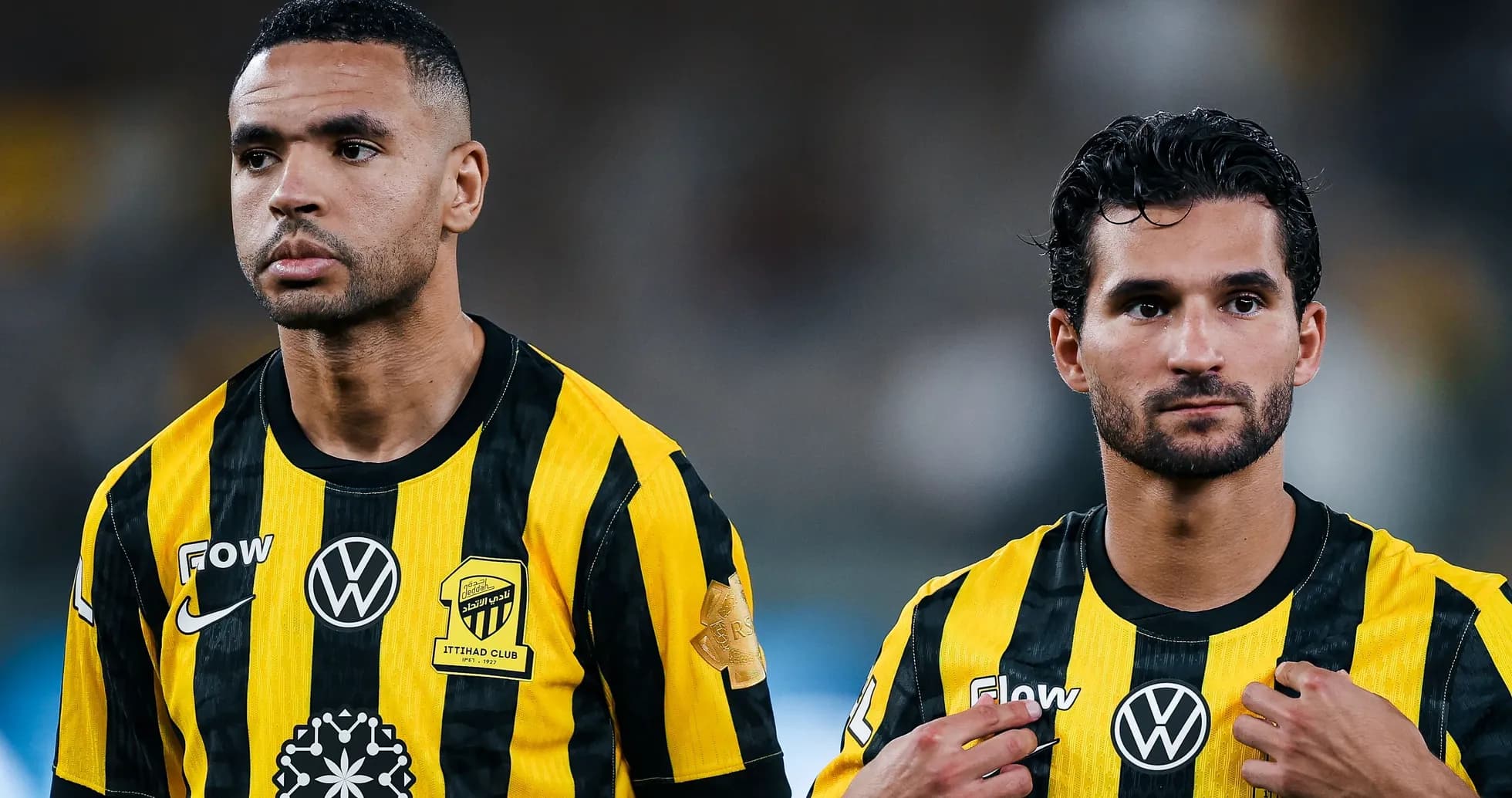
Al-Ittihad icon Khamis Al-Zahrani has delivered a blunt message to Houssem Aouar and Youssef En-Nesyri: this may not be your team next season.
Speaking to Al-Arabiya, the former midfielder painted a stark picture of a club racing against time, money, and its own squad limitations as it prepares for what he described as “a very big season” under new German coach Jens Wissing.
“They can’t do what the coach wants”
For Al-Zahrani, the issue is not star power but suitability.
“Al-Ittihad needs great depth in midfield,” he said, before making his stance clear. Neither Aouar, Fabinho nor En-Nesyri, in his view, fit the tactical demands Wissing is expected to impose – a game built on direct play, aggressive pressing and rapid transitions.
In other words, the spine of last season’s side does not match the blueprint of the new era.
The pressure, Al-Zahrani argued, now falls on the club to act decisively. Fabinho’s contract has already expired, and the trio of Fabinho, Aouar and En-Nesyri are, as he put it, under the coach’s microscope. The expectation is simple: Wissing must make a call on them quickly.
Urgent surgery in midfield
Al-Zahrani repeatedly returned to one theme: speed.
“These matters require speed in decision-making, in addition to quality in selection,” he insisted. Wissing, he believes, has already “put his finger on the wound” and now has to “plug the gaps with distinguished signings.”
The plan, as Al-Zahrani understands it, is clear enough. Al-Ittihad intend to bring in at least two midfielders – one as a direct replacement for Fabinho, the other with a profile similar to Mamadou Doumbia. Aouar’s fate, though, hangs in the balance, tied to the final shape of the squad and the strict limit on foreign players.
It leaves the Algerian playmaker in a grey zone: talented, but not guaranteed a role in Wissing’s high-intensity system.
Tight deadlines, tighter finances
If the tactical puzzle is complex, the wider context is even harsher.
Al-Zahrani described the situation facing Al-Ittihad as “thorny,” highlighting not just the time pressure before the new campaign but also the financial constraints that hem in the club’s ambitions. The margin for error in recruitment is slim. The need for clarity on who stays and who goes is urgent.
Complicating it all is Wissing himself. The German arrives with fresh ideas but, as Al-Zahrani pointedly noted, without vast experience of leading a club the size and expectation level of Al-Ittihad.
A new coach, a demanding fanbase, a squad in flux, and two high-profile names being openly urged towards the exit. For Aouar and En-Nesyri, the question now is stark: fight to convince a coach whose system seems to move away from their strengths, or step aside as Al-Ittihad reshapes its identity for the season ahead?