Andoni Iraola's Coaching Staff: A New Era at Liverpool
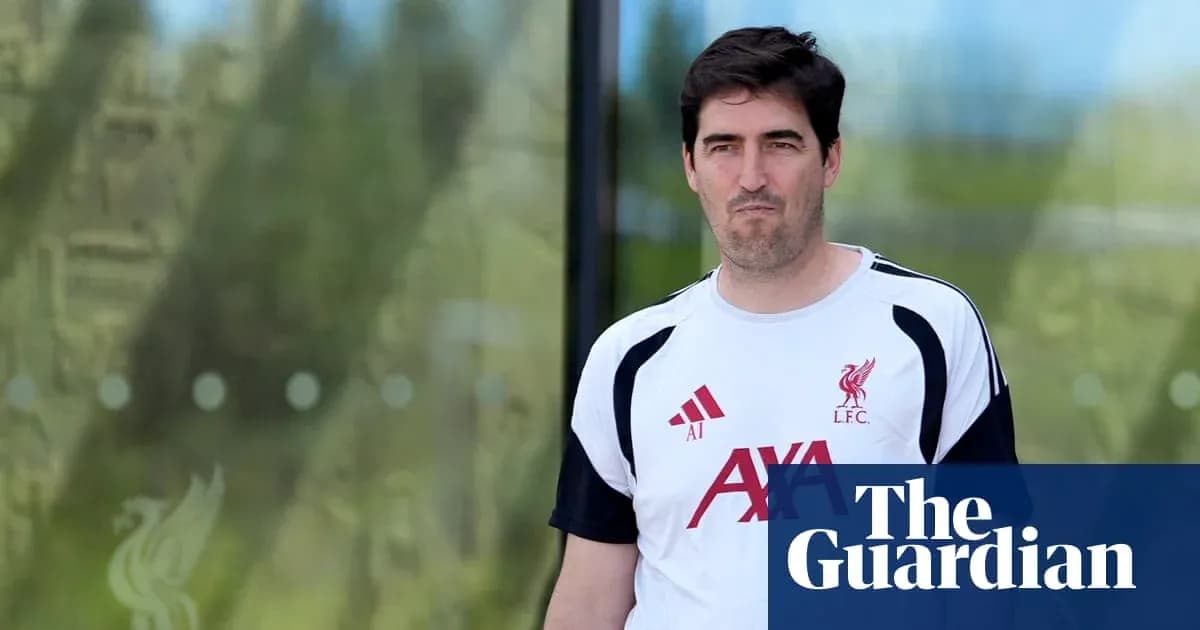
Andoni Iraola did not walk into Liverpool blind. He walked in with a team.
The new head coach has arrived at Anfield with a clear plan, a trusted inner circle and one glaring weakness to fix: set pieces.
Iraola’s inner circle comes to Anfield
Since succeeding Arne Slot last month, Iraola has quietly reshaped Liverpool’s backroom without tearing it up. Several familiar faces from Bournemouth have followed him north, blending into what he openly describes as an already high-calibre staff.
Tommy Elphick, a boyhood Liverpool supporter, and Shaun Cooper have come in as first-team coaches. Pablo de la Torre, Iraola’s long-time ally, steps in as assistant coach. Alejandro Rosalen, fresh from a five-year spell at Napoli, takes over as first-team goalkeeping coach.
These are not cosmetic appointments. They are the spine of Iraola’s daily work.
“For me, it was important they came with me,” he said as he prepared for his first game in charge, a pre-season friendly against Sunderland in Nashville on Saturday. De la Torre, in particular, is more than his job title suggests. The pair first worked together at AEK Larnaca, then again at Rayo Vallecano, and have effectively grown into the profession side by side.
“Pablo is a physical coach but has been with me almost all the years I have been coaching. So, for me, he is much more than a physical coach really. He is an assistant and we know each other very well.”
That trust matters now. New club, new league demands, same core voices in his ear.
Bournemouth lessons, Liverpool standards
If Iraola feels fortunate at Liverpool, it is because he has been here before in a different way. When he walked into Bournemouth, his plans were immediately disrupted. His assistant Iñigo Pérez, expected to follow him from Rayo Vallecano, was denied a work permit.
It could have left a hole. Instead, it opened a door.
“I was very lucky with Tommy and Shaun when I arrived at Bournemouth,” Iraola said. Pérez’s setback eventually turned into a personal success story — he is now coaching Villarreal, a club Liverpool could yet cross paths with in the Champions League.
But in the meantime, Elphick and Cooper stepped up.
“When I had Tommy and Shaun there, we did not feel the need to bring in another assistant,” Iraola explained. “They were very prepared, they were very helpful for me in terms of understanding the English culture, the mentality of the players, what they were used to, what they like in training, even the small details that maybe in Spain are different.”
Elphick’s career — Aston Villa, Bournemouth, Brighton, Huddersfield — gives him a natural bridge to the dressing room. Cooper, too, offers that closeness to the current game that managers slightly removed from their playing days sometimes lack.
“They can be in a closer position to the players. They can feel more identified. I am a little bit older. Some of the players maybe didn’t know I was a player,” Iraola admitted, half-joking, half-accepting the reality of a new generation.
At Liverpool, that dynamic will be crucial. A demanding fanbase, a squad used to challenging for major honours, and a club that has just seen a title-winning coach depart. The message has to land. The staff have to carry it.
Fixing Liverpool’s set-piece flaw
One area, though, needs no translation. The numbers are blunt.
Last season, only Bournemouth (26), Crystal Palace (25) and Leeds (24) conceded more goals from set pieces than Liverpool’s 23. For a side that still managed to win the title in what proved Slot’s final campaign, it was a glaring contradiction: champions of England, vulnerable from dead balls.
That will not be allowed to drift.
“One requirement” for Iraola and his staff, as he put it, is to tackle that problem head-on. He has not just brought in voices he trusts; he has given them defined responsibilities.
“Tommy does defensive set plays, Shaun does more offensive, more creative ones,” Iraola said. The split is clear. Elphick will be charged with tightening the line, winning first contacts, cleaning up second balls. Cooper will be asked to turn corners and free-kicks into a weapon rather than a chore.
They will not work alone. Inside the club, Lewis Mahoney has already built a reputation.
“We are working very well here with the set-piece analyst [Lewis Mahoney], who was very good in the second half of last season. He is already with the club, so they are working on some stuff.”
The phrase “some stuff” hides the detail but hints at the process: data, patterns, rehearsed routines, tailored roles. Mahoney’s impact late last season has earned him a central place in the new structure, not a token carry-over from the previous regime.
The pressure will be immediate. Every corner conceded at Anfield will be watched with a little more tension. Every free-kick swung into Liverpool’s box early in the season will be judged not just on the players’ reactions but on the work done all week at the training ground.
A new era, built on familiarity
Iraola’s first Liverpool game in Nashville will not define anything. Pre-season never does. But it will mark something important: the first glimpse of a touchline team that already feels tightly knit.
He has blended continuity with familiarity — keeping Mahoney, integrating his Bournemouth lieutenants, trusting De la Torre again, adding Rosalen from a high-level European environment at Napoli.
“They are very good coaches,” Iraola said. “We kind of understand the game similarly and they have different roles in the coaching staff, they help with set pieces also. That’s the reason I continued with them.”
This is how he works. Not as a solitary figure, but as the front man of a group that has already navigated setbacks, cultural shifts and now a step into one of the most scrutinised jobs in world football.
The title has been won. The previous coach has gone. The margins at the top are thin, and 23 goals from set pieces is a number that sticks on the page.
If Iraola and his staff can erase that weakness without losing what made Liverpool champions, the conversation around this new era will change quickly — from who he brought with him, to how far this group can take them.