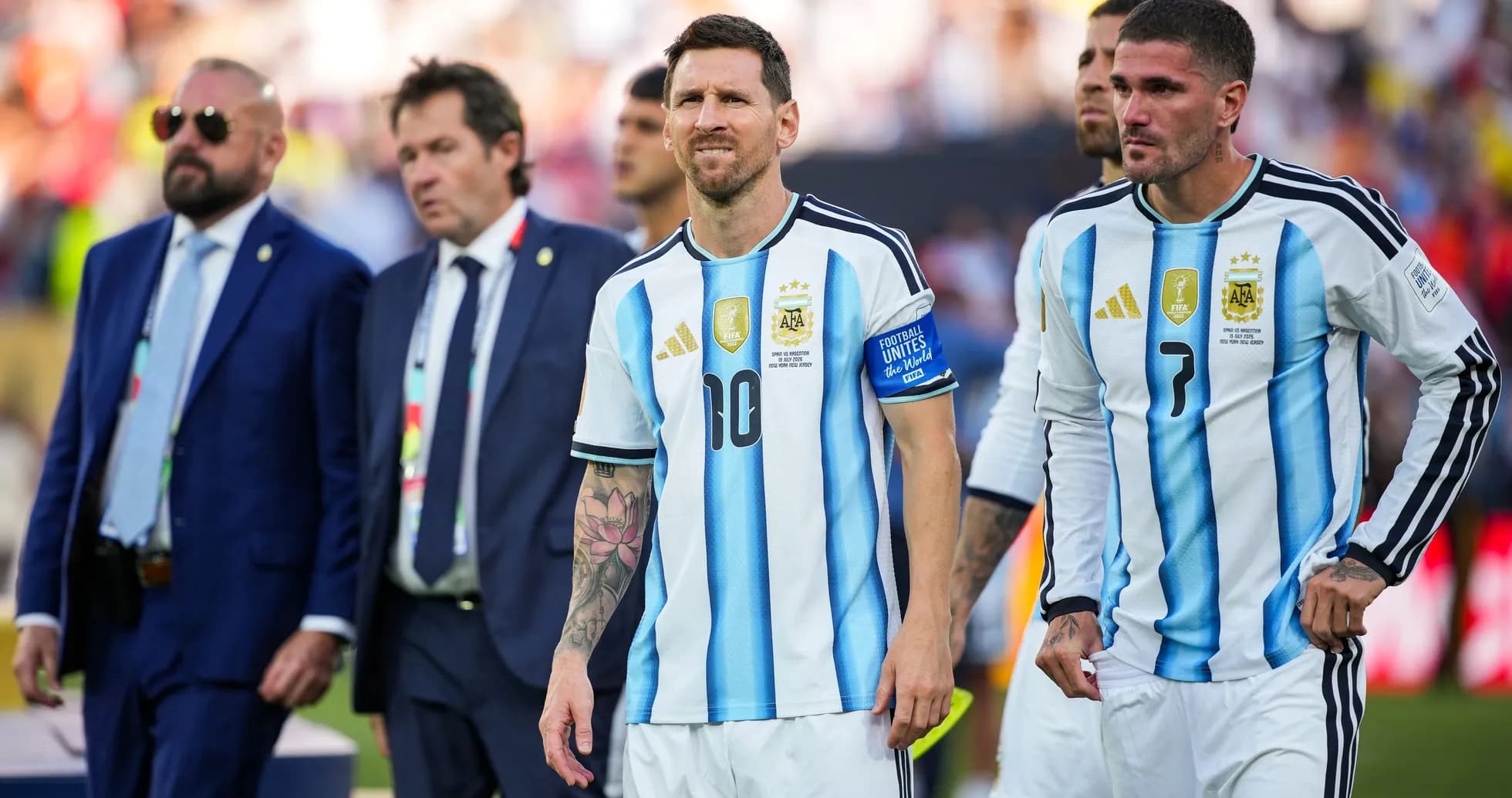
Argentina's National Holiday for Runners-Up: A Controversial Decision
Argentina flew home without the trophy, beaten 1-0 by Spain in extra time in New York, undone by a Ferran Torres strike and a performance that never once troubled the opposition goalkeeper. No shot on target. No world crown retained.
And yet, back in Buenos Aires, the government has opened the door to a national holiday.
In an unexpected move, President Javier Milei announced that the squad will be allowed to choose a day to be declared a public holiday in recognition of their campaign. Not for a title. For second place.
The reaction was instant and ferocious.
A Holiday for Second Place?
Milei chose not to attend the final in person, citing superstition. Instead, he turned to X to set out his stance, confirming that the players and coaching staff would decide if and when the country stops to celebrate.
“Given the concern about the celebrations for the achievement reached by the Argentine National Team, I inform the population that, depending on what the Players and the Technical Staff decide regarding the day to celebrate, it will be declared a national holiday,” he wrote.
The wording only fuelled the argument. What, exactly, was being celebrated?
Argentina had fallen short on the pitch, failing to defend their world title and delivering a strangely blunt display on the biggest stage. For a fanbase raised on Maradona and Messi, on World Cups and Copa América glory, a holiday for coming second felt like a jarring break with tradition.
Public Backlash and Confusion
Phones lit up, radio shows erupted, and social media turned into a running referendum on national standards. Many supporters questioned the very idea of marking a runners-up finish with a day off work. Others wondered if the announcement was some kind of administrative mistake.
To a significant portion of the public, it felt out of step with the performance in New York. Argentina had battled to the final, yes, but the last act was flat. No spark, no incision, no shot on target. Not the kind of defiant, romantic failure that usually earns a free pass in a football-obsessed country.
Plenty of fans suggested the players themselves would rather avoid a grand parade, preferring to disappear back into club football and let the disappointment fade. The notion of Messi and his team-mates waving from an open-top bus after a toothless defeat sat uneasily with many.
Milei Stands by Messi’s Generation
Milei doubled down with a second post, this time more emotional, more in tune with the dressing room than the street.
“Thank you so much, players. [We fought] until the end with our boots on. Argentina always at the top,” he wrote, defending Lionel Messi and the veterans who once again carried the national shirt deep into a tournament.
That message captured the other side of the debate. This is a group that has delivered a World Cup and major honours, a generation that has rewritten the modern history of the Albiceleste. From that angle, a holiday looks less like a reward for second place and more like a final salute to an era.
Yet the tension remains: is Argentina celebrating this specific campaign, or the legacy of a golden core that is about to walk away?
The End of an Era Looms
Behind the political noise and social media fury lies a simple football reality. This run, and this defeat, may mark the last World Cup for Lionel Messi.
The expectation is that the Inter Miami star has played in his sixth and final edition of the tournament, even if he has not formally announced the end of his international career at 39. Around him, other senior figures are also nearing the exit, forcing Lionel Scaloni and his staff into a rapid reset.
They now face the delicate task of blooding new talent while the country argues over whether to close the shops and schools for a team that fell one step short. The conversation in Argentina has shifted from tactics and line-ups to identity and standards.
What, in this new era, counts as success worth stopping a nation for?