Arsenal's 2026-27 Season: A Title Rebuild
Arsenal finished last season with a medal haul that felt light, the Fifa Champions Cup a poor substitute for what they really wanted: a platform to dominate after that Champions League triumph in 2025. Instead, it exposed how much this squad needed stripping back and starting again.
This summer, they’ve done exactly that.
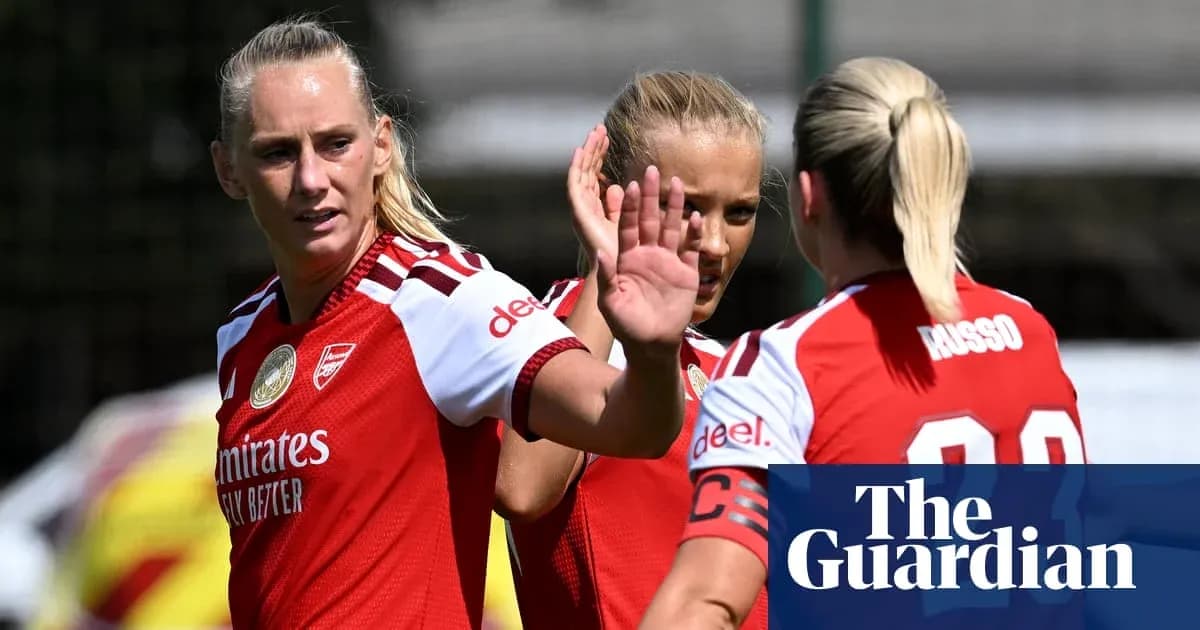
Eleven players have gone, including two pillars of the modern era in Beth Mead and Katie McCabe. Seven have arrived. It is not a tweak; it is a reset. In Spain full-back Ona Batlle, England midfielder Georgia Stanway, Switzerland’s Géraldine Reuteler and Germany forward Selina Cerci, Arsenal have recruited battle-tested internationals and, crucially, lowered the age profile of a group that had begun to feel a touch static.
Whether allowing Mead to join Manchester City and McCabe to move to Chelsea comes back to sting them will hang over the early months of the season. Those are emotional departures as much as tactical ones. But for the first time, Renée Slegers has had a full pre-season to work with a squad that looks like hers, not her predecessor’s.
Two years running, Arsenal have stumbled out of the blocks in the WSL. Four draws and a defeat in their first nine games last term left them chasing, not leading. This time there are no excuses. No major summer tournament draining legs and minds. No early Champions League qualifiers cutting into preparation. Qualification for the league phase was already secured by that second-place finish.
The path is clear. Now they have to walk it.
A title race on a knife-edge
The margins last season were brutal. Arsenal lost only once in the league and still finished second. Opta’s expected points model had them as the best side in the WSL in 2025-26, yet the trophy went elsewhere because of six draws. Manchester City drew just one.
Dig into the numbers and it hurts even more. Expected goals data suggests Arsenal did more than enough to win three of those stalemates. One, against Chelsea, they probably deserved to lose. The rest? Dropped points that turned a near-perfect season into another “what if”.
As they and City traded a win apiece in their head-to-heads, those drawn games decided the title. That is the fine line Slegers has to erase.
This year, the landscape tightens again. City are back in the Champions League, juggling the same schedule as Arsenal. Several other clubs have invested smartly. The league looks deeper, sharper, less forgiving. Yet for Arsenal, it is also an opening: a genuine chance to end a seven-year wait for a WSL crown.
“We’re in a great place of course, but we would have liked to have won more trophies last season and that is our huge ambition coming into this year,” said the technical director, Jodie Taylor. “I’ll flat out say it: we want to win the league and want to take that next step.”
No one at Arsenal is pretending otherwise. This season is about the title.
Money, momentum and the Emirates question
Off the pitch, the club’s direction is just as clear. Arsenal’s latest accounts showed revenue climbing by £6.5m to £21.5m for the year ending May 2025. The shift is not cosmetic; it reflects a club that has outgrown its old confines.
In that period, eight matches at the Emirates Stadium drew an average of 29,833 fans and generated just under £6m in matchday income. The next set of filings should look even stronger. Last season’s WSL home campaign brought an average attendance of more than 34,000 across all 11 league games. That is not a one-off spike. It is a new baseline.
The growth runs through every stream. Broadcast revenue surged past £2m, more than double the £956,000 recorded in 2024, helped by their Champions League success. Commercial income leapt from £649,000 to £1.77m. These are numbers that match the eye test: Arsenal have become the WSL’s biggest draw.
Yet the balance sheet still has a familiar caveat. Group income from the parent club rose from £9.3m to £11.85m, more than half of total revenue. Like many in the league, Arsenal remain heavily reliant on the wider organisation. The women’s side is booming, but not yet standing fully on its own feet.
The stadium situation captures that tension perfectly. All WSL home fixtures and European knockout ties, if they get there, will be staged at the Emirates. Domestic cup games and Champions League league-phase matches stay at Meadow Park.
Arsenal have led the WSL’s attendance boom, accounting for more than 40% of all league spectators last season. Yet they are stuck in a logistical no-man’s land for cups and early European games: the Emirates is too big and too hard to schedule around the men’s calendar, while Meadow Park is now clearly too small for what this team has become.
Slegers’ team, at last
Amid all this, Slegers steps into her second full season with the bar set high and, finally, the tools she wanted. The 37-year-old impressed after taking over from Jonas Eidevall as interim, then permanent, manager. She steadied an established squad. Now she has reshaped it.
The summer’s churn gives her the chance to imprint a clearer identity, to refine style as well as personnel. This is no longer about managing a hand she was dealt. It is about playing the cards she picked.
The headline arrival is Stanway. A two-time European champion with England, she brings far more than a familiar face to a dressing room already packed with Lionesses. She brings edge.
Stanway has called herself “ruthless and robust”. Arsenal have badly needed that. For all their technical quality, they often lacked a snarling, combative presence in midfield when games tightened and space vanished. At 27, Stanway offers that steel in the spine, along with the experience of winning on the biggest stages.
Add Batlle’s energy and quality at full-back, Reuteler’s intelligence in midfield and Cerci’s threat up front, and Arsenal look deeper, more varied, more dangerous.
The kids coming back
Not all the “new” faces are signings. Some are returns that feel just as significant.
Last season was supposed to be the breakout year for Michelle Agyemang and Katie Reid. Agyemang, 20, arrived off a superb Euro 2025 campaign. Reid, 19, had burst into the domestic season with real promise. Then anterior cruciate ligament injuries stopped both in their tracks.
Almost a year later, they are edging back. Their minutes will be carefully managed. Rhythm and confidence will take time. But the hunger will be fierce, and the memory of where they left off will drive them.
If Arsenal are serious about building a squad that can contend every year, not just this one, those two could be pivotal.
Cooking something different
Inside the camp, there is a sense of a project reaching a crucial stage. Lotte Wubben-Moy framed it in her own way.
“It’s like you’re cooking the most beautiful recipe and then you add the final small ingredients that make the marginal difference, that elevate, and you create something that’s beautiful and that you can relish and enjoy. That’s what we’re in the process of.”
The ingredients are there: a refreshed squad, rising crowds, a manager with authority, a spine hardened by Stanway and company, young talent returning with a point to prove.
Arsenal have been close for two seasons. Painfully close. This time, the question is blunt: does this version finally have the edge to turn almost into everything?