Arsenal's Premier League Triumph and the Future of English Football
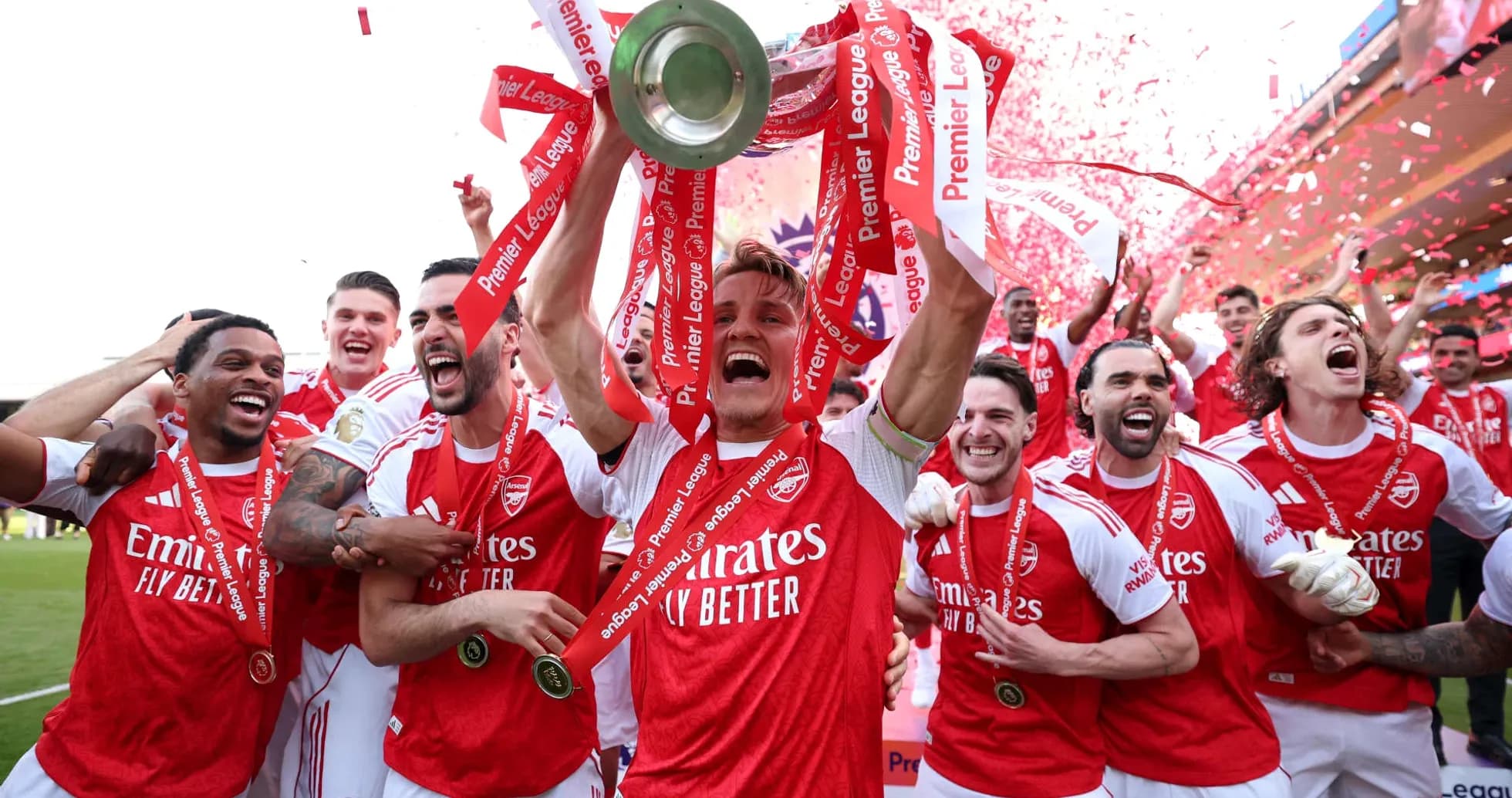
Martin Odegaard raised the Premier League trophy into the south London sky and, for a moment, English football looked untouchable.
Arsenal, champions again after 22 long years, had finally clambered back to the summit. Their 14th league crown, sealed at Selhurst Park on May 24, completed a three-year carousel of winners: Manchester City in 2023-24, Liverpool in 2024-25, now Arsenal. Three different champions in three seasons. A title race that keeps changing hands. A league that loves to sell itself as the most competitive show on earth – and, on the surface, has the evidence to back it up.
Stack that against the rest of Europe and the contrast is stark. Spain, the continent’s second-richest competition, has become a private feud between Barcelona and Real Madrid. Those two have walked off with 20 of the last 22 La Liga titles. In Germany, Bayern Munich’s grip has been even more suffocating, with 13 titles in 14 seasons. France has been reshaped in Paris Saint-Germain’s image, the capital club taking eight of the last nine Ligue 1 crowns.
Only Italy’s Serie A can look England in the eye when it comes to churn at the top. Four clubs – Juventus, Inter Milan, AC Milan and Napoli – have shared the last seven titles, a reminder that the old order can still be shaken if you invest well, recruit smartly and get the football right.
English clubs, though, have gone beyond domestic dominance. They have colonised Europe’s latter stages as well. Only a penalty shootout defeat for Arsenal against PSG in last weekend’s Champions League final stopped a clean sweep of UEFA’s major competitions. Aston Villa and Crystal Palace had already banked the Europa League and Europa Conference League, while Chelsea currently hold FIFA’s Club World Cup. The Premier League’s swagger is not just marketing; it is etched into silverware.
Money explains plenty. The Premier League’s broadcast deals, at home and abroad, dwarf anything else in world football. The latest Deloitte rich list reads like an extended advert for English power: half of the world’s 30 highest-revenue clubs come from England. Not just the traditional giants either. AFC Bournemouth, Brentford and Brighton & Hove Albion – clubs that once lived on the margins – now sit in the global elite by income.
Look a little closer, though, and the shine starts to dull.
The league that sells itself as the ultimate destination is quietly exporting some of its best talent. England’s captain, Harry Kane, earns his living abroad. So do five of his international teammates heading to the World Cup, with Anthony Gordon’s move from Newcastle United to Barcelona the latest high-profile departure. Six members of the national squad now play outside England.
Martin Samuel, writing in The Times, captured the shift in mood. Once, an English player heading to Real Madrid or AC Milan felt like a badge of honour for the domestic game. Now, with almost a quarter of the squad overseas, it feels different. It looks like a drain. The worry is not that English players are good enough to be wanted elsewhere. The worry is that comparable quality is not flowing back in the other direction.
Beneath the TV billions, the balance sheets tell their own story. Premier League clubs out-earn almost all of their European rivals, yet only four – Newcastle United, Aston Villa, Bournemouth and Liverpool – actually turned a profit in the most recent season with published figures. The rest are leaning hard on owner funding, transfer gains and creative accounting to stay the right side of the rules.
Drop below the top flight and the picture darkens again. Administration has become an all-too-familiar word. Historic clubs such as Derby County and Sheffield Wednesday have been dragged to the brink, victims of overreach, misjudged gambles and the unforgiving economics of chasing promotion or simply trying to survive.
To keep pace and comply with financial fair play, many clubs have resorted to accounting contortions: selling and leasing back stadiums or training grounds, booking paper gains to tick regulatory boxes. The intention behind the rules is sound – to protect competitive balance and stop a handful of sovereign wealth funds and billionaire owners from inflating wages and fees to ruinous levels. The reality is a system that can be gamed by those with the right advisers and leaves others clinging on.
Even the super-rich may start to think twice. The jeopardy that makes English football compelling on the pitch can terrify investors off it.
Tottenham Hotspur, one of the six Premier League clubs that flirted with the doomed European Super League project in 2021, spent this season staring over the edge. They only just avoided relegation. West Ham United, the Premier League’s eighth-longest serving club and 20th in Deloitte’s Money League, went down. Two clubs with modern stadiums, huge fanbases and serious commercial power found themselves exposed to the same trapdoor as everyone else.
For American owners raised on closed leagues and guaranteed fixtures, that is a chilling prospect. You can pour hundreds of millions into a club, build a global brand, sign off on lavish wages – and still find yourself in the Championship, cut off from the Premier League’s vast TV pot in a single bad year.
Samuel noted that Liverpool, Manchester United, Crystal Palace, Chelsea and Newcastle are all, in different ways, effectively on the market. The next wave of investors will study what happened to West Ham, and how close Tottenham came to disaster, and feel the chill. The risk-reward equation no longer looks quite so simple.
Somewhere in all this, behind the fireworks and confetti at Selhurst Park, the Premier League’s own executives will have felt it too. The product has never looked stronger. The foundations have rarely felt more fragile.
The trophy is back in north London. The question now is whether English football can keep holding everything else together.