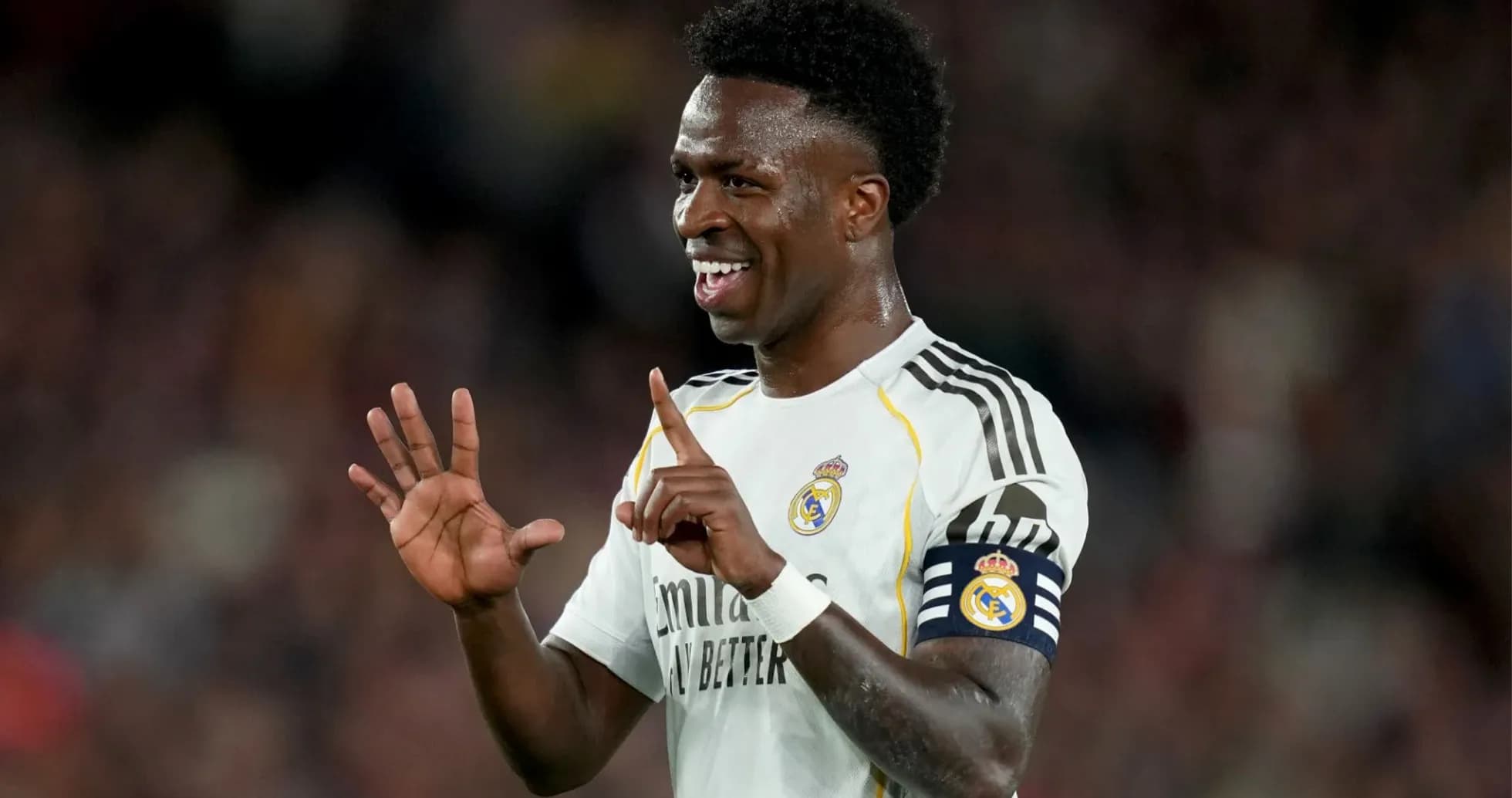
Arsenal's Pursuit of Vinicius Junior: A Transformative Move
Arsenal used to dream about players like Vinicius Junior. Now they are being talked about as a realistic destination.
That, more than any balance sheet or league table, is the clearest measure of how far Mikel Arteta has dragged this club in five relentless years.
From culture reset to galáctico talk
Arteta did not build this version of Arsenal on stardust. He stripped the place down. Big names went out the door – Pierre-Emerick Aubameyang, Alexis Sanchez, Mesut Özil – and with them the sense that individual brilliance could paper over structural cracks. In its place came a harsher creed: discipline, “non‑negotiables”, and a dressing room where everyone, in theory, pulls in the same direction.
It was a gamble. It delivered a Premier League title.
That is why the idea of Arteta personally driving a move for Vinicius Junior feels so striking. This is not a marginal upgrade. This is the kind of transfer that bends the whole shape of a squad.
Former Newcastle goalkeeper Shay Given, speaking to BOYLE Sports, did not need to see a contract on the table to understand the significance.
“Could Vinicius Junior be the sort of player to add the quality Arsenal need in the final third? Yes,” he said. “And it shows you the level that Arsenal are at that this sort of deal is even being spoken about, and of course the financial power they now have to back it up.”
He’s right. Just the conversation tells its own story.
The cost of chasing the very top
This is not fantasy-football money. Reports in Spain and England suggest Real Madrid have planted a €150 million (£128.4m) price tag on Vinicius, a figure that would make him the most expensive signing in Premier League history.
Given didn’t bother dressing it up.
“Can you imagine the financial package that would be needed to bring a player like Vinicius Jr to Arsenal?” he said. “It would be huge numbers all round across the transfer fee, the wages and all the clauses and add-ons.”
Huge numbers. Huge implications. You do not sign a player at that price and then gently ease him into a settled dressing room. You build around him, or you risk tearing at the fabric you’ve spent years stitching together.
That is where this story becomes more than a simple question of “can they afford him?”
Harmony versus headline
Arsenal’s transformation under Arteta has been as much psychological as tactical. The Emirates, once a theatre of tension and impatience, now houses a squad that looks, from the outside at least, unified and fiercely aligned with their manager’s demands.
“Arsenal have become renowned over the last couple of years for being this team that has a real togetherness after moving on the likes of Pierre-Emerick Aubameyang, Alexis Sanchez and Mesut Ozil,” Given pointed out. “Everyone in that squad now feels like they’re pulling in the same direction.”
That togetherness is not a side note. It is the foundation of everything Arteta has done – from the brutal culls of high-profile figures to the insistence on work without the ball, on structure, on sacrifice.
Drop Vinicius Junior into that environment and you are not just adding another winger. You are importing one of the sport’s most recognisable stars, a player used to the bright white glare of the Bernabéu and the expectation that he will decide the biggest nights.
Vinicius has done exactly that. He has been central to Real Madrid’s recent Champions League triumphs, repeatedly delivering on the biggest stage. He is not a prospect. He is the finished article in the most unforgiving competition there is.
The risk Arteta would have to embrace
And yet, for all his talent, Vinicius represents the kind of risk Arteta has mostly avoided since 2019.
“I’m not saying Vinicius Jr doesn’t defend or wouldn’t fit into that group but it’s a risk,” Given admitted. “But I suppose you have to take risks to bring something different to a team like that, and he’s a brilliant player. It would be the biggest transfer news of the year if Arsenal signed him.”
Arteta has shown a ruthless streak with anyone who does not meet his “non-negotiables”. Big salary? Big reputation? It has never saved a player once he falls on the wrong side of that line. That approach cleared out distractions and hardened the squad’s mentality, but it also set a standard: nobody is bigger than the collective.
Any pursuit of Vinicius would test that principle. The Brazilian would arrive not just as another signing, but as the immediate headline act in a team already full of champions. His status, his fee, his wage packet – all of it would change the internal landscape overnight.
That is why Arsenal’s recruitment team cannot just run the numbers and the clips. They have to be sure about the person as much as the player. Does he buy into the work off the ball? Does he accept the tactical discipline Arteta demands? Does he enhance the dressing room dynamic, or distort it?
A tantalising dilemma
For supporters, the image is irresistible: Vinicius in red and white, tormenting full-backs at the Emirates, adding Champions League pedigree to a side that has just climbed back to the summit of English football.
For the club, the equation is colder. There are logistical hurdles – the fee, the wages, Real Madrid’s willingness to even contemplate a sale – and emotional ones. Break the wage structure for one superstar and you reshape every contract negotiation that follows. Hand the keys to one player and you challenge the carefully curated sense that this is a squad of equals.
Arsenal’s hierarchy must weigh Given’s warning about the “collective spirit” against the reality that players like Vinicius do not come around often, and even less often to clubs outside Madrid, Barcelona, or Manchester City’s orbit.
This is what life at the very top looks like. You fight to build a culture strong enough to win. Then you decide whether it’s strong enough to absorb a superstar who could change everything again.