Aston Villa's Transfer Strategy: Garnacho Loan and Financial Maneuvering
Aston Villa have been here before.
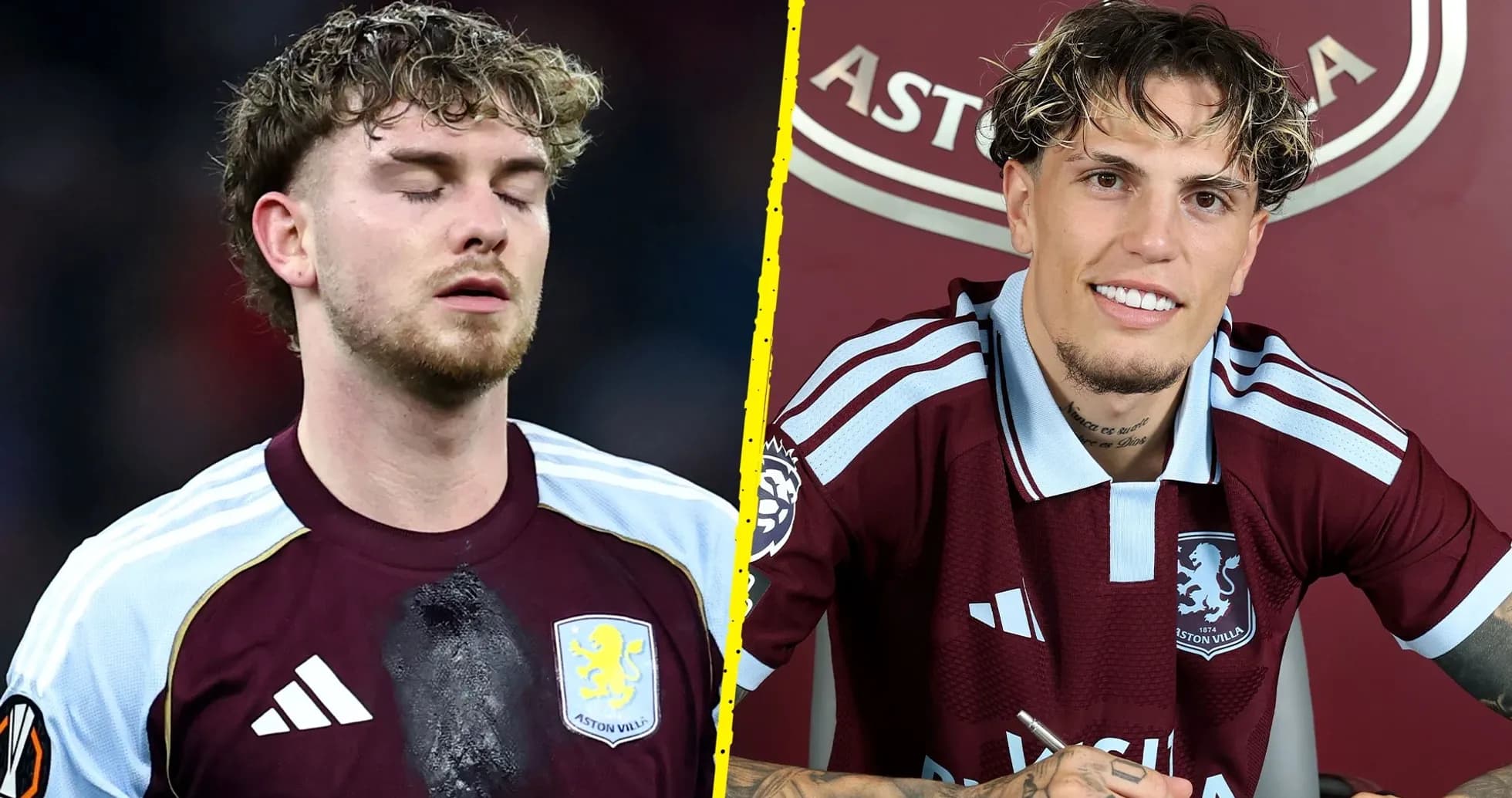
Twelve months ago, deadline day brought Harvey Elliott through the door from Liverpool on a season-long loan, dressed up with a conditional obligation to buy. On paper, it looked clever. Elliott arrived as player of the tournament from the Euro Under-21s, Villa needed depth, and the numbers seemed manageable.
Then reality bit.
The sting in the deal was brutal in its simplicity: if Elliott made 10 appearances, Villa would be locked into a £35million permanent transfer. Unai Emery barely used him. Across the entire campaign, Elliott played just 278 minutes. A move that was supposed to launch his Premier League career instead stalled it, as Villa effectively froze him out to avoid triggering the clause.
Now, they are rolling the dice again.
Garnacho arrives, but this is no simple loan
This time the headline name is Alejandro Garnacho, prised from Chelsea on a season-long loan with a conditional obligation to buy. The exact trigger remains under wraps, but talkSPORT understands it is appearance-based and easily achievable. The full package, loan plus obligation, comes in at around £43million.
The timing is impossible to ignore. Garnacho’s arrival was confirmed only two days after Morgan Rogers went the other way to Stamford Bridge for £117m, a fee that instantly made him the most expensive British player in history.
For Villa, the Rogers deal was a financial thunderbolt. Signed from Middlesbrough in January 2024 for just £8m, he has now delivered a huge profit and a vital cushion as the Europa League holders try to stay on the right side of UEFA’s financial regulations.
Two big moves. The same clubs. Days apart. On the surface, it looks like the anatomy of a modern swap deal. And that is exactly what could worry UEFA.
The 45-day rule and a clever bit of timing
Under UEFA’s transfer rules, multiple deals between the same clubs within a 45-day period are treated as a swap. That matters because in a swap scenario, clubs cannot simply book the full profit on a sale. Instead, they have to reduce that gain to the net difference between the sale price and the cost of the incoming player.
If UEFA classified Rogers-for-Garnacho as a swap, Villa’s eye-watering profit on Rogers would shrink dramatically on their books.
Villa’s answer has been to lean on structure and timing. By taking Garnacho on an initial loan, with the obligation to buy likely to be triggered outside that 45-day window, they can – for now – recognise the Rogers deal as a straightforward, hugely profitable sale.
On talkSPORT’s Transfer Insiders, reporter Ben Jacobs laid out how the deal effectively walks right up to the line of UEFA’s rules.
He contrasted it with the Elliott situation, where a relatively low appearance threshold for a permanent move led Emery to marginalise the midfielder. That was a sporting decision with a financial shadow. This Garnacho move, he argued, is built more squarely around financial creativity under UEFA’s updated Financial Fair Play framework.
The logic is simple. Clubs want to bank big sale fees immediately, which look healthy on annual accounts, while spreading the cost of incoming transfers over long contracts through amortisation. That tension is exactly what UEFA has tried to rein in.
So UEFA introduced the 45-day rule: mirrored or related deals between the same clubs in that window must effectively be treated on a net basis, to stop both sides booking inflated profits at the same time. Separate deals, but one financial story.
Villa and Chelsea, though, have gone a different route. One huge permanent transfer for Rogers at £117m. One loan with a conditional obligation for Garnacho. Trigger the obligation later, and the fee falls outside the 45-day frame. On paper, it becomes a permanent deal hidden inside a loan structure.
Everyone involved knows what it really is. A permanent move, delayed in the accounts.
UEFA’s grey area
That does not mean Villa can relax.
UEFA’s own rules contain a crucial caveat: if the conditions that trigger the obligation are “considered to be virtually certain”, then the transfer must be treated as permanent from the outset. In accounting terms, there is no hiding place. Loan in name, permanent in the books.
For Villa, that would be a problem. It would drag Garnacho’s cost into the same accounting period as the Rogers sale and eat into the profit they are currently banking.
The only way around it is uncertainty. UEFA will allow the Garnacho move to be treated as a loan initially only if “the fulfilment of a condition cannot be assessed with sufficient certainty to trigger the permanent transfer from the inception of the loan.”
So the fine print matters. How many appearances? In which competitions? Are there injury or performance caveats? If UEFA decides the obligation is almost guaranteed, they can insist both clubs book it as a permanent deal straight away.
That is the tightrope Villa are walking.
Jackson interest hits a wall
All of this also collides with Villa’s wider plans.
Chelsea have offered striker Nicolas Jackson to Emery’s side. The Spaniard knows him well from their time together at Villarreal and is understood to admire the forward. On football grounds alone, the move makes sense.
But the calendar and the rulebook are in the way.
With UEFA’s 45-day window still in play, another significant deal between the same clubs would crank up the scrutiny. Unless Villa make another major sale in this window to soften the impact on their books, any move for Jackson risks dragging the Rogers and Garnacho business into the sort of netted-off calculation they are trying to avoid.
That may push any serious pursuit of Jackson back to January, when the clock has reset and the accounting landscape looks different.
So Villa find themselves in a familiar position: ambitious in the market, creative with the numbers, and waiting to see how UEFA views the fine print. They have landed a high-profile winger, banked a colossal profit, and threaded a needle in the regulations.
The question now is not just how Garnacho performs on the pitch, but whether the paperwork around him holds up under UEFA’s microscope.