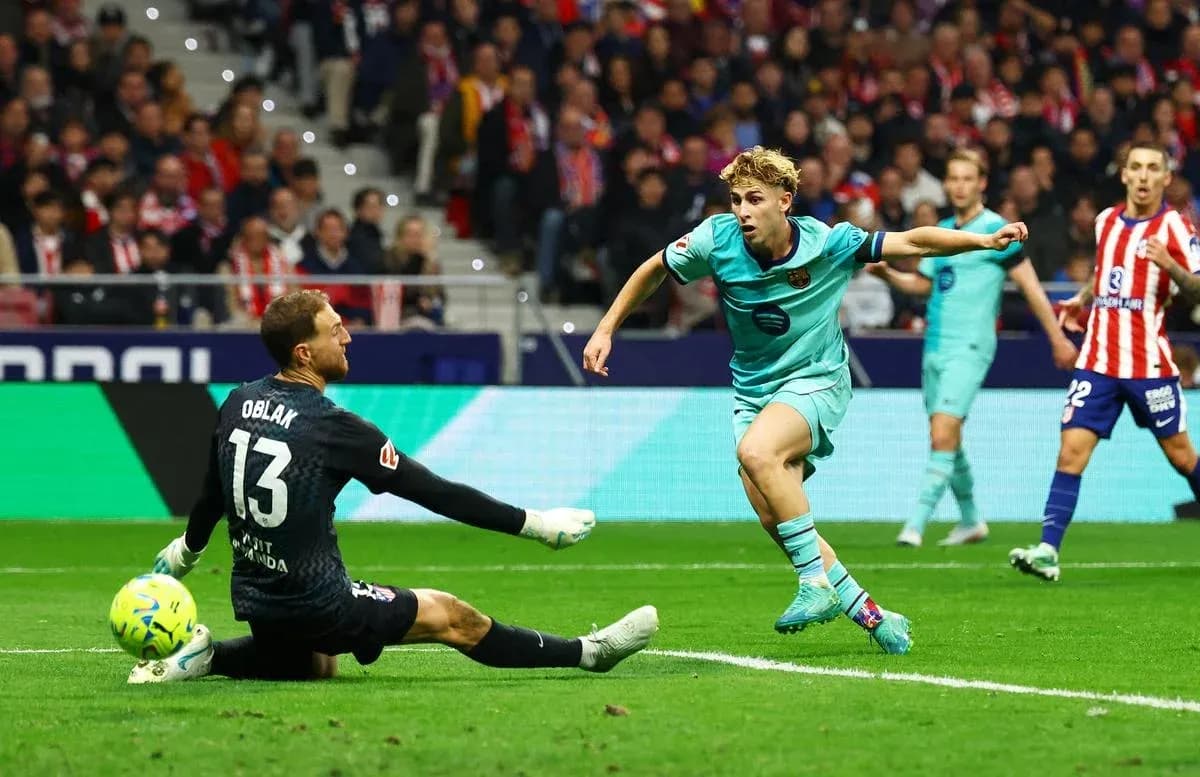
Atletico Madrid vs Barcelona: Clash of Ideologies at Metropolitano
Under the lights of the Metropolitano Stadium, this was billed as a clash of ideologies as much as a top‑of‑the‑table duel: Diego Simeone’s retooled Atletico Madrid, third in La Liga with 28 points and a goal difference of 13, against Hansi Flick’s free‑scoring Barcelona, leaders on 33 points with a ferocious overall goal difference of 35. Over 90 minutes that ended 1‑2, the league’s most balanced contender tried to suffocate its most explosive attack – and fell just short.
Simeone doubled down on his evolving 4‑4‑2, a shape he has used in 8 league matches this season, but the personnel told a more progressive story. Jan Oblak anchored a back four of Marcos Llorente, Marc Pubill, Dávid Hancko and Álex Grimaldo – a line as comfortable advancing with the ball as retreating into the box. Ahead of them, a hard‑running but technically ambitious midfield: Giuliano Simeone wide right, Koke and Pablo Barrios inside, and Álex Baena drifting from the left into pockets between Barcelona’s lines. Up front, Lee Kang‑In and Julián Álvarez formed a mobile front two, less about aerial duels and more about pressing triggers and combination play.
Opposite them, Flick opted for a 4‑1‑4‑1 that morphed into a 2‑3‑5 in possession. Joan García started in goal behind a defence of B. Farinas, Pau Cubarsí Paredes, Gerard Martín and João Cancelo. Marc Bernal sat as the single pivot, with Lamine Yamal, Fermín, Pedri and A. Gordon forming a fluid attacking band behind Raphinha, the league’s most ruthless finisher so far with 15 goals and 3 assists in 11 appearances. It was a line‑up that underlined Barcelona’s identity this season: relentless verticality, but with enough control to survive the Metropolitano’s storm.
Heading into this game, the numbers framed the narrative starkly. Atletico had been efficient rather than extravagant: overall they had scored 23 goals and conceded 10 in 12 league matches, an average of 1.9 goals for and 0.8 against. At home they had been strong, with 12 goals scored and 5 conceded across 6 matches, and 3 clean sheets at the Metropolitano. Barcelona, by contrast, arrived as an attacking avalanche: 48 goals scored in total, 24 at home and 24 on their travels, averaging 4.0 goals both at home and away. On their travels they had been perfect – 6 wins from 6, with 24 goals scored and only 6 conceded – and they had failed to score in none of their 12 league fixtures.
Within that statistical clash, the absences and disciplinary undercurrents added nuance. Atletico’s season‑long card profile pointed to volatility in the middle and late phases: 25.00% of their yellow cards had come between 31‑45 minutes and another 25.00% from 76‑90, with a solitary red card arriving in the 76‑90 window as well. Barcelona’s bookings had been concentrated just after half‑time, with 44.44% of their yellows between 46‑60 minutes, a sign of a side that often raises intensity – and risk – immediately after the break. There were no explicit missing‑player listings in the data, so both coaches effectively had full tactical decks to play with, including impact defenders like Robin Le Normand on Atletico’s bench, whose single red card this season is a reminder of the edge Simeone can introduce if he leans into chaos.
The key match‑ups were always going to be defined by Barcelona’s hunters against Atletico’s shield. Raphinha, with 31 shots and 19 on target, arrived as the league’s most efficient finisher; his blend of direct dribbling (22 attempts, 14 successful) and penalty‑box movement meant Hancko and Pubill had to defend not just space, but timing. Behind him, Lamine Yamal was the purest expression of Flick’s attacking doctrine: 10 goals, 8 assists, 52 shots and 42 key passes, all wrapped in an 8.21 average rating. His duel with Grimaldo down Atletico’s left was a battle between a creator who thrives in 1v1s and a full‑back whose delivery and timing going forward are central to Simeone’s new‑look attack.
Atletico’s own offensive spearhead came from deeper zones. Álex Baena, with 5 goals and 3 assists and 30 key passes in 12 appearances, has become Simeone’s primary conduit between midfield and attack. His tendency to drift inside from the left to overload central zones asked questions of Marc Bernal’s positional discipline. Alongside him, Giuliano Simeone’s 4 goals, 2 assists and 28 tackles embody the hybrid role Simeone demands from his wide players: winger in possession, auxiliary full‑back without the ball. Their task was not just to create, but to slow Barcelona’s transitions at source.
In the engine room, Koke and Barrios tried to control the rhythm against Pedri and Fermín. Pedri’s metronomic passing and Fermín’s 7 goals and 5 assists from midfield gave Barcelona a dual‑threat interior pair; both can arrive late into the box, both can break lines with passes. The battle here was as much about spacing as duels: could Atletico’s double pivot stay compact enough to block central lanes without leaving Bernal free to dictate from deep?
Defensively, Atletico’s season profile suggested resilience. Overall they had conceded only 10 goals in 12 matches, with an average of 0.8 both at home and on their travels, and they had kept 6 clean sheets in total. But Barcelona’s attack has been testing every structure it meets: with 4.0 goals per game and only 13 conceded overall (1.1 per match), plus 4 clean sheets, their goal difference of 35 underlined just how punishing they can be if given space.
Barcelona’s penalty record added another layer to the risk calculus. They had won 5 penalties, scoring 4 and missing 1 – that single miss a reminder that even their ruthlessness has limits. Atletico, by contrast, had been perfect from the spot with 2 penalties scored from 2, and none missed.
In the end, the 1‑2 scoreline felt like the meeting point of these trends. Atletico’s structure, intensity and home record made them competitive, but Barcelona’s attacking ceiling – powered by Raphinha’s finishing, Lamine Yamal’s dual role as top scorer and top assist provider, and the supporting creativity of Fermín and A. Gordon – tilted the balance. The statistical prognosis before a ball was kicked pointed towards a narrow Barcelona edge: a side averaging 4.0 goals per game on their travels against a host conceding 0.8 at home, in a stadium where Simeone’s men had failed to score only once all season.
Over 90 minutes in Madrid, that projection held. Atletico’s collective block slowed Barcelona, but could not fully blunt them. Flick’s side did not hit their usual four‑goal avalanche, yet their blend of efficiency, set‑piece threat and individual brilliance was enough to bend – and finally break – one of La Liga’s most disciplined defensive units.