Barcelona Dominates Real Madrid 2-0 in La Liga Showdown
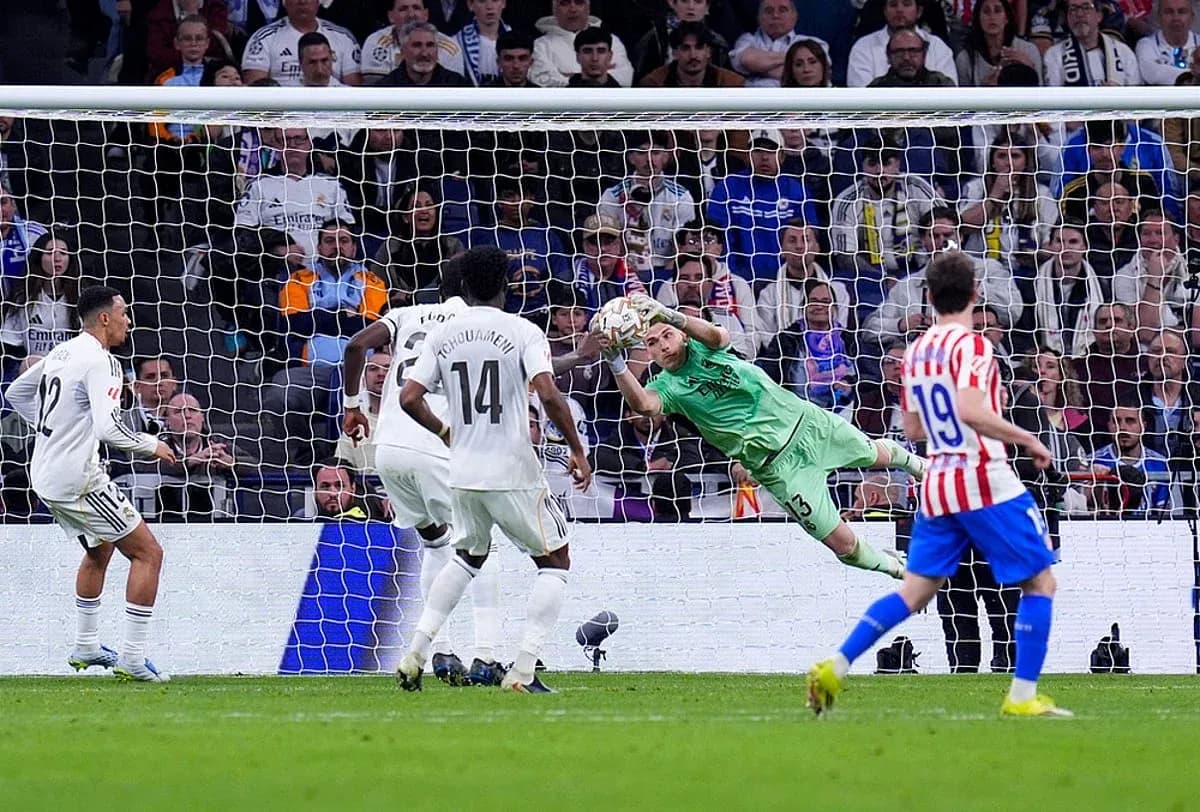
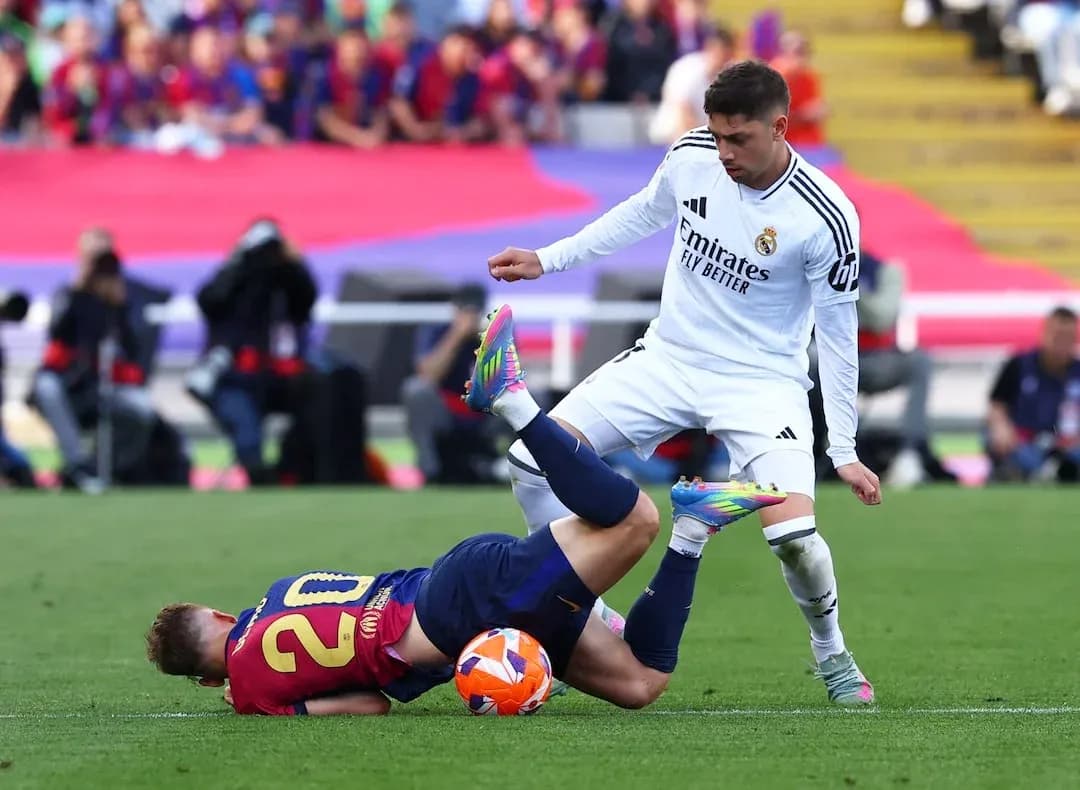
Barcelona’s 2-0 home win over Real Madrid at Camp Nou in La Liga’s Regular Season - 35 was defined by an explosive opening quarter-hour and then a mature, control-first game state management. Hansi Flick’s side struck twice early through Marcus Rashford and Ferran Torres, then used their structure in and out of possession to suffocate Real Madrid’s central threats. Alvaro Arbeloa’s team grew into the game territorially and on set plays, but never translated their eight shots and 0.79 xG into sustained, high-quality chances, with Barcelona closing the night at 2-0 and 0.99 xG, fully aligned with the scoreline.
Executive Summary
Flick kept Barcelona in a 4-2-3-1 that behaved like a 2-3-5 in settled possession, with Joao Cancelo and Gerard Martín stretching the width and Pablo Gavi plus Pedri anchoring the double pivot. Real Madrid mirrored the nominal 4-2-3-1, but their structure was far more reactive: Eduardo Camavinga and Aurélien Tchouaméni were repeatedly forced backwards by Barcelona’s aggressive first line and high central occupation. With 57% possession, 527 passes and 92% accuracy (527 passes, 484 accurate), Barcelona controlled tempo and zones, while Real Madrid’s 394 passes at 87% accuracy left them chasing transitions and set pieces rather than orchestrating play.
Scoring Sequence & Disciplinary Log
Barcelona seized control almost immediately. On 9', Marcus Rashford (Barcelona) attacked from the second line, exploiting the half-space behind Real Madrid’s double pivot to finish a “Normal Goal” and tilt the pressing dynamics in Barcelona’s favour. By 18', the pattern repeated in a more collective way: Ferran Torres (Barcelona) converted from close range, assisted by Dani Olmo, whose positioning between Real Madrid’s lines consistently pulled Antonio Rüdiger and Raúl Asencio into indecision. At 2-0, Barcelona could compress the pitch and dictate where the game was played.
- 40' Eduardo Camavinga (Real Madrid) — Foul
- 52' Dani Olmo (Barcelona) — Argument
- 52' Raúl Asencio (Real Madrid) — Foul
- 55' Jude Bellingham (Real Madrid) — Unallowed field entering
- 81' Raphinha (Barcelona) — Argument
- 81' Trent Alexander-Arnold (Real Madrid) — Argument
Card verification: Barcelona: 2, Real Madrid: 4, Total: 6.
The clustering of yellows around the 40'–55' and 81' marks reflects moments when Real Madrid tried to raise the emotional and physical temperature to break Barcelona’s rhythm, but the hosts largely absorbed those spikes without losing structural discipline.
Tactical Breakdown & Personnel
Barcelona’s 4-2-3-1 was extremely vertical. In possession, Pau Cubarsí and Eric García formed a calm first line, with Joan García rarely forced into high-volume shot-stopping (1 save) thanks to strong control of depth and box entries. Cancelo advanced high on the right, often forming a line of five with Rashford, Olmo, Fermín López and Torres. This allowed Barcelona to pin both full-backs, Fran García and Trent Alexander-Arnold, and isolate Real Madrid’s centre-backs in wide and central 2v2s.
Gavi and Pedri were key to the press and rest-defence. Out of possession, they created a compact 4-4-2 shape, with Rashford stepping up alongside Torres to screen Tchouaméni and Camavinga. The effect was that Real Madrid’s progression was pushed wide and backwards, reflected in their shot profile: 8 total shots, but only 1 on goal despite 7 attempts inside the box. Barcelona’s defensive index on the night is underlined by those numbers and by the fact that Real Madrid’s xG (0.79) came more from volume and proximity than from clear, unopposed chances.
Arbeloa’s Real Madrid tried to mirror the structure but not the control. With Bellingham as a central 10 and Vinicius Júnior starting from the left, the idea was to overload the left half-space and isolate Gonzalo García centrally. However, Barcelona’s back four held their line compactly, and the double pivot tracked Bellingham’s movements aggressively. When Real Madrid did reach the final third, they often ended in wide crosses or set pieces, which explains their 8 corner kicks versus Barcelona’s 4.
Substitutions were clearly game-state driven. On 64', Flick added fresh control and vertical threat: Frenkie de Jong (IN) came on for Dani Olmo (OUT), while Raphinha (IN) came on for Marcus Rashford (OUT). De Jong’s introduction shifted Barcelona’s midfield from a pure double pivot to a more circulation-heavy triangle, helping manage the 2-0 lead. At 70', Alvaro Arbeloa responded with Thiago Pitarch (IN) for Eduardo Camavinga (OUT), seeking more forward thrust from midfield.
On 77', Flick doubled down on managing energy and maintaining depth: Robert Lewandowski (IN) came on for Ferran Torres (OUT), and Marc Bernal (IN) came on for Gavi (OUT). Lewandowski offered a stronger hold-up reference to relieve pressure, while Bernal helped maintain the intensity of central pressing. Arbeloa then reshaped his front line at 79': Franco Mastantuono (IN) came on for Brahim Díaz (OUT), and César Palacios (IN) came on for Gonzalo García (OUT), effectively refreshing both the right half-space and the central forward role to chase the game.
The late phase saw a final defensive adjustment from Flick: at 88', Alejandro Balde (IN) came on for Fermín López (OUT). This nudged Barcelona into a more conservative 4-3-3/4-5-1 out of possession, with extra coverage on the flanks to deal with Real Madrid’s late wide pressure and crosses.
The Statistical Verdict
The statistical profile supports the tactical story of controlled dominance rather than overwhelming siege. Barcelona’s 10 total shots, 7 on goal, and 0.99 xG show a side that created enough, early and efficiently, then prioritised control. Their 57% possession and superior passing metrics — 527 passes, 484 accurate (92%) — underpin a strong overall form on the night, with the ball circulation used as a defensive tool once 2-0 was established.
Real Madrid’s 8 shots (only 1 on goal) and 0.79 xG, despite 7 efforts inside the box, indicate that Barcelona’s defensive index was high: they allowed entries but not clean finishing conditions. Real Madrid’s 394 passes, 342 accurate (87%), and 43% possession highlight a team more often reacting than dictating. Disciplinary asymmetry — Real Madrid’s 4 yellow cards to Barcelona’s 2 — further reflects a side stretched by Barcelona’s structure and forced into reactive interventions. In sum, the 2-0 scoreline and underlying metrics align tightly with a tactically mature Barcelona performance and an ultimately blunted Real Madrid response.