Barcelona Break Transfer Record for Kerolin in Women's Football
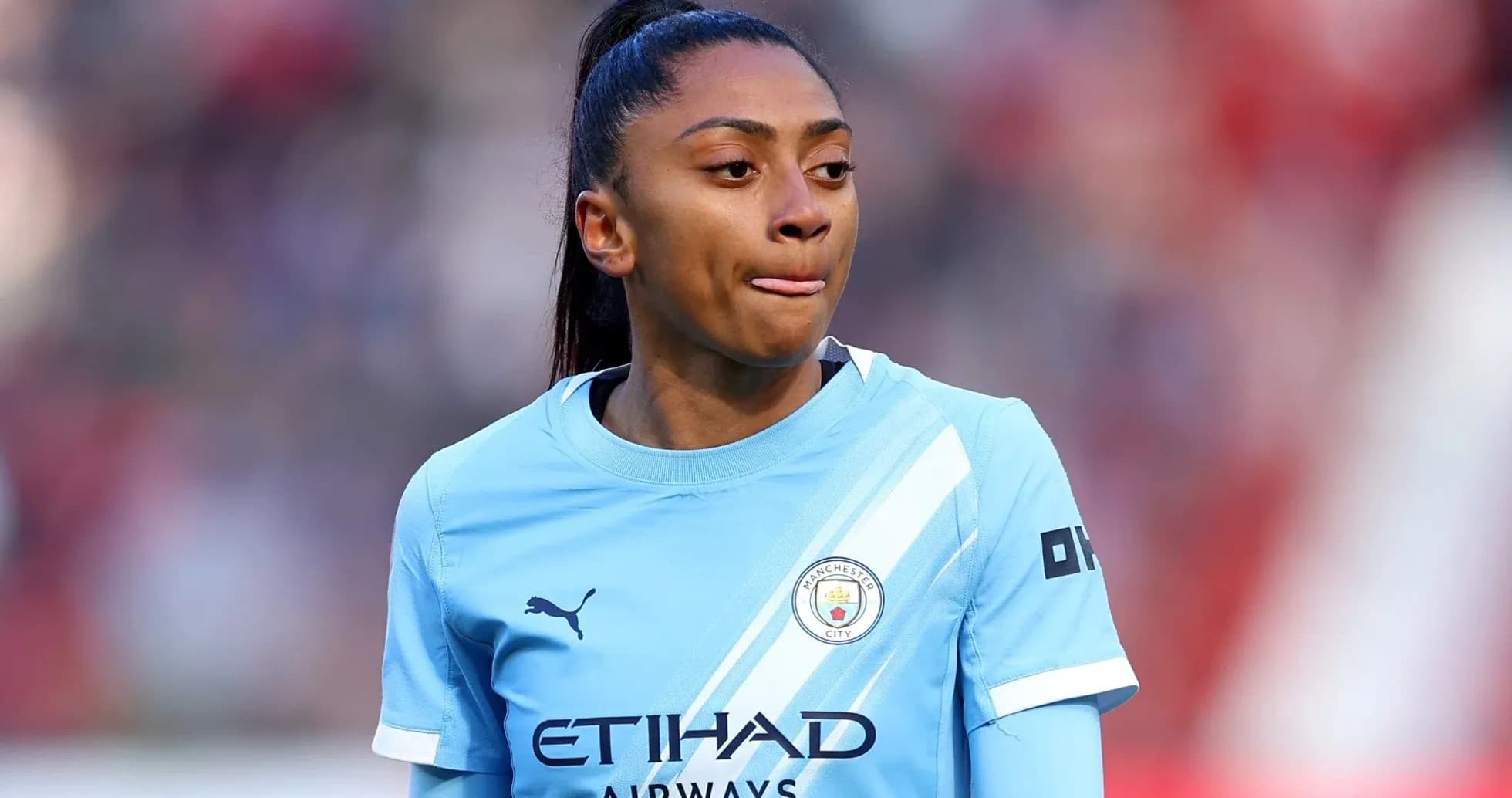
Barcelona are about to smash through another barrier in the women’s transfer market – and they’ve chosen Kerolin as the player worth breaking the bank for.
The Brazilian forward is set to sign a four-year deal in Catalunya this week after Barcelona finally reached agreement with Manchester City on a fee that underlines just how far the women’s game has moved, and how far Barca are prepared to stretch to stay on top.
A fee that rewrites the numbers
The story began earlier this month, when journalist Victoria Leite revealed that Barcelona had already seen two bids knocked back. The second of those offers would have eclipsed the £400,000 ($470,000) they paid for Keira Walsh in 2022 – a fee that has stood as the club’s women’s transfer record.
City still said no.
Reports in Sport then highlighted the scale of the challenge: a release clause north of €1 million (£857,000/$1.14m), a figure Barca were either unable or unwilling to hit. Negotiations continued, the two clubs trying to “find common ground and finalise the transfer”, as Leite put it.
The pressure finally told. Leite now reports that a deal is in place at around €1.5m (£1.28m/$1.7m), a sum that will place Kerolin among the most expensive players in women’s football history – behind only Grace Geyoro of London City Lionesses and potentially Alyssa Thompson, now at Chelsea.
For a club that has spent the last few years juggling Financial Fair Play constraints and high-profile exits, it is a bold, almost defiant move.
City cash in on a rising star
From Manchester City’s perspective, this is the kind of offer that forces a rethink, even when the player in question is central to the project.
Kerolin has just delivered a superb season in the Women’s Super League, registering 14 direct goal contributions as City ended their 10-year wait for the title. Only Khadija Shaw, Alessia Russo and Vivianne Miedema outperformed her in that regard. She did all of that in her first full campaign at the club after arriving from North Carolina Courage in January 2025.
She is 26. She was under contract until 2028. On paper, this is the profile you build around, not cash out on.
Yet the logic behind City’s decision is clear. The forward line is stacked: Shaw, Miedema, Mary Fowler, Lauren Hemp, Aoba Fujino, Iman Beney. On top of that, Beth Mead has arrived this summer. When a squad is that loaded in attacking areas and a record fee lands on the table, the calculation changes.
City bank a huge sum, keep their wage structure under control and still have time – and money – left in this window if they decide they want another attacker. From a purely sporting and financial standpoint, it is ruthless but coherent business.
Barca plug a gaping hole in attack
For Barcelona, this is not a luxury signing. It is a necessity.
The European champions have seen their forward line ripped open in recent months. Alexia Putellas, twice a Ballon d’Or winner and the face of the project, has joined London City Lionesses. Salma Paralluelo, who scored twice in the Champions League final, walked away on a free shortly after that showpiece, despite being offered a new deal.
Those departures cut deep, on the pitch and in the dressing room.
There is still plenty of talent in Catalunya. Claudia Pina, Ewa Pajor, Kika Nazareth and Caroline Graham Hansen – fresh from signing a new contract – give Barca a frontline that most clubs would envy. Youngsters Sydney Schertenleib and Vicky Lopez are growing into bigger roles and carry the promise of the next generation.
But promise alone does not win European titles. Kerolin brings something different: proven, top-level, game-changing quality, delivered consistently over a full season in one of the toughest leagues around. For a club that has leaned heavily into recruiting young prospects this summer, she offers ready-made impact at the very highest level.
The bill comes due
The question now hangs over the numbers. Barcelona’s willingness to push past €1m for a single player comes at a time when their finances remain under intense scrutiny.
Transfer fees in the women’s game have risen sharply, so the size of the cheque is not shocking in isolation, especially for a Brazil international with two years left on her deal. The context at Barca is what makes it more delicate.
Only last summer, several first-team players left to help the club satisfy FFP requirements. A swathe of top academy talent also departed. Those decisions were not purely sporting; they were financial triage.
Now, with Kerolin about to arrive on a huge fee, the club faces another tightrope walk. Key renewals are looming. Patri Guijarro, widely regarded as one of the best holding midfielders in the world, is under contract only until 2027 and is reportedly on the radar of Lyon and leading English clubs. Pajor, the focal point of the attack, is entering the final year of her deal. So is rising star Esmee Brugts.
Barca have just watched Putellas, Paralluelo, Mapi Leon and Ona Batlle all leave for nothing at the end of their contracts. They cannot afford a repeat next summer, not if they want to remain the reference point in the women’s game.
So the equation is stark. Kerolin’s arrival should help keep Barcelona at the summit of Europe in the short term. The next challenge is whether the club can balance that ambition with the financial discipline needed to lock down the rest of their core – or whether this record-breaking gamble will force more painful choices a year from now.