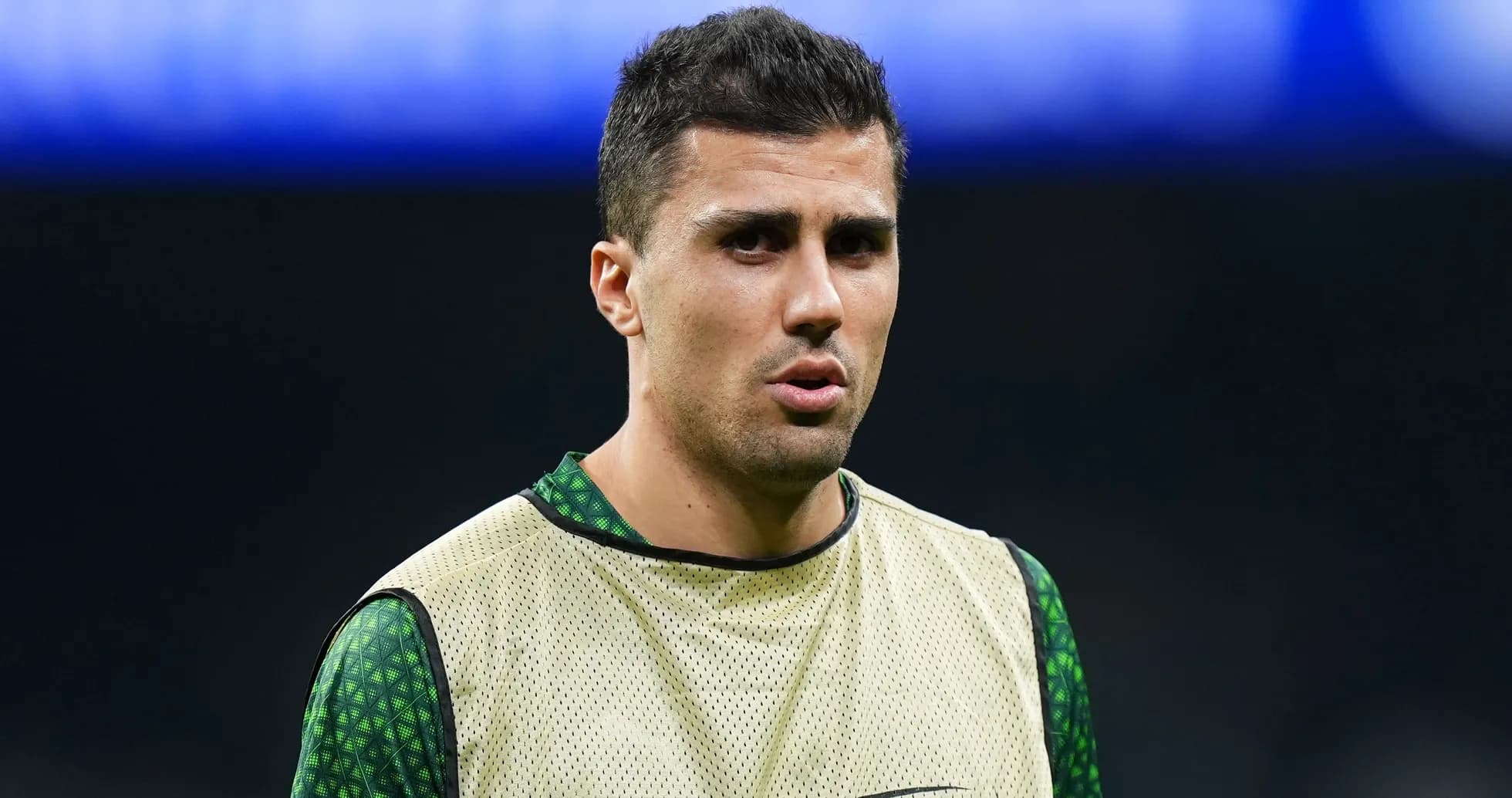
Barcelona’s Strategic Coup: Deco's Role in Securing Rodri
Barcelona did not win this battle in front of cameras or in glossy presentation rooms. They won it in hushed corridors, in a luxury hotel on the Costa Brava, and on phone calls made far from the spotlight.
While the football world assumed Rodri was drifting steadily towards Real Madrid, Barcelona were quietly rewriting the script.
The day everything changed
The turning point came on Thursday, 30 July.
Deco, Barcelona’s sporting director, was meant to be on a straightforward route: end a short break in Croatia, then fly straight to England to join Hansi Flick and the squad at their pre-season camp. Routine, predictable, unremarkable.
He chose disruption instead.
Deco diverted to Barcelona and stayed more than a day before eventually heading to England. Inside the club, eyebrows went up. Flick and his staff were already on the ground preparing for friendlies; the sporting director was expected with them, not back in Catalonia.
That detour was no whim. It was the opening move in what the club hierarchy viewed as a “strategic” operation: the push to bring Rodri to Camp Nou. Initial contact with the Manchester City midfielder’s camp had already started. Now came the decisive phase.
A wedding, a hotel, and a change of heart
At the end of July, Rodri was in Catalonia for a wedding on the Costa Brava. A personal commitment became a tactical opportunity.
Barcelona, fully aware of the sensitivity of a tug-of-war with Real Madrid, imposed total secrecy. No leaks. No hints. No loose talk that could alert the Bernabéu or drive up the stakes.
Sport reports that Deco and Rodri met at a luxury hotel, away from the noise. Two and a half hours that would tilt the race.
Deco laid everything out: the sporting project, the central role waiting for Rodri in Barcelona’s midfield, Flick’s vision, the long-term plan built around his leadership and experience. This wasn’t a generic sales pitch. It was a clear roadmap of how Rodri would become the heartbeat of the team for years.
Up to that point, the path seemed to lead to Real Madrid. Rodri had listened to their proposal, held talks, weighed the idea. But he had not given a final yes.
By the time he left that hotel, his calculations had shifted.
Flick on the line
Deco’s work opened the door. Hansi Flick walked through it.
The new Barcelona coach did not leave the persuasion to executives and intermediaries. He picked up the phone himself, making several calls to Rodri to explain exactly how he saw him on the pitch and in the dressing room.
This was about more than tactics. Flick painted a picture of Rodri as a leader, a reference point in a rebuilt midfield, a player entrusted with guiding a new era at Camp Nou.
Inside the club, there was no doubt: if they wanted to beat Real Madrid to one of the best midfielders in the world, direct, personal contact from the coach was non-negotiable. Flick delivered it.
The message was clear. Barcelona weren’t just interested. They were all-in.
The hidden fixer
Behind the scenes, another figure helped bind the operation together: Dani Codina, Barcelona’s head of player services.
His name never surfaced publicly in the negotiations, but his influence, as revealed by Sport, was significant. Codina had previously worked at Manchester City, where he developed a close relationship with Rodri. That connection became a quiet asset.
Codina helped arrange the secret meeting between Deco and the player. More importantly, he helped create an atmosphere of trust around Barcelona’s pitch. For a player contemplating leaving a stable, title-winning environment, that sense of comfort matters.
Rodri was not just being asked to join a project. He was being invited into a familiar circle.
The decisive call
What followed was a stretch of near-total silence in the media, but intense activity in private.
Contacts between Barcelona and Rodri’s representatives continued over the next days. No grand leaks, no staged briefings. Just calls, meetings, and a carefully managed push to turn interest into commitment.
Then came last Thursday.
The club received the message they had been waiting for from people close to the player: Rodri had been convinced by the project. Talks had moved into an advanced stage.
The balance of power had flipped. Where Real Madrid once held the advantage, Barcelona now stood on the brink of a major signing.
A chain of quiet decisions had done the damage: Deco’s detour, a wedding weekend turned into a summit, Flick’s direct intervention, Codina’s discreet work in the background.
A strategic strike at Madrid
Now, only the final details remain.
Inside Barcelona, the deal is viewed as far more than another high-profile transfer. It is a cornerstone move: a way to rebuild the midfield around a player with proven pedigree, authority, and the mentality to anchor a new cycle.
It is also something else: a direct hit to Real Madrid’s plans. Losing out on one of the world’s premier midfielders is one thing; losing him to your greatest rival, after holding the upper hand, is quite another.
Barcelona have not announced anything yet. The ink is not dry. But they have already won one crucial battle — the one for Rodri’s conviction.
If they now complete the move, this won’t just reshape their midfield. It will redraw the lines of power at the very heart of Spanish football.