Benfica Dominates Aarhus in Tactical Showcase
Benfica’s 3-1 win over Aarhus at Estádio da Luz was a tactical demonstration of how to dominate territory and tempo with a clear structural plan. Marco Silva’s 4-1-3-2 consistently pinned a 3-5-2 Aarhus block deep, turning the Play-offs tie into a one-sided contest in everything but the scoreline. The statistical profile – 71% possession, 13 shots on goal to 1, 11 corners to 1 – underlines how comprehensively Benfica controlled the match.
Out of possession, Aarhus’ 3-5-2 was quickly forced into a 5-3-2 low block. The back three of C. Rosler, M. Camara and E. Kahl were repeatedly stretched horizontally by Benfica’s front and wide rotations. With only 29% of the ball and just 1 shot on goal, Aarhus’ attacking plan never established sustained phases; they were reduced to sporadic counters and direct balls into F. Emmery and T. Bech, hoping to exploit any gaps behind Benfica’s high line.
Benfica’s structure was built around a clear vertical spine. In the 4-1-3-2, L. Barreiro sat as the single pivot in front of the back four, giving license to the advanced line of G. Prestianni, E. Barrenechea and G. Sudakov behind the front pairing of V. Pavlidis and Rafa Silva. This gave Benfica a constant five-lane occupation in the attacking phase: full-backs A. Bah and S. Dahl provided width, while the three advanced midfielders operated between the lines. With such a platform, Benfica could recycle possession and compress Aarhus into their own third.
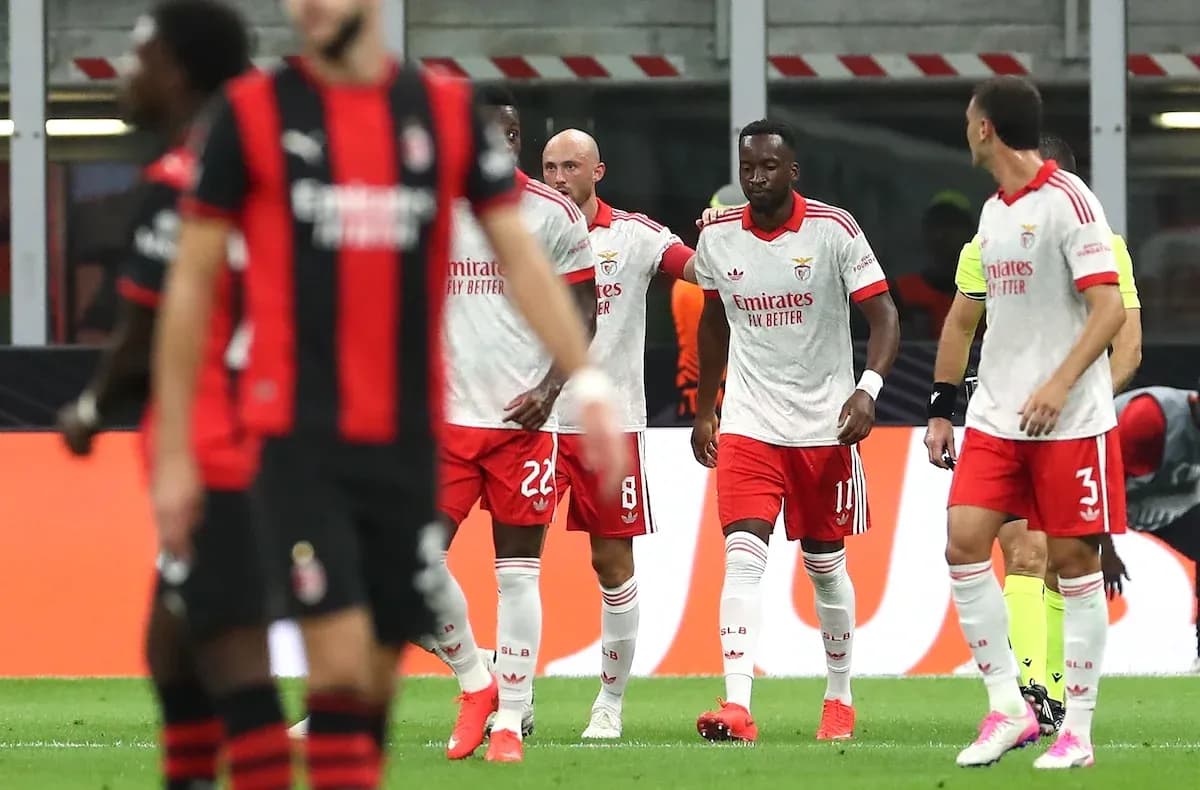
The early goal from Rafa Silva at 2' reflected this structural superiority. Benfica immediately established a high press, with the front two closing the Aarhus centre-backs and the advanced midfielders jumping onto the wing-backs and central midfielders. Aarhus struggled to play out; their 17 fouls compared to Benfica’s 10 illustrate how often they arrived late into duels as they chased shadows.
L. Barreiro’s role was pivotal. As the lone holding midfielder, he anchored transitions, allowing both full-backs to push high. His goal at 31' was the reward for consistently stepping into advanced zones when Benfica locked Aarhus in. With the back four spread across the halfway line and Barreiro patrolling in front, Benfica were able to sustain attacks and immediately counter-press any clearance. The 11 blocked shots for Benfica show how aggressively they attacked second balls and shooting opportunities around the box.
Aarhus, by contrast, could not connect their midfield to the front. The nominal 3-5-2 often collapsed into a flat 5-3-2, with the wing-backs forced so deep that the front pair were isolated. Their single shot on goal and single corner reflect a side living almost entirely in their own half. When they did find a way out, it was usually through quick vertical passes from midfielders like S. Jorgensen and J. Andersen, as seen in the 36' goal that briefly made it 2-1. But these moments were exceptions rather than a consistent pattern.
The penalty sequence around half-time was decisive tactically. The VAR-confirmed penalty for Vangelis Pavlidis at 45+1', converted at 45', restored a two-goal cushion and allowed Benfica to manage the second half with control rather than urgency. At 3-1 up, Benfica could afford to lower the tempo, circulate the ball, and force Aarhus to chase. With 71% possession overall, the match became a positional exercise rather than an end-to-end contest.
Substitutions reflected this game state. For Aarhus, the double change at 57' – R. Carstensen (IN) came on for C. Rosler (OUT) and S. Tchamche (IN) came on for S. Jorgensen (OUT) – suggested an attempt to refresh the right flank and inject more energy in midfield and attack. Later, J. Jonsson (IN) for M. Knudsen (OUT) and G. Links (IN) for F. Emmery (OUT) at 73', followed by M. Anderson (IN) for J. Bogere (OUT) at 81', were further efforts to find different profiles between the lines and in wide areas. Yet the underlying problem remained: Aarhus could not secure enough of the ball high up the pitch to make those changes tactically transformative.
Benfica’s substitutions were about load management and preserving control. R. Rios (IN) came on for L. Barreiro (OUT) at 66', keeping the single-pivot structure intact while adding fresh legs in the screening role. At 72', J. Duran (IN) for V. Pavlidis (OUT) and A. Schjelderup (IN) for G. Prestianni (OUT) maintained the same 4-1-3-2 shape but with new pressing energy and dribbling threat. Finally, F. Aursnes (IN) for G. Sudakov (OUT) and J. Kaminski (IN) for Rafa Silva (OUT) at 84' further solidified midfield control and allowed Benfica to see out the game without compromising their positional discipline.
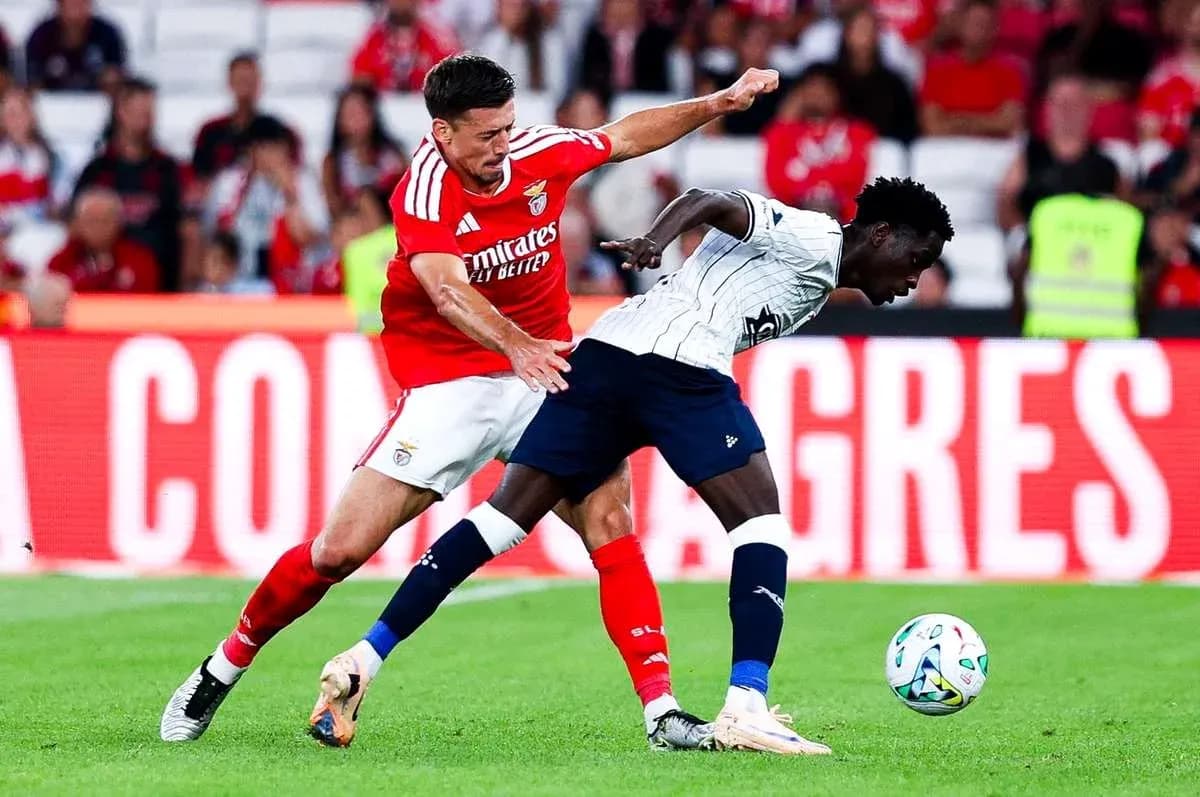
Defensively, Benfica’s back four of A. Bah, C. Lenglet, Tomás Araújo and S. Dahl benefited from the team’s territorial dominance. With Aarhus generating only 1 shot on goal and 1 blocked shot, the Benfica defensive unit was rarely exposed to sustained pressure. The 10 fouls committed by Benfica were largely tactical, stopping the few Aarhus transitions before they could develop.
From a statistical verdict, everything points to a match where the 3-1 scoreline actually flatters Aarhus. Thirteen shots on goal to one, eleven corners to one, and a 71%-29% possession split indicate that Benfica’s 4-1-3-2 not only controlled the ball but also consistently converted that control into penalty-box presence. Aarhus’ 17 fouls and single yellow card for Stefen Tchamche at 83' underline a reactive, chasing performance rather than an assertive pressing plan.
In the context of the UEFA Europa League Play-offs, this was a tactically mature home performance. Benfica imposed their structure early, used their pivot and advanced midfield line to dominate central spaces, and managed the game intelligently after establishing a lead. Aarhus’ 3-5-2 never solved the problem of progression under pressure, leaving them reliant on isolated moments rather than a coherent attacking scheme.