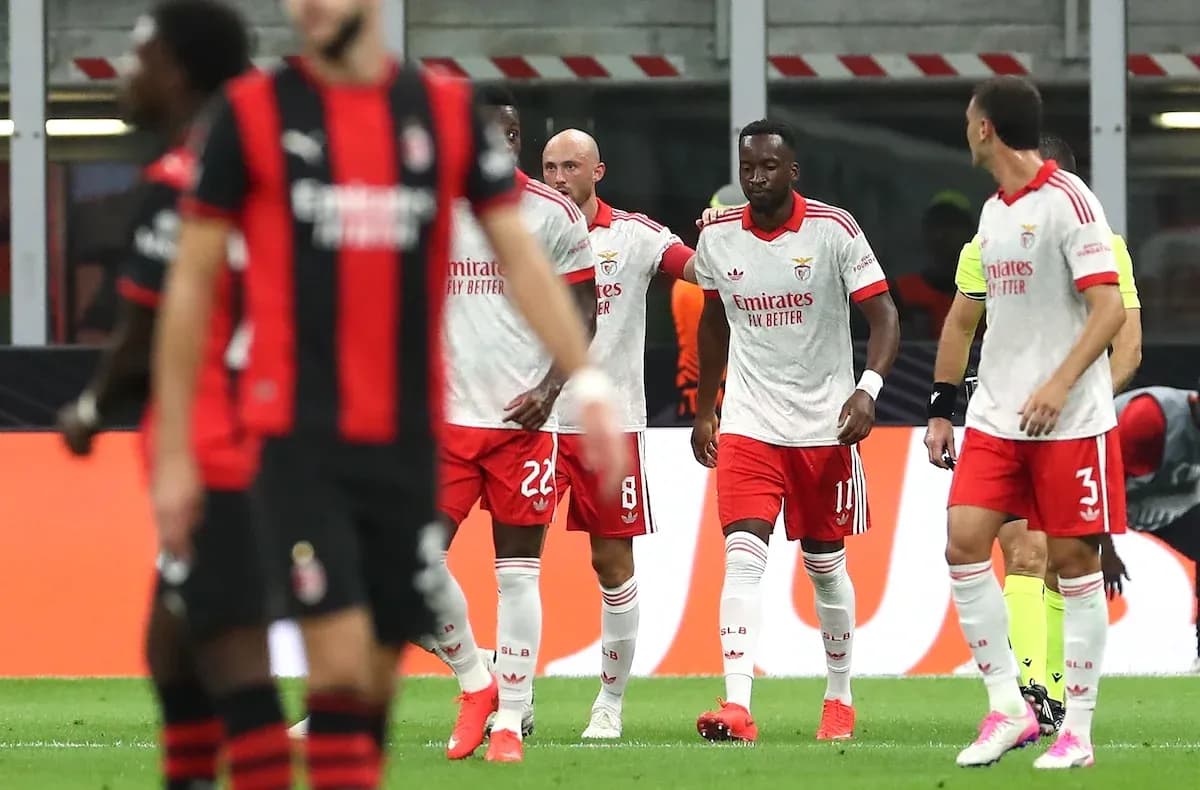
Benfica vs Celtic: UEFA Europa League Clash in Lisbon
On 15 October 2026, under the Lisbon lights, Benfica and Celtic meet again in the UEFA Europa League, this time in a wide-open league stage that could shape the rest of their European autumn. The venue name is not confirmed in the data, but the stage is set in Lisbon, where Benfica’s attacking form and Celtic’s fresh start collide in a game that already feels like a crossroads: for the hosts, a chance to turn early momentum into authority; for the visitors, the opportunity to plant a flag in Europe after a blank statistical slate.
Season Context
For now, the Europa League table is a clean sheet for Benfica: 0 games played, 0 goals scored, 0 conceded and 0 points, yet they are listed 4th in the overall league round. The ranking hides how dangerous they already look in this competition cycle, but on paper, they still start this league stage with everything to win and nothing yet recorded.
Celtic are in the same numerical position in terms of matches: 0 played, 0 goals for, 0 against, 0 points. They sit 9th in the league round with a “Play Offs” tag attached to their position, a reminder that even before a ball is kicked, the Scottish champions are expected to be in the mix for knockout contention if they can turn potential into results.
Form & Momentum
Benfica arrive with a powerful recent run behind them, even if the official Europa League standings still show 0 games. Their broader competition form reads “WWDWW”, a sequence that speaks of consistency and cutting edge (4 wins and 1 draw in their last 5 across 6 total fixtures). In those 6 matches they have scored 19 goals and conceded just 6, which works out to roughly 3.2 goals scored and 1.0 conceded per game — numbers that justify their reputation as one of the most explosive attacks in this Europa League field (19 goals in 6 matches) while remaining relatively secure at the back (only 6 conceded in 6).
Celtic, by contrast, are a mystery in this competition so far. Their Europa League statistics are a flat line: 0 matches, 0 goals for, 0 against, no wins, draws or losses. There is no form string to quote, and no evidence yet of how Brendan Rodgers’ side — or whichever coach leads this group — will translate domestic dominance and a revamped squad into continental performance. That unknown makes them dangerous in a different way: there is nothing recent in this tournament for Benfica to scout on paper.
Head-to-Head Patterns
The last time these two clubs shared a European pitch, the margins were tight but tilted towards Benfica. On 20 November 2012, Benfica edged Celtic 2-1 at Estádio do Sport Lisboa e Benfica in the UEFA Champions League (2-1, UEFA Champions League, season 2012, November 2012), a night that showcased the Portuguese side’s ability to find solutions at home when it mattered.
Earlier in that same campaign, on 19 September 2012 at Celtic Park, the sides cancelled each other out in a tense stalemate (0-0, UEFA Champions League, season 2012, September 2012), a result that underlined Celtic’s capacity to shut down Benfica’s attack on their own turf. Those are the only two competitive, non-friendly meetings in the data, and they paint a picture of a pairing where Benfica have been slightly more clinical while Celtic have shown they can drag the tie into a tactical arm-wrestle.
Tactical Preview
Benfica’s recent European blueprint is clear: high-tempo, front-foot football built on a flexible 4-2-3-1 that can morph into a more aggressive 4-1-3-2. The 4-2-3-1 has been their most used shape (3 matches), with the 4-1-3-2 close behind (2 matches), and the numbers back up the attacking intent: 19 goals in 6 fixtures and an average of 4.7 goals scored per home game in that sample underline how they overload the final third and flood the box with runners. V. Pavlidis is the headline act with 5 goals and 1 assist in just 3 appearances, a classic penalty-box forward who thrives on service, while Rafa adds incision between the lines with 2 goals and 1 assist in 4 games. Around them, A. Schjelderup, D. Lukebakio, J. Durán and G. Prestianni have all chipped in with goals, making Benfica multidimensional in attack (multiple forwards and attacking midfielders on the scoresheet).
Defensively, Benfica have conceded 6 goals in those 6 European fixtures, with only 2 allowed at home, which hints at a side that can press high without completely losing balance. C. Lenglet and Tomás Araújo have both contributed with goals from the back, but their primary value is in stabilising a team that often commits full-backs like A. Bah forward; Bah himself has 1 assist and a yellow card, a symbol of Benfica’s aggressive edge on the flanks (1 assist and 1 booking in 3 appearances).
Celtic’s tactical plan is harder to pin down because they have yet to play a Europa League fixture in this dataset. The squad list, though, suggests a blend of experience and athleticism: C. Carter-Vickers, K. Tierney and A. Trusty give them options for a solid back line, while C. McGregor and A. Oxlade-Chamberlain can control rhythm in midfield. Wide and attacking players like Yang Hyun-Jun, B. Nygren, K. Høgh and C. Durán hint at a side capable of transitioning quickly and attacking from wide zones. With no goals for or against in the competition yet, Celtic may lean on a compact shape and fast counters, especially away from home, to try to blunt Benfica’s firepower.
Statistical Snapshot
- Competition: UEFA Europa League, season 2026 — 15 October 2026.
- Venue: null, Lisbon.
- Prediction: null — Winner : Benfica.
- Win Probabilities: Home 50% / Draw 50% / Away 0%.
- Model: Benfica 73.5 — Celtic 26.5.
Betting Verdict
The analytical models lean clearly towards Benfica: the prediction tips them as winners, with a combined home-or-draw probability of 100% and a comparison index that favours the Portuguese side 73.5 to 26.5. That confidence is rooted in Benfica’s explosive recent European output (19 goals in 6 matches, with a last-five attacking index at the maximum and only 6 conceded) and the individual form of V. Pavlidis and Rafa, backed by a deep supporting cast. Celtic’s complete lack of recorded Europa League data this year, while making them unpredictable, also means there is no statistical case yet for them to outgun a Benfica team that scores freely and rarely fails to find the net (0 failed-to-score games in their 6-match sample). In narrative terms, everything points towards Benfica controlling the game and creating enough chances to justify backing the hosts, with the main risk factor being Celtic’s unknown ceiling rather than any evidence of sustained strength in this competition.