Bernadette Amani's Journey to Bayern Munich and WAFCON Leadership
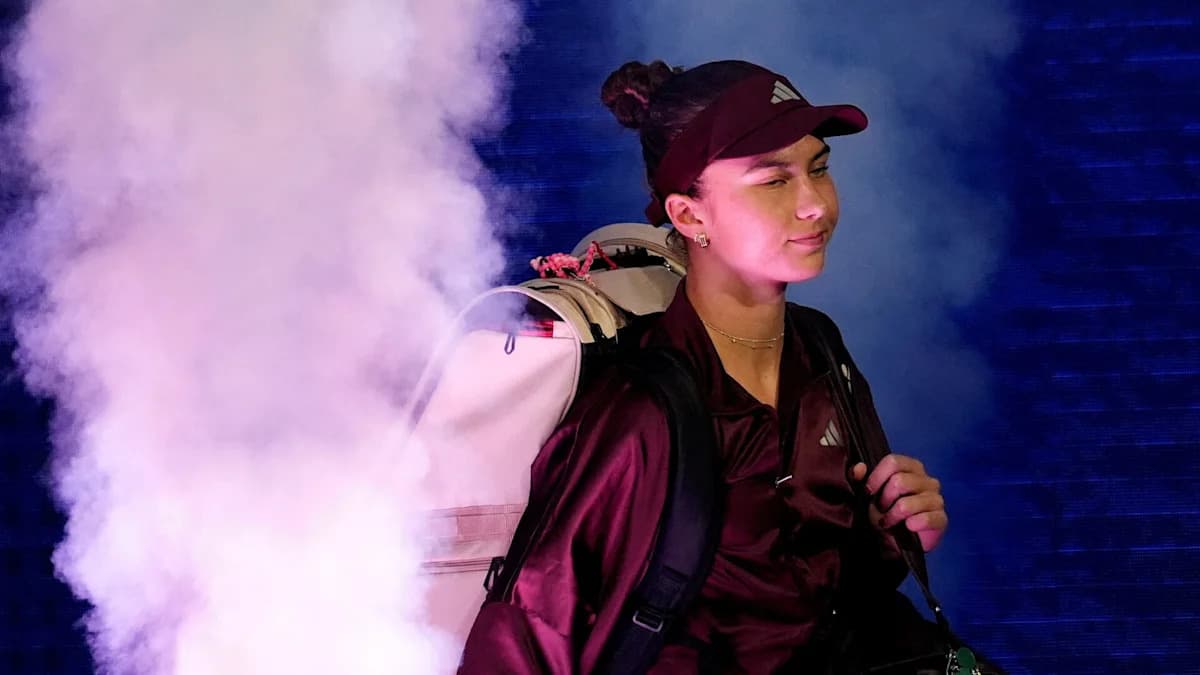
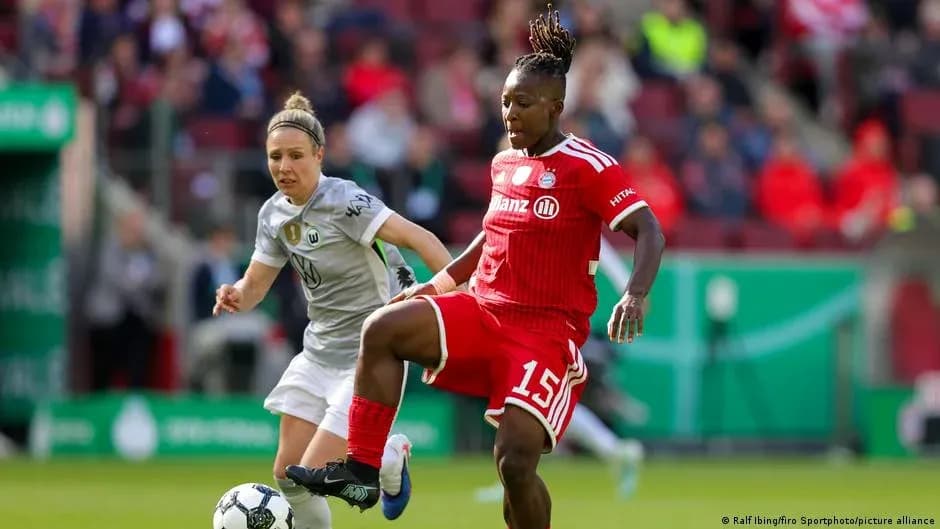
Seven months in Germany. Two trophies in the bag. Bernadette Amani has landed at Bayern Munich and, by her own account, right in the middle of her dream.
The 28-year-old midfielder arrived in January and promptly helped Bayern’s women secure a Bundesliga title and a German Cup. For a player who grew up kicking a ball with boys in a small Ivorian village, the leap is enormous, yet she speaks about it with a calm certainty that this is exactly where she is meant to be.
“Munich is a very, very big club,” she said in an interview with DW before the Women’s Africa Cup of Nations in Morocco. For her, it is not just a move. It is validation. “A real achievement, a dream come true to be here, to play for such a prestigious club.”
From village pitches to Bavaria’s elite
Nothing about Amani’s journey to the reigning German champions was straightforward. In Dougbafla, the idea that football could be a profession barely existed. Her parents didn’t see a future in it at all; they pushed her towards education, not a ball and a pair of boots.
That insistence took her to Abidjan, and that, in turn, changed everything.
In the capital she discovered an organised women’s league, real competition, real stakes. One match in particular in 2019 lit the fuse. She went to watch a top-of-the-table clash and found a different world.
She saw the intensity. She saw the technique. She heard that one player was missing because she was in Serbia, another because she was in Turkey. Those absences told their own story. Football, suddenly, was not just a pastime. It was a profession, a passport.
“It made me realize that I could make a living from what I love,” she recalled.
On that day, one of the teams on the pitch, Onze Soeurs de Gagnoa, offered her a trial. She took it. She passed it. Within a year she had left Ivory Coast for Spain’s third tier. Within five, she had climbed to Liga F with Eibar, then moved again to CD Tenerife Femenino. Each step was a rung on the ladder, each club a launchpad.
Tenerife turned out to be the springboard to the very top.
A different world at Bayern
Amani insists she was already a professional in Spain. But Bayern, she says, operates on another plane.
“I was already professional when I was in Spain, but let’s just say it wasn’t quite the same level of professionalism,” she explained.
The difference starts on the training ground. At her previous clubs in Spain or back home in Ivory Coast, the coaching staff might number five or six. At Bayern, it can be eight, even 10. Specialists everywhere. Extra eyes, extra voices, extra detail.
That infrastructure, she believes, forces players to grow. With that many experts around and a squad full of seasoned internationals, it becomes “virtually impossible” not to improve.
She talks about learning to see the game differently: where to stand, how to shape her body, when and how to receive the ball, how to think one step ahead. It is not just repetition. It is education.
“I’ve learned a great deal about aspects I wasn’t already aware of; how to position myself, how to position my body, how to interact with the ball and how to think,” she said. “Really understanding the game is something I’m gradually learning alongside the players and the coaching staff.”
Her description of Bayern as “the top” comes with a warning sign for herself. Arrival is not the end point.
“Someone on the outside will say to you: ‘You’ve put in the effort, you’ve made it to Bayern, a club that wins titles, that’s professional and renowned all over the world,’” she said.
From inside the game, the message is harsher: this is where the real work starts. “Staying there is even better. And it’s hard not to let your guard down.”
Captain of a returning force
For now, her battle to stay at Bayern pauses. The shirt changes. The responsibility grows.
At WAFCON 2026 in Morocco, Amani is captain of Ivory Coast, leading a national team back on the continental stage after a 12-year absence. The Lady Elephants were only added late, one of four extra teams when the competition expanded from 12 to 16 nations, but the expectations inside the camp are clear.
“The target that has been set for us is, of course, to do no worse than we did at the last Africa Cup of Nations we took part in — that is, to finish third,” she said.
That 2014 campaign set a standard. This time, the squad looks different. More Ivorians now play in Europe’s top leagues, a sign of quiet progress across the last decade. At the same time, almost half the current group are WAFCON debutants, stepping into this stage for the first time.
It is a blend that could unsettle some teams. Amani sounds anything but rattled.
“We’re going to focus on our own game, and we know that we’ve got qualities that could give our opponents a run for their money,” she said.
Statement start in Casablanca
On Monday in Casablanca, those words carried weight. Ivory Coast dismantled Burkina Faso 4-1 in their Group B opener, a result that did more than simply settle nerves. It put them top of the group and announced their return in style.
The goals, the control, the swagger – it all hinted at a side that has not come back just to make up the numbers.
Now comes a very different challenge. On Friday, Amani and her teammates face South Africa, officially the second-ranked team on the continent and one of the established powers in the women’s game in Africa.
On paper, it is the toughest assignment in the group. In reality, the picture has already shifted. South Africa stumbled badly in their first match, losing 2-1 to a Tanzania side few expected to trouble them. That result cracked the group wide open and handed Ivory Coast a chance to seize early control.
For Amani, it is another test of how far she has travelled – from Dougbafla to Abidjan, from Spain’s lower leagues to Bayern’s title celebrations, and now from a late WAFCON invite to the captaincy of a resurgent national team.
She has already discovered that reaching the top is only the beginning. Over the next few weeks in Morocco, the question is whether Ivory Coast can learn that same lesson, and stay there long enough to reclaim their place among Africa’s elite.