Boavista: The Club That Nearly Ended Celtic's Dreams
A name that once echoed around Europe has been silenced.
Boavista, the stubborn, streetwise club from Porto who twice stood in Celtic’s path in continental competition, have been ordered to cease all activities by 31 July 2026. A court ruling, driven by years of unpaid debts and failed restructures, has effectively pushed the 2001 Portuguese champions into extinction.
For Celtic supporters of a certain age, the news lands with a jolt. This isn’t just another foreign club in financial trouble. This is the team that shared a semi-final stage with Martin O’Neill’s Celtic in 2003, the side that forced Henrik Larsson to drag his team over the line. This is a club woven into two very different eras of Celtic’s European story.
From Hoops and Numbers to Heroes in Porto
The first meeting came in 1975, in the Cup Winners’ Cup. On paper, it was routine. In reality, it marked a small but significant milestone in Celtic’s history.
Celtic travelled to Portugal and ground out a 0-0 draw in Porto, a solid European away performance in the days when clean sheets on the road were gold dust. Two weeks later, under the lights at Celtic Park, they finished the job with a 3-1 win, taking the tie 3-1 on aggregate.
Kenny Dalglish scored. Shuggie Edvaldsson scored. Dixie Deans scored. The names alone tell you the era.
Those famous green-and-white hoops carried something new that night as well: squad numbers on the back. For the first time, Celtic’s iconic jersey was paired with the modern detail that would soon become standard. A traditional club taking a small step into a new footballing age, against opponents who would return to their story nearly three decades later.
The Semi-Final That Shook Celtic Park
Most Celtic fans, though, think of Boavista and go straight to 2003.
The UEFA Cup semi-final. The O’Neill years in full roar. Celtic Park at its loudest, Europe taking notice again.
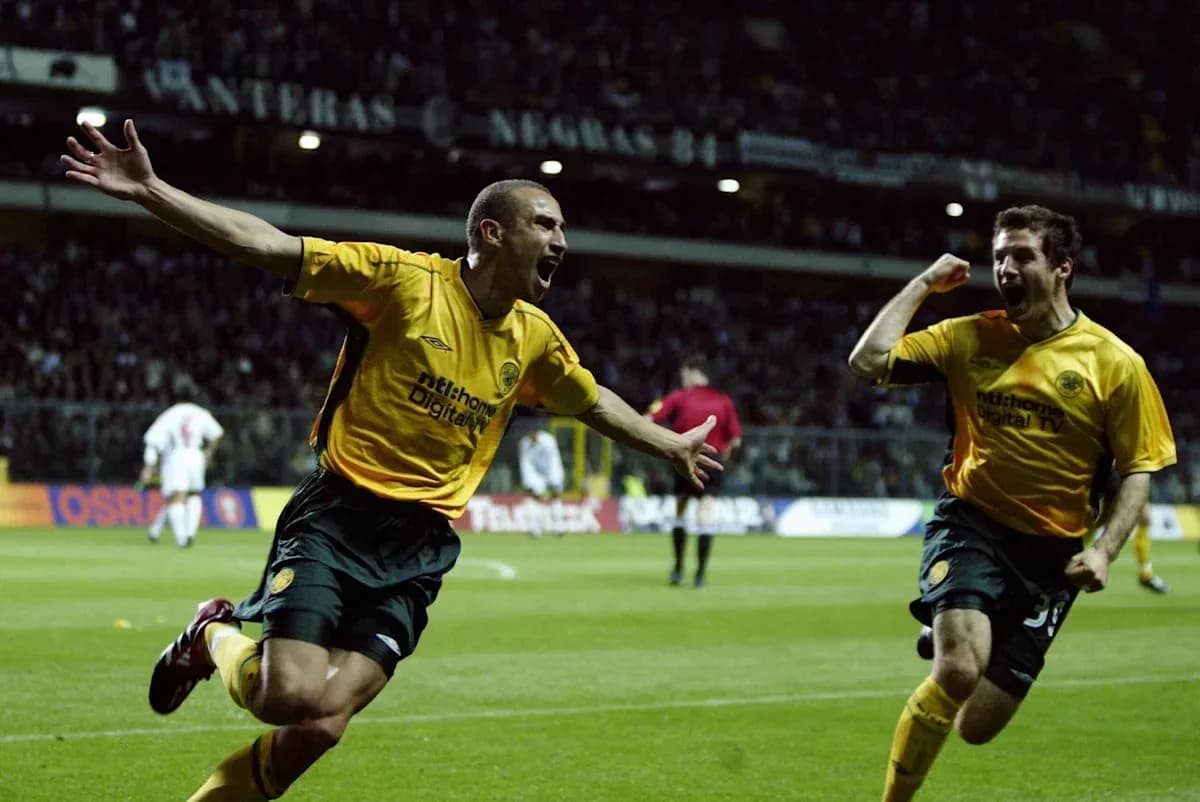
The first leg in Glasgow finished 1-1. Boavista were awkward, disciplined, and unapologetically cynical when they had to be. They scored an away goal and left with the tie finely balanced. Celtic had dominated large spells, but it was Larsson who had to step up and salvage the draw, the Swede levelling to keep the dream alive.
Two weeks later, at the Estádio do Bessa, the tension was suffocating. Boavista sat deep, played the percentages, and tried to smother Celtic’s rhythm. They were never a glamour side, but they were experts in the dark arts of knockout football.
Larsson broke them.
His goal in Porto sealed a 1-0 win on the night and a 2-1 aggregate victory, sending Celtic to a European final for the first time since 1970. The opponents in Seville would be Boavista’s city rivals, Porto. The memories of that final remain raw enough that some still prefer to skip the details. But the semi-final? That was pure Celtic folklore.
Martin O’Neill hugging Larsson at full-time in Porto. The away end in delirium. A modest club in black and white hoops forced to bow to a Celtic side charging towards history.
The Rise and Ruin of Portugal’s Fourth Power
Boavista were never supposed to be here, on the brink of disappearing altogether.
Founded in 1903, they built a reputation as the scrappers from Porto who could punch above their weight. Nine major honours, including that extraordinary Primeira Liga title in 2001. To this day, they remain the only club outside Benfica, Porto and Sporting to have been crowned champions of Portugal in the modern era.
That title was no fluke. It was the peak of a long, patient climb. Boavista had carved out a place as Portugal’s fourth force, a club capable of unsettling the established order. Their compact ground, their uncompromising style, their habit of making life miserable for bigger names – it all fed into a distinct identity.
But the financial foundations were never as sturdy as the team’s defensive shape.
The cracks began to show years ago. Transfer bans bit hard: five windows in which they were barred from signing players. When the restriction lifted, the response was desperate rather than strategic. In February 2025, they signed nine players in a single day, a frantic attempt to rebuild a squad that had been hollowed out.
The gamble failed.
In 2024/25, Boavista slid to the bottom of the Primeira Liga. On the final day, a 4-1 defeat away to Arouca sealed their relegation. Around 2,000 travelling fans watched it unravel, some of them spilling onto the pitch in anger and disbelief. The club’s fall from champions to basement was complete.
The Portuguese league authorities then barred Boavista from taking their place in Liga Portugal 2. Relegated side Oliveirense were handed a reprieve. Boavista were handed another blow.
A Club Unravels
The descent didn’t stop there.
In 2025, Boavista were refused registration in both the third-tier and fourth-tier Campeonato de Portugal. To keep any semblance of the institution alive, a new company structure was created, with a team entered into the Liga Pro – the new elite league under the Porto Football Association.
The original club, determined not to vanish from the map, placed a side in the fourth division of the district leagues. Supporters rallied around it, trying to preserve something of Boavista’s soul.
But a club cannot live on sentiment alone. Boavista began forfeiting matches by default, simply failing to show up. By the end of October, that team had withdrawn from competition. The badge still meant something. The organisation behind it was crumbling.
On 16 July 2026, the final act arrived. A court ordered Boavista to cease all activities by 31 July and to hand over their premises. Years of unpaid obligations to creditors, failed restructures, and mounting losses had caught up with them. There would be no more reprieves, no more last-minute rescues.
The club that once stopped Celtic in their tracks, then almost stopped them in their stride, is now a ghost.
A Name, a Memory, and a Question
For Celtic, Boavista will always be part of the journey. From Edvaldsson and Deans in 1975 to Larsson in 2003, their black-and-white hoops are stitched into some very different chapters of the club’s European history.
For Portuguese football, their loss is heavier. This was the club that dared to gatecrash the big three, that proved the title could be prised from Lisbon and the Dragão by a smaller, hungrier outfit from the same city.
Boavista failed to pay their debts. The courts have closed the book. On paper, that is the end.
But football has a habit of resurrecting its fallen. Badges reappear. New companies form. Names return with an extra word or two attached. The talk in Porto will now turn to whether something called Boavista FC can rise from the wreckage.
If it does, it will be starting from the bottom, stripped of status but not of history. And somewhere in Glasgow, there will be those who remember the nights when that name on a European draw meant a battle was coming.