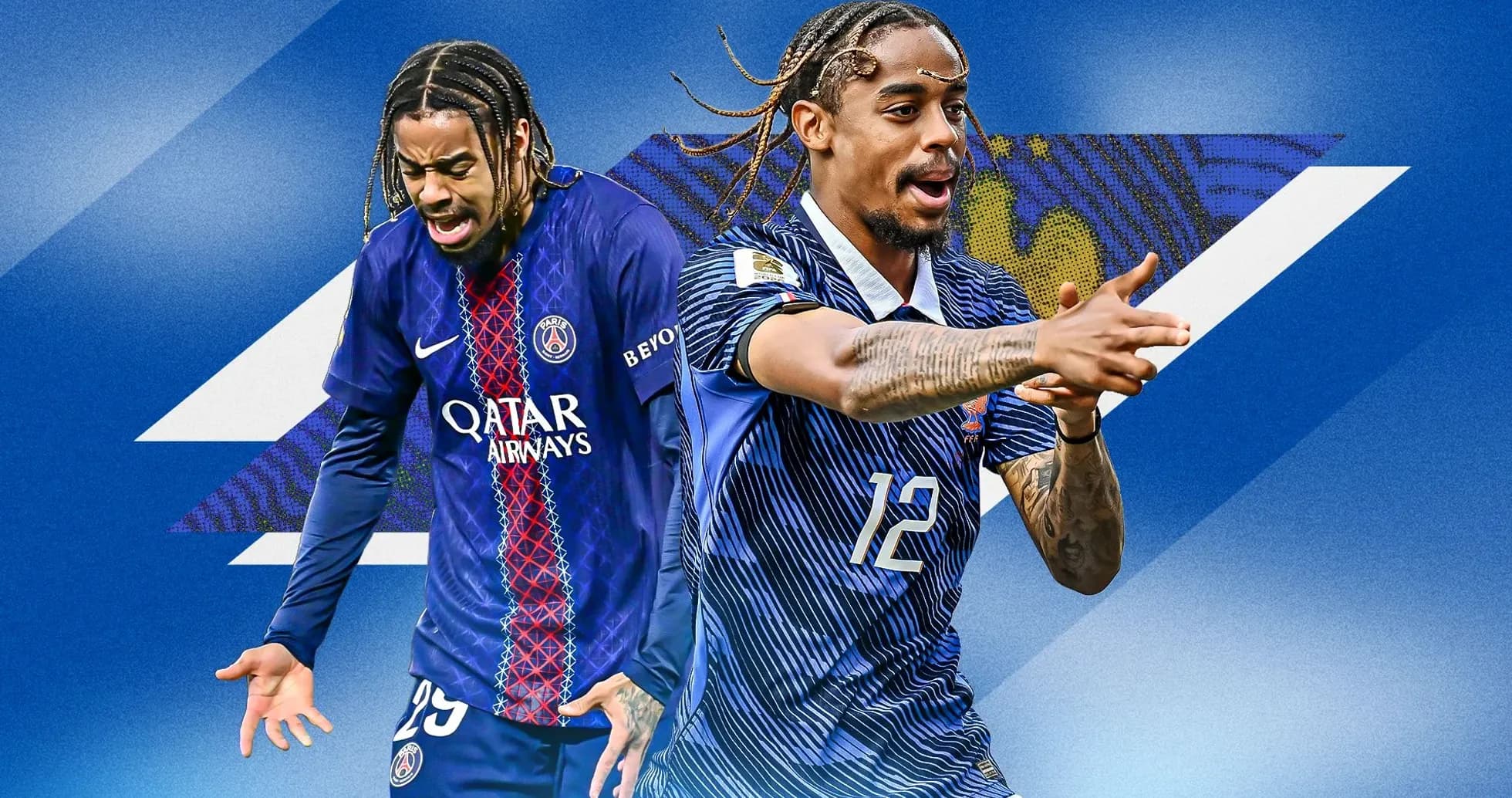
Bradley Barcola's PSG Journey: From Starlet to Bystander
Three years on from his move from Lyon to Paris, this was not the script Bradley Barcola had in mind.
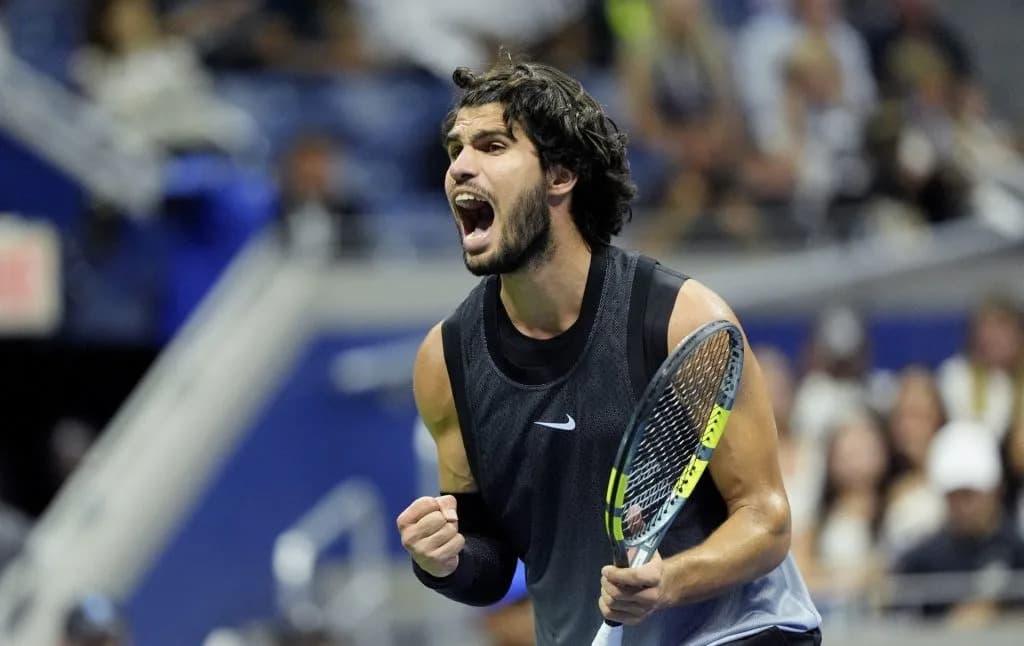
By 23, he expected to own the left flank at the Parc des Princes, to be the undisputed starter for PSG and a fixture for France. Instead, he finds himself trapped in a strange limbo: too talented to ignore, never quite trusted enough to build around.
From breakout to bystander
The numbers say one thing, the team sheet another.
Barcola’s debut season in Paris was more than respectable, yielding 14 goal contributions and hinting at a long-term solution on the left after Kylian Mbappé. PSG, though, saw room for more. In the summer of 2024 they moved for Desire Doue, another bright young winger, and then detonated the market in January 2025 with the arrival of Khvicha Kvaratskhelia.
Instead of stepping into Mbappé’s shadow, Barcola suddenly found himself fighting on two fronts.
He responded in the only way he knows: with production. The 2024-25 campaign was extraordinary on paper – 21 goals and 21 assists – the kind of return that usually turns a player into a franchise piece. Yet when the season reached its sharp end, Luis Enrique’s trust wavered. Barcola was regularly overlooked in the biggest fixtures, including the Champions League final against Inter, and rarely allowed to finish 90 minutes when he did start.
That pattern hardened last season. In 2025-26 his output slumped to 13 goals and seven assists, and his role shrank with it. Enrique routinely rotated in Ligue 1 to keep his “untouchables” fresh for Europe; Barcola did not fall into that protected category. He did not start any of the quarter-final, semi-final or final in another Champions League-winning run. In Ligue 1, he watched from the bench as an unused substitute against Lyon and Monaco, the sort of domestic showpieces in which a supposed cornerstone should be central.
For a player of his age and ambition, the message was impossible to miss.
A super-sub in blue
The same story is playing out in a different shirt.
Barcola’s France career, like his club trajectory, has been more staccato than symphony. He arrived at this World Cup with the profile to become Les Bleus’ mainstay on the left. Instead, he opened the tournament on the bench against Senegal.
He needed only two minutes to change that narrative.
Thrown on as a substitute, Barcola scored the decisive goal against the African champions, a sharp, clinical intervention that underlined his knack for instant impact. Didier Deschamps rewarded him with a start against Iraq on matchday two. That was the chance to grab the jersey. He didn’t quite do it. The performance lacked the same edge, and he was back among the substitutes for the final group game against Norway.
Again, he came alive from the bench. With 25 minutes to play, Barcola delivered a precise cross for Doue to head home late, adding gloss to the scoreline and reminding everyone of his creative range.
Deschamps went back to him from the start in the last-32 tie with Sweden. Barcola delivered once more, smashing home a fine second-half finish in a game dominated by a virtuoso display from Michael Olise. It felt, briefly, like a turning point.
He finally kept his place for the round-of-16 clash with Paraguay. This time, the spark deserted him. In a bad-tempered 1-0 win, Barcola drifted through the contest, unable to impose himself. As France prepare for a quarter-final against Morocco, his place is again under threat.
Starter, substitute, scorer, spectator. His World Cup is a mirror of his club life: decisive in moments, peripheral in status.
Contract stalemate and a changing stance in Paris
All of this plays out against a tense backdrop at PSG.
Talks over a new contract have stalled. Barcola’s deal runs until 2028, but negotiations are frozen as he questions his place in the hierarchy. He wants guarantees of importance; PSG, by their actions, are offering competition instead.
Earlier in the summer, the message from Paris was blunt: not for sale. The club were said to value him at a figure “much higher” than the £116 million Manchester City paid Nottingham Forest for Elliot Anderson, according to The Athletic. Barcola, at least officially, was beyond reach.
That position has softened.
Speaking on his YouTube channel this week, transfer specialist Fabrizio Romano captured the shift: “Until last week, Barcola was untouchable; now I see him linked to several clubs. The reality is that Barcola is not untouchable. Barcola has serious possibilities to leave Paris in the summer transfer window.”
PSG have not suddenly fallen out of love with his talent. They have simply spotted an opportunity they are unwilling to ignore.
The Diomande domino
The European champions are circling one of the breakout stars of 2025-26: RB Leipzig and Ivory Coast sensation Diomande.
Liverpool were widely reported to be leading the race for the 19-year-old, with a deal worth around €100 million being discussed. Then the dynamic flipped. It emerged that Diomande favours a move to Paris, convinced that Luis Enrique’s project offers the best platform to win trophies and, one day, the Ballon d’Or.
Leipzig, emboldened, are believed to value him at around €130m. Even for PSG, that is a fee that demands some financial choreography.
Gonçalo Ramos has already gone to AC Milan. Lee Kang-in is set to join Atletico Madrid. Yet a signing on the scale of Diomande would likely require more room on both the balance sheet and the team sheet. For Barcola, the writing is clear enough. If Diomande walks through the door, his minutes – already fragile – come under even greater threat.
At that point, a transfer stops being a possibility and starts to look like a necessity.
Liverpool’s opening
This is where Liverpool re-enter the frame, potentially as the surprise winners of a race they are about to lose.
Miss out on Diomande, gain Barcola. On Merseyside, that equation makes more sense than it first appears.
The Reds are rebuilding their attack after Mohamed Salah’s departure. Victor Munoz has arrived, and new manager Andoni Iraola must carefully manage the rise of prodigy Rio Ngumoha, who does not turn 18 until the end of August. What he lacks is a ready-made, Champions League-hardened winger in his prime years, someone who can start from day one and absorb the immediate pressure of replacing a global star.
Barcola fits that brief.
At Anfield, he would not be fighting Kvaratskhelia, Doue and potentially Diomande for a single lane on the left. He would be walking into a vacancy. His profile – direct, creative, capable of both scoring and supplying – dovetails with Iraola’s aggressive, front-foot style. Crucially, he would finally have the “certain-starter” status he craves.
Liverpool, for their part, need a marquee arrival to soften the emotional and tactical blow of losing Salah. There are not many attainable players on the market with Barcola’s combination of pedigree, age and Champions League experience. Compared with the younger, less battle-tested Diomande, he offers a more immediate guarantee.
What began as a setback in one pursuit could become the solution in another.
“Honestly, I don’t know”
If there were any doubts that a move is on the table, Barcola himself has cleared them up.
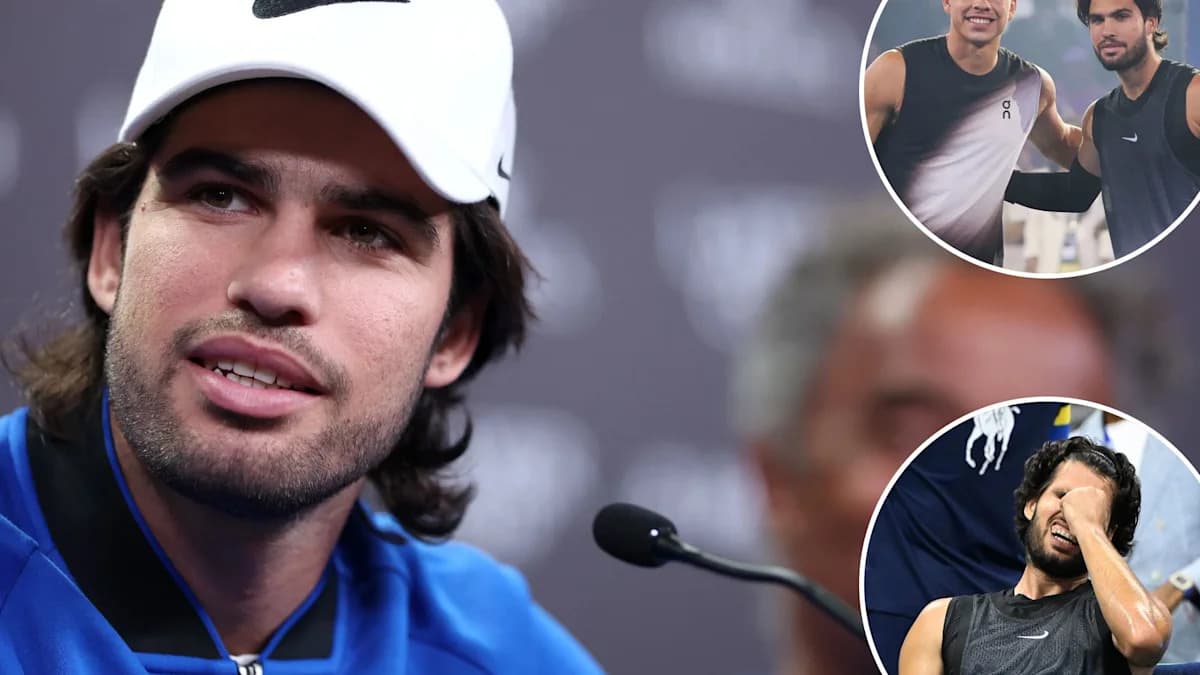
“Right now, I’m really focused on the World Cup,” he said in a France press conference before facing Paraguay. “But regarding what happens afterward, honestly, I don’t know at the moment.”
That is not the language of a player settled in his surroundings. It is the sound of someone waiting for the next door to open.
PSG’s pursuit of Diomande, their shifting stance on his “untouchable” status, and his own stop-start role for club and country have converged into a simple reality: Barcola has outgrown the margins. He needs a stage that treats him as central, not optional.
Whether that stage is Anfield or elsewhere, the next move will define his career. Does he stay and gamble on forcing his way past a new wave of stars in Paris, or walk away to become the focal point he always believed he would be?
For a player once earmarked as Mbappé’s heir, the time for hovering on the fringes is over.