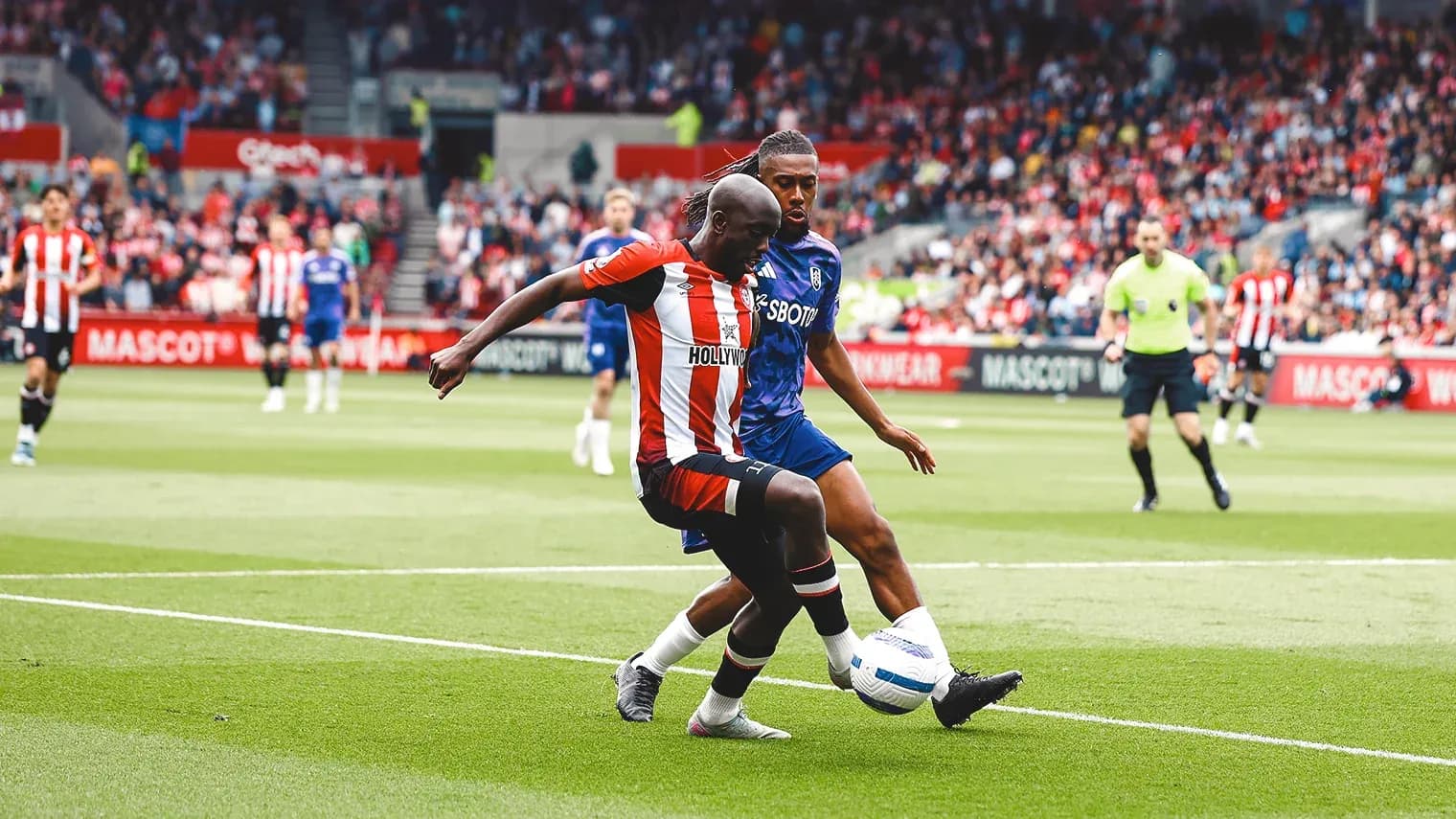
Brentford and Fulham Share Points in Tactical Stalemate
Under grey west-London skies at the Brentford Community Stadium, two sides with contrasting trajectories but similar ambitions shared a goalless stalemate. Following this result, Brentford remain a top‑half force, sitting 7th with 48 points and a goal difference of +4 (48 scored, 44 conceded) after 33 matches. Fulham, for their part, stay in mid-table at 12th on 45 points, their goal difference a narrow -3 (43 for, 46 against).
Both managers leaned into their seasonal identities. Brentford once again trusted the 4‑2‑3‑1 that has been their primary shape in 25 league outings, while Marco Silva matched them with Fulham’s own favoured 4‑2‑3‑1, a system he has rolled out 30 times this campaign. The outcome – 0-0 – ran against the grain of Brentford’s usually productive home form, where they average 1.6 goals for and 1.1 against, and Fulham’s more fragile away record, with just 0.9 goals scored and 1.6 conceded on their travels.
For Brentford, the point extends a curious run of draws – their form line now reads “DDDDD” – evidence of a side difficult to beat but struggling to turn control into wins. Fulham, inconsistent at the best of times with a “DLWDL” sequence heading into this game, will quietly accept an away clean sheet against one of the division’s sharper home attacks.
Tactical Voids and Discipline
This was a match shaped as much by absences as by those on the pitch. Brentford were heavily stripped of depth and variety. F. Carvalho and J. Dasilva were both missing with knee injuries, removing two ball-carrying midfielders who could have altered the rhythm between the lines. The absence of V. Janelt (foot injury) robbed Keith Andrews of a natural organiser and presser in the double pivot, while R. Henry’s muscle injury and K. Furo’s groin problem further thinned the defensive options. J. Henderson (knock) and A. Milambo (knee injury) added to a long list that forced Brentford to lean hard on the available core.
Fulham’s list was shorter but still significant. Kevin and K. Tete, both ruled out with foot injuries, limited Silva’s full-back rotation and slightly narrowed his options for altering the defensive balance late on. With Tete absent, Timothy Castagne’s role at right-back became non-negotiable, demanding 90 minutes of concentration against Brentford’s left-sided rotations.
In disciplinary terms, this fixture always had the potential to simmer. Brentford’s season-long yellow card profile shows a clear late-game spike: 25.86% of their bookings arrive between 76-90 minutes, with another 22.41% in the 61-75 band. Fulham, meanwhile, are serial offenders in the closing phases too, taking 19.70% of their yellows from 76-90 and a striking 24.24% in added time (91-105). That shared tendency for late fouls framed the final quarter as a zone of risk for both managers, especially with Brentford already having one red card on their record this season – issued in the 31-45’ window – and key attacking figures like K. Schade and Thiago carrying multiple yellows across the campaign.
Crucially, neither side has been undermined by penalty misses this season: Brentford have scored 7 of 7 penalties overall, while Fulham are 4 from 4. The one blemish comes from Thiago, who, despite 7 penalties scored, has missed once in league play – a reminder that even elite takers are fallible under pressure.
Key Matchups – Hunter vs Shield, Engine Room
The headline duel was always going to be Thiago against Fulham’s rearguard. The Brazilian arrives as one of the league’s most prolific forwards: 21 total goals and 1 assist in 33 appearances, underpinned by 61 shots and 39 on target. He is not merely a poacher; 558 completed passes with 20 key passes, 32 tackles, and 5 blocked shots paint the picture of a centre-forward who presses, contests and links play.
Against him stood a Fulham defence that, on their travels, has conceded 27 goals in 17 matches – an average of 1.6 away goals against. That vulnerability made this a classic “Hunter vs Shield” scenario: could Thiago’s penalty-box gravity and aerial presence break a unit that has shown both resilience (3 away clean sheets) and fragility? The 0-0 suggests Fulham’s back four, marshalled by B. Leno and the central pairing of J. Andersen and C. Bassey, managed to compress the spaces Thiago thrives in, often forcing him into duels rather than clean looks at goal.
Wide of him, K. Schade represented Brentford’s chaos agent. With 7 goals, 3 assists, 64 dribble attempts (19 successful), and a hefty 382 duels contested – plus 6 yellows and 1 red – Schade brings both incision and volatility. Fulham’s left side, anchored by R. Sessegnon, had to absorb his direct running while staying disciplined; any lapse risked inviting the kind of late-game yellow that Fulham accumulate so frequently.
In the “Engine Room”, the contest between Brentford’s double pivot and Fulham’s creative axis defined the rhythm. For Brentford, Y. Yarmolyuk and M. Jensen were tasked with screening the back four and feeding the attacking trio of D. Ouattara, M. Damsgaard and Schade. Opposite them, S. Lukic and T. Cairney had to balance ball progression with tracking runs from deep.
Yet the true conductor for Fulham was H. Wilson. His season numbers – 10 goals, 6 assists, 698 passes at 80% accuracy, and 33 key passes – mark him as one of the league’s premier chance creators. Operating from the right in the 4-2-3-1, Wilson’s duel with K. Lewis-Potter at left-back was pivotal. Lewis-Potter, nominally a defender here, had to respect Wilson’s left foot, preventing him from cutting inside into shooting and crossing zones. The fact Fulham failed to score despite Wilson’s influence suggests Brentford’s structure, with S. van den Berg and N. Collins centrally, held its shape impressively.
Further forward, the presence of Rodrigo Muniz as Fulham’s lone striker and the option of R. Jimenez from the bench gave Silva varied profiles to test Brentford’s centre-backs – Muniz more penalty-box focused, Jimenez more rounded, with 9 goals and 3 assists plus 351 duels contested this season. Yet neither could tilt the balance decisively.
Statistical Prognosis and Tactical Verdict
From a statistical lens, the goalless scoreline sits slightly at odds with the underlying attacking tendencies. Heading into this game, Brentford were averaging 1.5 total goals for per match and 1.3 against, Fulham 1.3 for and 1.4 against overall. The combined profile hinted at a contest with goals at both ends rather than a stalemate.
However, both sides have a notable capacity for clean sheets – Brentford with 9 overall (4 at home, 5 away), Fulham with 7 (4 at home, 3 away) – and both managers set up in their most stable shapes. The mirrored 4‑2‑3‑1 structures effectively cancelled each other out: double pivots screening central zones, full-backs cautious in their advance, and creative hubs like Wilson and Damsgaard often forced wide rather than allowed to operate in the half-spaces.
In xG terms – even without explicit values – the patterns of the season suggest Brentford likely shaded the quality of chances at home, given their stronger scoring average and Thiago’s individual shot volume. Yet Fulham’s disciplined block, backed by Leno’s command of his area, kept the hosts at arm’s length.
The tactical verdict: this was a match where structure beat chaos. Brentford’s attacking ceiling, embodied by Thiago and Schade, met a Fulham side that, despite their away frailties across the season, executed a compact, low-risk game plan. Both teams’ late-game card tendencies may have tempered the aggression in the closing stages, with players wary of costly bookings or dismissals.
For Brentford, the draw underlines their solidity but raises questions about turning territorial control into goals against organised mid-table opponents. For Fulham, a point and a clean sheet away to a top‑seven side reinforces their capacity to frustrate better attacks, even if their own offensive output remains patchy on the road.
In the broader campaign arc, this 0-0 feels less like a missed opportunity and more like a tactical stalemate between two 4‑2‑3‑1 systems that know themselves well – a game where the numbers promised more, but the structures, and the absences, kept the story locked at nil-nil.