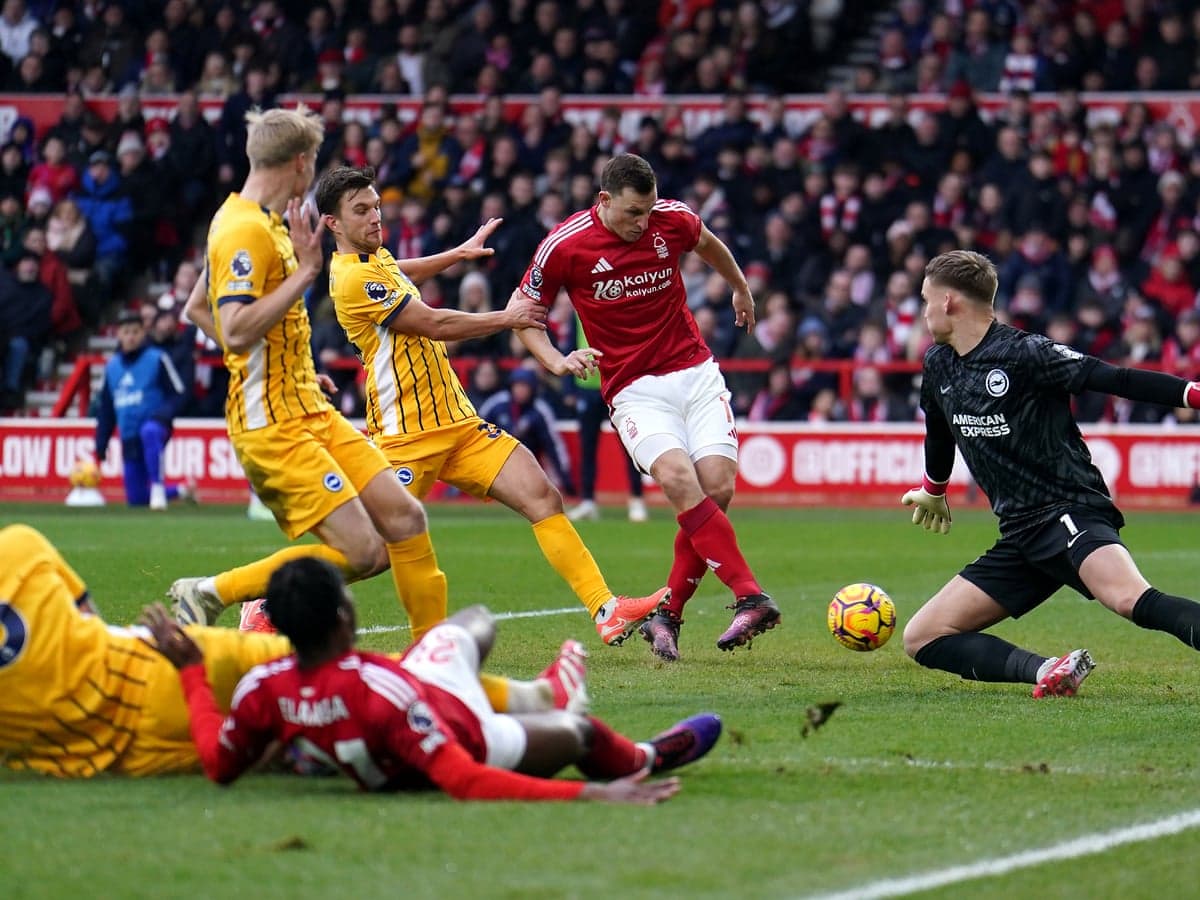
Brighton Outmaneuvers Forest in Tactical Battle at Amex Stadium
Brighton’s controlled edge and compact structure outmanoeuvre Forest’s late pressure at Amex Stadium, both teams mirrored each other in a 4-2-3-1, but Brighton used their slight possession edge (54% to 46%) to dictate the tempo for long stretches. Their circulation through Pascal Gross and James Milner aimed at structured progression rather than sheer volume, reflected in 522 total passes with 453 completed at 87% accuracy. Forest were not pinned back, but their 444 passes at 86% accuracy suggest more balanced, end-to-end phases rather than sustained dominance. Brighton’s possession was largely effective, generating the better xG and more shots on target, while Forest’s periods of control often ended against a settled Brighton block.
Offensive Mechanics & xG Analysis
Brighton’s attacking plan was about controlled shot quality rather than overwhelming volume. They produced 14 total shots to Forest’s 13, but crucially hit the target more often (7 shots on goal versus 4). That superiority is underlined by xG: Brighton at 1.32 against Forest’s 0.79, indicating more consistent access to higher-quality shooting positions. The even split between shots inside and outside the box (7 each) shows a mix of patient box entries and willingness to shoot from range when Forest’s block held.
Forest’s 13 shots were less efficient in terms of danger. Matching Brighton’s 7 shots inside the box but finishing with a lower xG points to more rushed or wide-angle efforts. The standout defensive stat is Forest’s 6 blocked shots conceded, meaning Brighton’s efforts were often only denied by last-ditch defending. That level of emergency blocking indicates that Brighton were regularly able to work the ball into threatening zones, forcing defenders to step out and sacrifice their shape. Both sides had 4 corners, suggesting neither team completely hemmed the other in, but Brighton’s superior on-target count and xG imply their territorial phases translated into more meaningful final-third pressure.
Defensive Intensity & Game Management
The foul count (13 for Forest, 12 for Brighton) points to a physically balanced contest rather than one side constantly breaking up play. Brighton’s three yellow cards, all for fouls and arriving after the interval (55’, 84’, 90+3’), illustrate a conscious shift into game management: tactical fouling to disrupt Forest’s rhythm as they chased the equaliser. Forest’s single booking, for simulation at 30’, reflects frustration rather than sustained aggression.
In goal, Brighton’s Bart Verbruggen needed only 3 saves, while Forest’s Matz Sels made 5, reinforcing the idea that Brighton generated the clearer chances. With no reds and most cautions late, Brighton managed the closing stages with a compact block and controlled cynicism rather than chaos.
Brighton’s slightly superior possession, cleaner chance creation (higher xG, more shots on target) and disciplined late-game fouling allowed their 4-2-3-1 structure to out-perform Forest’s more reactive, last-ditch defending and lower-quality shooting.