Brighton W vs Manchester City W: FA WSL Clash Preview
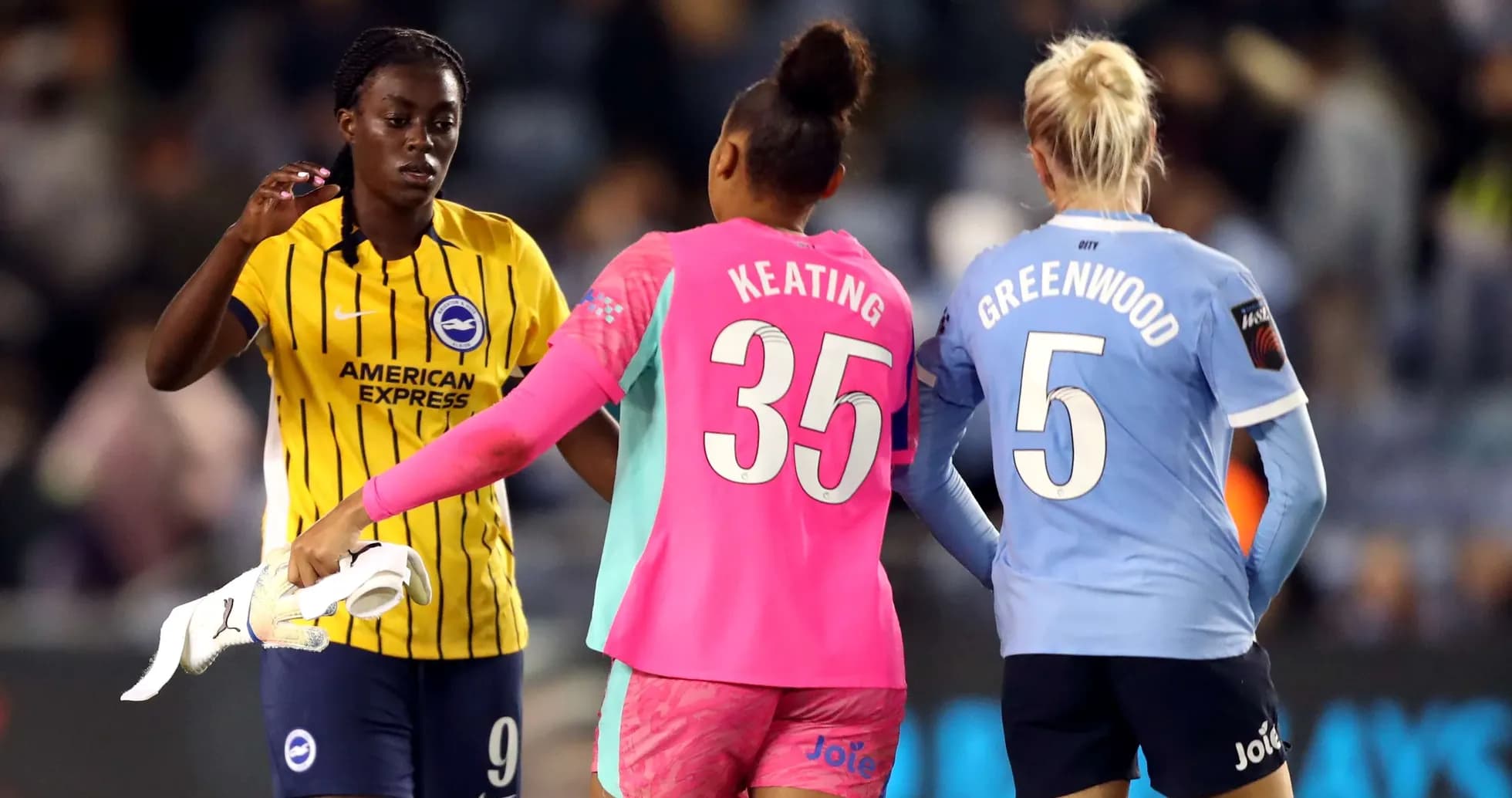
The Broadfield Stadium in Crawley stages a classic top‑versus‑mid‑table clash in the FA WSL regular season on 25 April 2026, as sixth‑placed Brighton W host leaders Manchester City W. With Brighton still looking to lock in a solid top‑half finish and City pushing hard to convert their position into the title, the stakes are clear even if this is not a cup tie: one side is fighting to protect its status, the other to maintain a champions’ pace.
Context and stakes
In the league, Brighton come into this round 20 fixture sitting 6th on 21 points from 18 matches, with a goal difference of -1 (21 scored, 22 conceded). Their form line of “WDLLL” underlines how fragile their recent trajectory has been: one win and one draw followed by three straight defeats.
Manchester City W, by contrast, arrive as the division’s benchmark. They are top of the table with 49 points from 19 games, boasting 16 wins, one draw and only two defeats. A goal difference of +40 (55 for, 15 against) underlines the gulf in firepower and defensive solidity between the sides. Their form of “WWDWL” suggests near‑relentless consistency, with only the occasional stumble.
Brighton’s home record offers some encouragement: 3 wins, 2 draws and 3 defeats from 8 matches at The Broadfield Stadium, with 12 goals scored and 10 conceded. City’s away record, however, is imposing: 6 wins, 1 draw and 2 defeats from 9 on the road, scoring 18 and conceding just 7.
Tactical picture: Brighton W
Across all phases this season, Brighton have played 18 league matches, splitting evenly between 6 wins, 3 draws and 9 losses. They average 1.2 goals scored and 1.2 conceded per game, a statistical profile of a mid‑table side: competitive in most matches but lacking dominance at either end.
At home, Brighton score 1.5 per game (12 in 8) and concede 1.3 (10 in 8), suggesting they are more adventurous and slightly more vulnerable in front of their own fans. They have kept 6 clean sheets overall (3 at home, 3 away), but they have also failed to score 5 times, including 3 at home, underlining a tendency to go flat in the final third.
The lineup data hints at tactical experimentation. The most used shape is a 4‑2‑3‑1 (4 matches), supported by 4‑4‑1‑1 (3), plus one‑offs in 3‑4‑3, 4‑4‑2 and 4‑3‑1‑2. Against a high‑pressing, possession‑heavy City, the double pivot of 4‑2‑3‑1 feels the likeliest option, giving Brighton extra protection in front of the back four and outlets for counter‑attacks.
Key to those transitions will be midfield creator and scorer K. Seike. With 3 goals and 1 assist in 15 appearances, she is Brighton’s standout in the league’s top‑scorer chart. Her 17 key passes and 69% pass accuracy show a player tasked with threading passes between the lines, while 14 shots (9 on target) indicate she is encouraged to shoot from the edge of the box or when breaking into space. Her dribbling (15 attempts, 7 successful) and involvement in 73 duels (29 won) underline her role as a ball‑carrier and pressure‑resistance outlet when Brighton look to escape City’s press.
Brighton’s disciplinary profile also matters tactically. Yellow cards are spread across the middle phases of each half, peaking between minutes 31‑45 and 76‑90. That suggests they can become stretched late in each half, something City’s relentless tempo will look to exploit.
One notable tactical weakness is from the penalty spot: Brighton have earned 1 penalty in the league and missed it. Any spot‑kick here cannot be assumed to be a gimme.
Tactical picture: Manchester City W
Manchester City’s numbers are those of a champion in waiting. Across all phases they average 2.9 goals per game (55 in 19) while conceding just 0.8 (15 in 19). Away from home, that remains a formidable 2.0 scored and 0.8 conceded on average.
Their biggest winning margins – 6‑0 at home and 1‑5 away – illustrate both their capacity to overwhelm weaker sides and their ruthless counter‑attacking when opponents open up. A longest winning streak of 13 games in the league speaks to tactical clarity and mental resilience.
City are structurally stable: 4‑2‑3‑1 has been used in 11 of their league matches, with only a single outing in 4‑1‑4‑1. That double pivot underpins their aggressive front four, with full‑backs pushing on and the wide players tucking inside to overload central spaces.
The spearhead of this system is K. Shaw, the league’s leading scorer. In 19 appearances (all starts) she has 12 goals and 3 assists in just 1,058 minutes – a phenomenal output of better than a goal contribution every 70 minutes. Her 61 shots, 33 on target, show a high‑volume shooter who constantly tests goalkeepers. She is not just a finisher either: 18 key passes and 221 total passes point to a forward who links play, while winning 78 of 138 duels shows she can occupy centre‑backs physically.
Around her, the attacking cast is deep. Kerolin has 7 goals and 3 assists from only 508 minutes, with 11 of her 13 shots on target – a devastating efficiency from wide or second‑striker positions. Her 82% pass accuracy and 9 key passes suggest she is as comfortable combining in tight spaces as she is running in behind.
Behind them, V. Miedema has been repurposed effectively as a creative midfielder: 6 goals and 4 assists in 929 minutes, with 22 key passes and 80% pass accuracy. She provides the link between City’s double pivot and their front line, drifting into pockets where she can either shoot from distance or slide passes into Shaw and the wingers.
A. Fujino adds another dimension from midfield: 3 goals, 1 assist, 88% pass accuracy and 13 successful dribbles from 18 attempts. Her ability to break lines with both passing and carrying will be a major test for Brighton’s central structure.
From the spot, City are flawless this season: 2 penalties taken, 2 scored, 0 missed. If this match is decided by fine margins, their reliability from 12 yards is a significant edge.
Defensively, 7 clean sheets (4 at home, 3 away) and only 2 away matches without scoring highlight a side that rarely allows opponents an easy route into games. Yellow cards cluster between minutes 46‑60, reflecting an aggressive start to second halves – a period when Brighton will need particular composure.
Head‑to‑head narrative
Looking at the last five competitive meetings in the FA WSL (no friendlies involved), Manchester City have had the upper hand:
- 12 September 2025: Manchester City W 2‑1 Brighton W (City home win)
- 30 March 2025: Brighton W 1‑2 Manchester City W (City away win)
- 29 September 2024: Manchester City W 1‑0 Brighton W (City home win)
- 17 March 2024: Brighton W 1‑4 Manchester City W (City away win)
- 12 November 2023: Manchester City W 0‑1 Brighton W (Brighton away win)
Over these five, City have 4 wins, Brighton 1, and there have been 0 draws. Brighton’s solitary victory – a 0‑1 away win in November 2023 – shows they can frustrate City on their day, but the trend since then has been one‑way traffic: four straight City wins, with Brighton conceding at least twice in three of those four.
Key battles and game plan
Brighton’s best chance lies in compactness, discipline and transition. Expect them to keep their full‑backs more conservative than usual, allowing Seike and the wide players to spring forward when City’s attacking full‑backs are caught high. Brighton’s 6 clean sheets show they can execute a low‑block game plan, but they will need to avoid the late‑half lapses that have cost them bookings and territory.
For City, the plan is familiar: dominate possession, pin Brighton back, and use the fluid front four to drag defenders out of shape. Shaw’s duel with Brighton’s centre‑backs will be central; if they double up on her, space opens for Kerolin and Miedema between the lines. City’s pressing in the first 15 minutes after half‑time – where their yellow cards spike – will likely be designed to kill the game early in the second period.
Set pieces and penalties could be decisive. Brighton’s poor penalty record contrasts sharply with City’s 100% conversion, and in a match where the underdog may only get one big moment, that difference is stark.
The verdict
On form, data and head‑to‑head history, Manchester City W are clear favourites. They score more than twice as many goals per game as Brighton across all phases, concede significantly fewer, and have won four of the last five league meetings between the sides.
Brighton’s home numbers and their ability to keep clean sheets mean this is unlikely to be a procession if they execute their defensive plan well. But sustaining concentration against City’s relentless attacking rotations for 90 minutes is a huge ask.
The most logical expectation is a City win, with Brighton competitive in phases but ultimately overwhelmed by the leaders’ quality in the final third. A scoreline with City winning by one or two goals, and at least one of Shaw, Kerolin or Miedema on the scoresheet, aligns best with the evidence.