Canada vs Bosnia & Herzegovina: Match Report and Tactical Analysis
Canada 1-1 Bosnia & Herzegovina at BMO Field leaves Group B finely poised, with both sides moving to 2 points from two games and maintaining their positions — Canada top on 2 points with a goal difference of 0 (GF 2, GA 2), Bosnia & Herzegovina second also on 2 points and a goal difference of 0 (GF 2, GA 2). For the co-hosts, a late response preserved an unbeaten start but underlined their difficulty turning territorial control into wins, while Bosnia & Herzegovina will see this as a missed chance after leading for nearly an hour.
Match Report
The contest opened with Canada trying to impose themselves territorially, but their early aggression also brought the first disciplinary note: on 11', Alistair Johnston (Canada) received a yellow card (Tripping) after stepping in late to stop a Bosnia & Herzegovina transition.
On 21', Bosnia & Herzegovina struck with their first major attacking incision. A flowing move down the left culminated in a precise delivery from Sead Kolašinac, and 21' Bosnia & Herzegovina goal — J. Lukic (assisted by S. Kolasinac), giving the visitors a 1-0 lead by exploiting space between Canada’s centre-backs.
As the half wore on, Bosnia & Herzegovina leaned into a more combative approach to disrupt Canada’s rhythm. On 45', Ermedin Demirovic (Bosnia & Herzegovina) — yellow card (Roughing) after a robust challenge in midfield. Deep into first-half stoppage time, 45+1', J. Lukic (Bosnia & Herzegovina) — yellow card (Roughing), the striker booked for a late, physical intervention as Canada tried to build from the back. Bosnia & Herzegovina reached half-time 1-0 up, having been more efficient in both boxes.
Canada emerged from the interval with greater urgency but also defensive risk. On 53', L. De Fougerolles (Canada) — yellow card (Holding) after being forced to haul down his man while covering space behind the back line, a symptom of Canada pushing numbers forward.
The pivotal tactical shift came on 61', when Jesse Marsch made a triple substitution to inject pace and directness. At 61', J. Shaffelburg replaced L. Millar (Canada), adding a more vertical threat on the flank. In the same minute, 61', P. David replaced J. David (Canada), offering fresh movement and a different profile at centre-forward. Also on 61', A. Ahmed replaced T. Buchanan (Canada), giving Canada another ball-carrying option between the lines.
Bosnia & Herzegovina responded almost immediately with their own double change to stabilise and refresh. On 62', S. Bazdar replaced J. Lukic (Bosnia & Herzegovina), removing their booked goalscorer and adding fresh legs up front. In parallel, 62', A. Gigovic replaced I. Basic (Bosnia & Herzegovina), adjusting the midfield balance to cope with Canada’s growing pressure.
As Canada pinned Bosnia & Herzegovina deeper, Sergej Barbarez further rotated his wide and midfield options. On 74', I. Sunjic replaced E. Bajraktarevic (Bosnia & Herzegovina), adding defensive stability in midfield, and also at 74', K. Alajbegovic replaced A. Memic (Bosnia & Herzegovina), freshening the wide areas to relieve pressure on the back four.
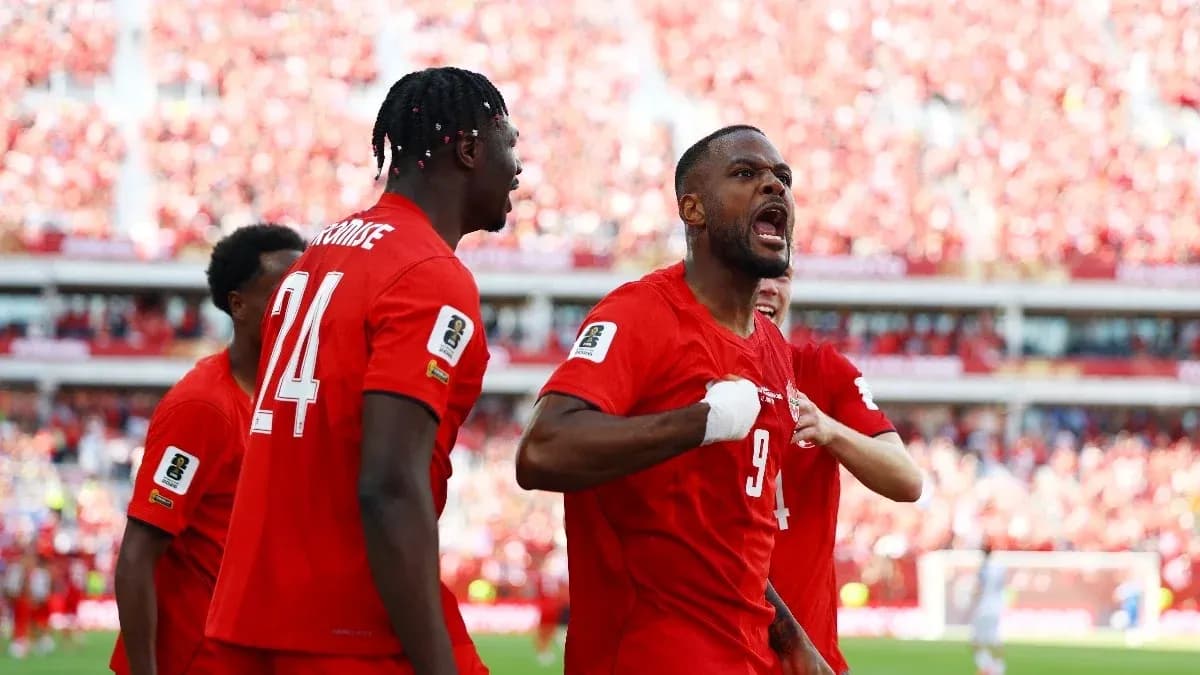
Canada’s final attacking reshuffle arrived on 76', when C. Larin replaced T. Oluwaseyi (Canada), introducing their most proven penalty-box finisher to attack a tiring defence. The move paid off swiftly. On 78', Canada finally converted their territorial dominance: 78' Canada goal — C. Larin (assisted by P. David). A well-timed run and composed finish from Larin, created by P. David’s intelligent movement and delivery, levelled the match at 1-1 and rewarded the aggressive substitution strategy.
In the closing stages, Bosnia & Herzegovina sought to protect the point and add fresh energy to the left side. On 84', D. Burnic replaced S. Kolasinac (Bosnia & Herzegovina), removing the assist provider and experienced full-back to manage his workload and add a more conservative presence.
Canada made one final midfield adjustment to push for a winner. On 90+1', J. Osorio replaced S. Eustaquio (Canada), aiming to inject late creativity and third-man runs from midfield.
The final notable incident came in stoppage time as Bosnia & Herzegovina’s defensive resistance became increasingly desperate. On 90+3', N. Katic (Bosnia & Herzegovina) — yellow card (Holding) for grappling with his opponent to stop a late Canadian attack, encapsulating the visitors’ rear-guard effort as the match finished 1-1.
Fixture Statistics & Tactical Audit
- xG: Canada 1.25 vs 0.98 Bosnia & Herzegovina
- Possession: Canada 61% vs 39% Bosnia & Herzegovina
- Shots on Target: Canada 4 vs 3 Bosnia & Herzegovina
- Goalkeeper Saves: Canada 2 vs 1 Bosnia & Herzegovina
- Blocked Shots: Canada 4 vs 1 Bosnia & Herzegovina
The underlying numbers suggest a broadly balanced contest with a slight territorial and chance-volume edge to Canada. With higher possession (61%) and more total shots (13 to 8), Canada were dominant in territorial terms (61% possession, 13 shots) but not overwhelmingly superior in chance quality, as reflected by a narrow xG advantage (1.25 vs 0.98). Bosnia & Herzegovina’s lower shot count but comparable xG indicates their attacks were more selective and efficient, typified by Lukic’s first-half goal from a well-constructed move. Canada’s four shots on target to Bosnia & Herzegovina’s three, combined with the blocked-shot disparity (4 vs 1), underline how often the hosts forced the issue around the box without consistently breaking through the final line. The 1-1 scoreline aligns closely with the xG profiles and shot distribution, making the draw a fair reflection of the balance of chances, even if Canada’s late pressure might have justified a marginal expectation of a winning goal.
Standings Update & Seasonal Impact
In Group B, this result keeps both sides firmly in contention while reinforcing how fine the margins are. Canada, who started the day on 1 point with 1 goal scored and 1 conceded, move to 2 points with a record of 2 goals for and 2 against, maintaining a goal difference of 0. They remain in 1st place in the group, still in the “Advancing to the Round of 32” positions but with no cushion in terms of points or goal difference. Bosnia & Herzegovina, also beginning on 1 point and a 1-1 goal record, likewise climb to 2 points with 2 goals scored and 2 conceded, preserving their goal difference at 0 and holding 2nd place. The table is therefore compressed at the top, with Canada ahead only on ranking criteria rather than points, and the final group matchday now set to determine qualification, seeding, and potentially the fine margins of goal difference.
Lineups & Personnel
Canada Starting XI
- GK: Maxime Crépeau
- DF: Alistair Johnston, Luc De Fougerolles, Derek Cornelius, Richie Laryea
- MF: Tajon Buchanan, Ismael Koné, Stephen Eustaquio, Liam Millar
- FW: Jonathan David, Tani Oluwaseyi
Bosnia & Herzegovina Starting XI
- GK: Nikola Vasilj
- DF: Amar Dedić, Nikola Katić, Tarik Muharemović, Sead Kolašinac
- MF: Esmir Bajraktarević, Benjamin Tahirović, Ivan Bašić, Amar Memić
- FW: Ermedin Demirović, Jovo Lukić
Post-Match Verdict
Canada’s display was assertive in structure and territory but only intermittently clinical in the final third (13 shots, 1.25 xG, 4 on target), with the attack only truly ignited after the hour-mark changes that introduced Shaffelburg, P. David, Ahmed and later Larin. The hosts’ 61% possession and 9 corners point to a team in control of field position, yet the need for a late equaliser underlined ongoing issues in converting sustained pressure into clear, high-value chances. Defensively, Canada were generally stable but vulnerable in isolated moments (conceding 0.98 xG from just 8 shots), particularly when Bosnia & Herzegovina exploited wide areas and the channels, as seen in the Lukic opener.
For Bosnia & Herzegovina, this was a disciplined and efficient away performance built on compact defending and selective attacking (39% possession, 8 shots, 0.98 xG). Their forwards and wide players maximised limited attacking phases, with Lukic’s goal exemplifying their capacity to punish lapses. However, the high foul count (20) and three yellow cards reflect how often they were forced into reactive, last-ditch interventions as Canada increased the tempo. The late concession, against the backdrop of mounting Canadian pressure and substitutions, suggests a side that defended bravely but ultimately could not fully manage the physical and positional demands over 90 minutes. Overall, a tactically even contest where Canada’s structural dominance and bench impact were balanced by Bosnia & Herzegovina’s early efficiency and defensive resilience, justifying the shared points.