Carlos Cordeiro Resigns from FIFA Amidst World Cup Controversy
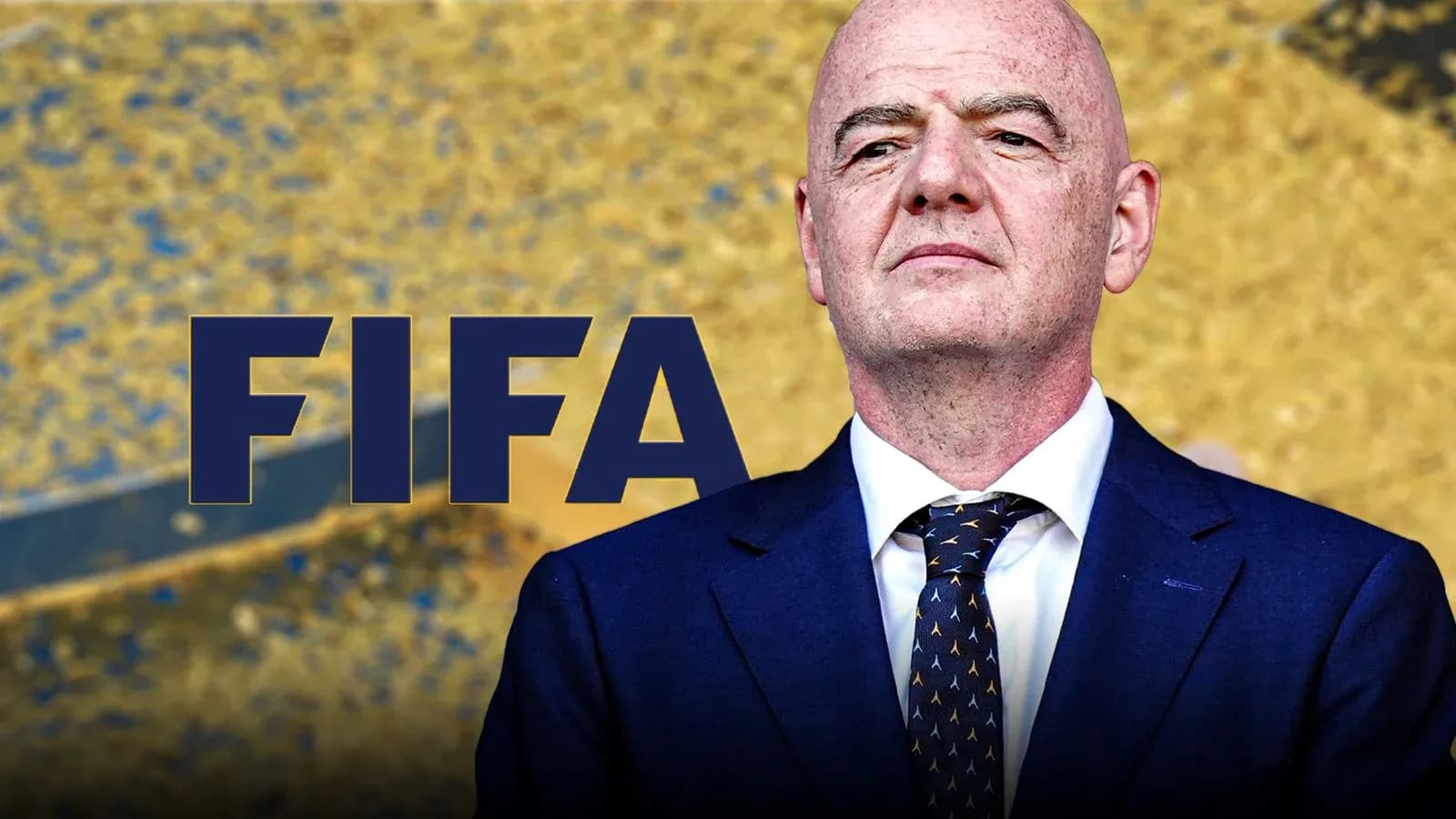
Carlos Cordeiro has walked away from FIFA – and straight into the centre of its biggest political storm in years.
The senior advisor to president Gianni Infantino resigned in protest at plans to explore selling a stake in a new World Cup commercial vehicle to private investors, a move that has already triggered open revolt from three of football’s most powerful confederations.
“I cannot stand by while FIFA considers selling a stake in the World Cup,” Cordeiro said in an exclusive statement to Sky News. A former banker and ex‑US Soccer president, he did not mince his words.
“Let me be clear: I had no involvement in this proposal, and I oppose it unequivocally. It is a bad deal for FIFA's Member Associations, a bad deal for football, and a bad deal for the long-term future of the game.”
For a man embedded at the top of the FIFA hierarchy to break ranks so publicly is rare. To do it on the World Cup, the organisation’s golden asset, is incendiary.
A night-time statement, a deepening crisis
Cordeiro’s departure landed just hours after FIFA issued a late-night statement from Zurich, insisting “nobody is selling football” and defending its proposal to create FIFA Forward Enterprise (FFE), a commercial entity that could take on private investment.
The governing body stressed it would continue with a consultation process on FFE, despite the backlash. It claimed the debate had been “disrupted by incorrect media reports” and promised that every member association would be able to “express its vote based on facts”.
The message did nothing to cool the temperature.
UEFA’s 55 member associations had already declared they would not enter any FIFA competition while the plan remained on the table. CONCACAF, representing 41 nations from North and Central America and the Caribbean, also “rejected the proposal”. The Asian Football Confederation (AFC), long seen as a key Infantino ally, then broke ranks too, calling for an “urgent review” of FIFA’s governance.
Add those numbers up and confederations representing 143 of FIFA’s 211 member associations now stand against the project. That is not a minor wobble. It is a structural challenge to Infantino’s authority.
“Nobody is selling football” – but nobody’s buying the argument
FIFA’s defence of FFE hinges on a single idea: that this new entity would simply allow member associations to “take meaningful ownership of the commercial opportunity of football in their respective countries” without compromising the “spirit or the governance of FIFA or football itself”.
“Nobody is selling football. This is not something FIFA would ever entertain,” the statement insisted.
Yet the details around FFE have already spooked much of the game. An investor group led by Thrive Eternal, founded by Joshua Kushner – brother of Jared Kushner, son-in-law of former US President Donald Trump – is lined up to acquire a minority stake if the project is approved.
National associations have been tempted with the prospect of huge returns. But those numbers depend on the men’s and women’s World Cups remaining truly global. If UEFA’s national teams stay away, those projections collapse. If CONCACAF and the AFC hold their line, the idea of a World Cup in anything but name comes into view.
Leagues across Europe and beyond are also pushing back, wary that a commercially driven FIFA would chase ever-bigger, ever-more-frequent tournaments that slice deeper into domestic calendars.
UEFA called its opposition “unanimous and unequivocal” and went further, issuing a direct threat.
No UEFA national teams will participate in any FIFA competition for so long as these proposals remain alive, unless this proposal has been abandoned in its entirety and binding assurances have been given that FIFA will never again open its governance or competitions to private ownership, it said.
For FIFA, that is not background noise. That is the economic engine of the modern game turning off the tap.
AFC turns, and the ground under Infantino shifts
If UEFA’s fury was expected, the tone from Asia was more telling. The AFC has been a crucial pillar of Infantino’s power base since his election in 2016, when its president Sheikh Salman lost out to him in the presidential race.
This time, Asia’s message came close to a vote of no confidence in the way FIFA is being run.
The AFC believes this moment must become a catalyst for strengthening institutional reform, its statement read. It argued that “meaningful democracy is not measured solely by the opportunity to vote” and demanded “transparent governance, timely consultation, informed deliberation and genuine participation throughout the decision-making process”.
It then called on FIFA “to undertake an urgent review of its governance and decision-making framework” to ensure that proposals “of global significance” are developed with proper consultation and oversight.
Stripped of diplomatic phrasing, the AFC is accusing FIFA of pushing through a plan of seismic importance without the necessary checks, balances or buy-in.
Infantino under fire
Inside FIFA, the official line is that this is a democratic exercise: a consultation, a vote, a simple majority decision. Outside, the mood is very different.
Sky Sports News’ Kaveh Solhekol described FIFA’s nocturnal statement as “desperate” and “tone-deaf”, questioning how much support Infantino really commands within his own organisation and pointing out the statement did not mention the president by name.
“He’s in a hole and he needs to stop digging,” Solhekol said, arguing that Infantino must “start reading the room” and accept that “his power is starting to ebb away”.
Solhekol also attacked Infantino’s repeated attempts to blame the media for the crisis, pointing to accurate reporting by The Times and the Financial Times that first exposed the scale and structure of the FFE proposal.
Without that reporting, the football world would not be debating this plan in such stark terms. Without this backlash, Infantino would not be facing questions about his political survival.
Can the FIFA president ride this out?
Infantino has wriggled out of tight corners before. This one looks different.
He is confronting open opposition from UEFA, CONCACAF and the AFC, the threat of boycotts from European national teams, resistance from domestic leagues and now the public resignation of a senior advisor who calls the plan “a bad deal for the long-term future of the game”.
His options are narrowing. He can persist with the consultation, betting that a majority of the 211 member associations will back him despite the fury of the biggest confederations. Or he can retreat, apologise, and try to rebuild trust in time for the next FIFA presidential election, where he still hopes to stand unopposed.
Either way, the battle over FFE has already exposed a deeper fault line: who really owns the future of the World Cup – and how far the game is willing to go in the chase for new money.