Celtic's Painful Collapse Against Lask: A Night to Forget
Martin O’Neill called it one of the most painful nights of his Celtic reign – and it is hard to argue.
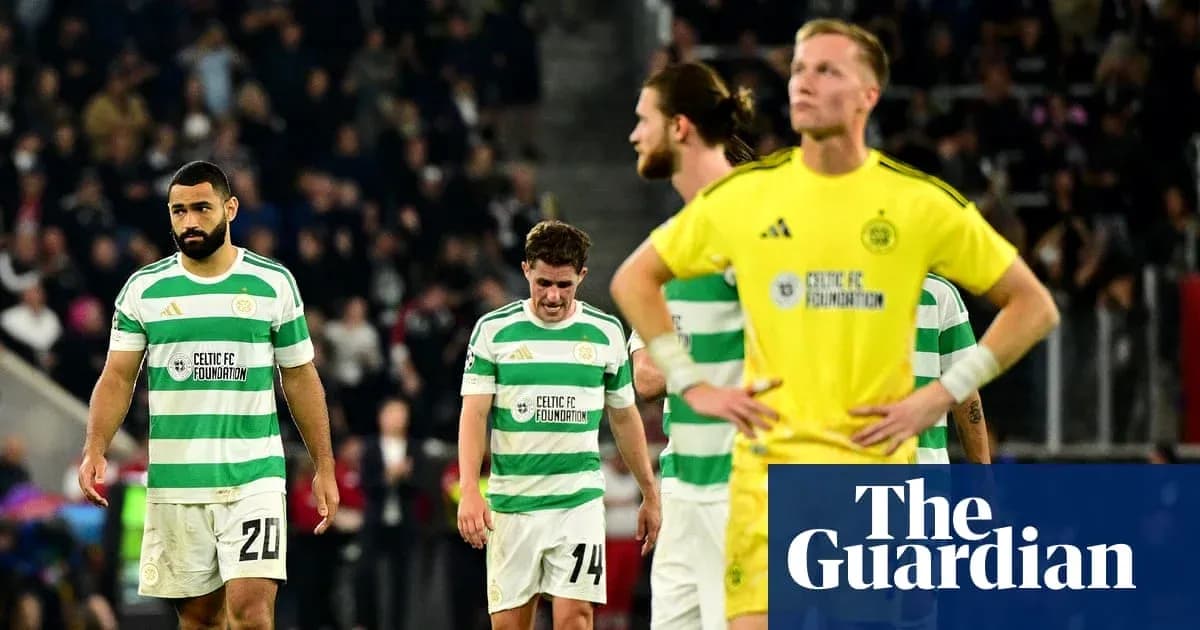
From 4-0 up on aggregate and apparently strolling into the Champions League league phase, Celtic contrived to crash out against Lask in Austria, losing 5-1 after extra time and tumbling into the Europa League with a financial and psychological thud.
From cruise control to catastrophe
The script looked straightforward after 21 minutes in Linz. Callum McGregor, the captain, struck to add to Celtic’s 3-0 first-leg advantage and silence the home crowd. At that point, O’Neill’s side held a four-goal cushion and looked to be playing for time rather than survival.
They never reached the interval with that sense of comfort intact.
Celtic carved out chances to kill the tie. Two, in O’Neill’s eyes, were “great, great opportunities” that should have buried Lask. They went begging. The punishment was brutal. A goal conceded just before half-time handed the Austrians a lifeline. Another blow arrived just after the restart. The momentum flipped, and Celtic never truly wrestled it back.
Lask, suddenly alive and emboldened, came “roaring back”, as O’Neill put it. Celtic, by contrast, retreated into themselves. The goals they shipped were, in their manager’s assessment, “from our viewpoint, not good goals at all”. The damage, though, was devastatingly real.
By the end of extra time, the aggregate lead that had looked unassailable was in ruins, replaced by one of the most remarkable collapses in the club’s European history.
O’Neill: ‘That’s my team and my responsibility’
O’Neill, who has managed Celtic in more than 300 matches, did not seek refuge in excuses or context. Asked whether this ranked among his worst experiences in the job, the 74-year-old did not hesitate.
“I’d put it down before the disappointment of losing the Uefa Cup final in 2003,” he said. “It’s so, so disappointing.”
He cut a figure who understood the scale of the fallout – sporting, emotional and financial. Dropping into the Europa League will cost Celtic at least £20m in lost Champions League revenue, a stark reminder of what was at stake in Linz.
Yet O’Neill refused to turn the night into a public inquest on his squad’s depth or quality.
“These are tough games,” he said. “It might only be a Champions League qualifying game, but it felt like a Champions League game. I thought they were a fine side. But that doesn’t matter. We should have been able to have seen it through. And we didn’t do.
“Talking about the squad, that’s for another day.”
The line that lingered longest was the simplest. “That’s my team and that’s my responsibility.”
McGregor: ‘We actually looked scared’
If the manager owned the defeat, his captain did not hide from it either. McGregor’s goal should have been the platform for a routine passage into the lucrative league phase. Instead, he left Austria talking about fear and passivity.
“We got what we deserved,” he told Amazon Prime. “I thought we were so passive. All night. We actually looked scared to go and win the game, and when you are 3-0 up it’s psychological.”
McGregor did not spare the first leg either. Celtic’s 3-0 win at home, he suggested, had flattered them.
“To be honest I didn’t think we were that good in the first leg, either. We scored at good times and kind of got away with it. You go 3-0 and you think you’ve got a real chance but when you play like that you can’t have any excuse whatsoever.”
His conclusion was blunt and unforgiving.
“We have to suck it up, apologise to the supporters and the club because there is no way that we should lose that game … Now you’ll see what kind of characters are in there.”
That is the question now hanging over Celtic’s season: how a squad and a manager absorb a collapse like this, and what kind of response they can summon from the wreckage of a night that will not be forgotten quickly.