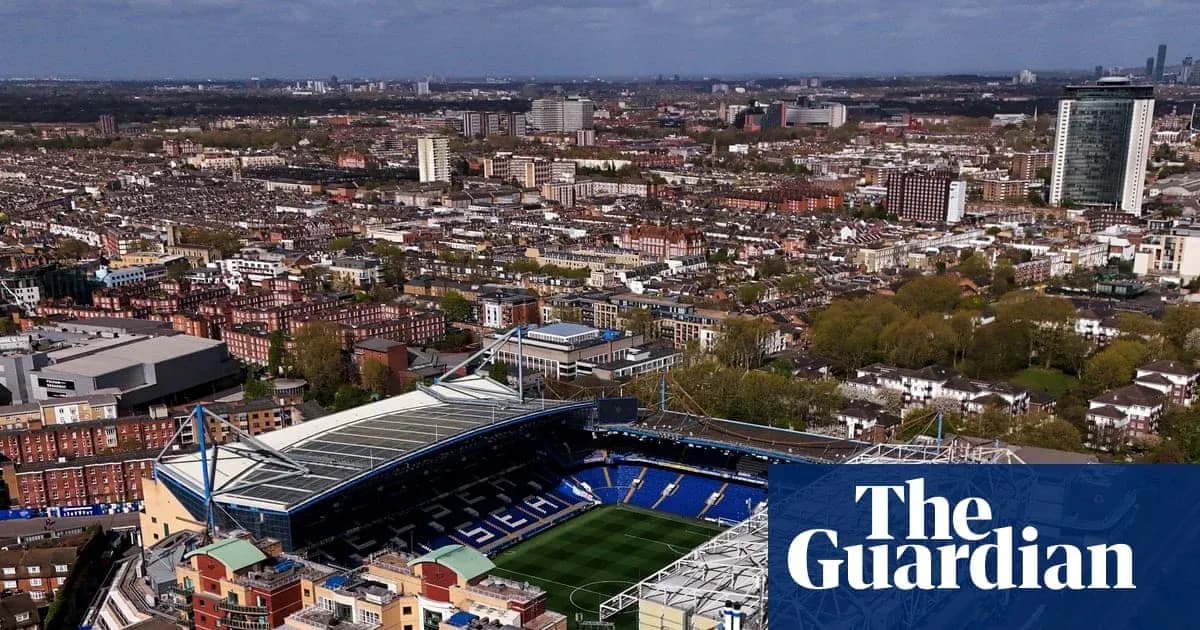
Chelsea Fined £10m and Faces Transfer Ban Over Abramovich Era Breaches
Chelsea’s Roman Abramovich years have been dragged back into the spotlight, and the verdict from English football’s authorities is brutal.
The FA has fined the club £10m and imposed a suspended two‑window transfer ban after uncovering a long-running pattern of rule breaches in the transfer market. The punishment mirrors the Premier League’s earlier action this year, which centred on unlicensed agents and attempts to disguise the true nature of deals between 2009 and 2022.
This was not a technicality. It was systemic.
Deals involving Samuel Eto’o, Eden Hazard and Willian were among those found to have broken regulations. An independent commission initially went far harder, landing Chelsea with a suspended six‑point deduction. That sanction, though, did not survive the appeal process. The points threat has gone; the suspended registration ban remains.
New owners, old sins
The case only reached this stage because Chelsea’s new ownership, BlueCo, walked into the mess and chose to disclose it. After taking control in 2022, they self‑reported the irregularities, triggering parallel investigations by the FA, Premier League and Uefa.
That decision heavily shaped the outcome. The disciplinary panel went out of its way to praise the club’s cooperation. Chelsea, already working under a settlement agreement with Uefa, stressed that they had “worked openly and transparently with all regulators” and welcomed confirmation that “this brings all regulatory proceedings against the club to a close”.
For the current regime, this is about closure. For the previous one, it is about condemnation.
“Shameful and arrogant”
The FA’s written reasons pull no punches. The independent commission described the conduct of the Abramovich-era administration as showing “a shameful and arrogant disregard for the rules of the game … which has done so much to bring the game of football in general, and the name of CFC into disrepute”.
That line will sting at Stamford Bridge. It also underlines how far the panel believed Chelsea’s hierarchy had strayed.
Yet the commission’s ire did not stop with the club.
The FA itself came under fire for failing to charge any individuals linked to the misconduct and for asking that no sporting sanction be imposed. The Premier League, which had also examined the case, argued against a sporting penalty as well. Even so, the commission initially opted for a suspended points deduction, on the basis that Chelsea had sought and gained a sporting advantage.
The appeal board disagreed on that crucial point. It concluded there was not enough evidence to prove any advantage had actually been achieved, and stripped away the six‑point threat. In its place came the suspended two‑window ban on registering new players, activated only if Chelsea offend again.
The financial hit, in the end, is modest for a club of Chelsea’s scale. The reputational hit is not.
A “masterclass” in the courtroom
From the legal trenches, the club’s handling of the case has drawn admiration.
“Chelsea’s lawyers performed a masterclass in non-adversarial diplomacy with both the FA and the Premier League,” said Stefan Borson, a football finance expert and head of sport at law firm McCarthy Denning.
He noted that even when the FA’s independent panel diverged from the positions advanced by both the FA and Chelsea, it still eased a notional 15‑point starting point down to a six‑point suspended penalty. That, too, disappeared on appeal, leaving what Borson called a “final meagre fine” paid out of retained escrow from Abramovich’s sale proceeds.
Behind the courtroom language lies a more uncomfortable story about how Chelsea operated at the height of the Abramovich era.
Offshore money and off‑book deals
The Premier League and FA have spent months combing through tens of millions of pounds in secret payments routed through offshore companies owned by Abramovich. The trail emerged through Cyprus Confidential, a leak of data from Cypriot financial services firms used to manage the Russian oligarch’s wealth, and investigated by the Guardian and international partners.
Among the deals exposed were apparent off‑book payments to Hazard’s agent and to an associate of Antonio Conte, the manager who delivered the 2016–17 Premier League title.
The FA’s documents open a rare window into the club’s internal thinking during that period. One example stands out: the 2013 signing of Willian. The Brazilian had appeared on the verge of joining Tottenham, only for Chelsea to hijack the move at the last moment.
According to the paperwork, an unnamed senior Chelsea figure believed losing Willian would be “not good” and losing him to Tottenham would be “adding insult to injury”. For the FA, that attitude spoke volumes.
In its submissions, the governing body argued that this individual “may have loved the power associated with having a bottomless pocket when it came to acquiring players of great quality and/or with great potential, but to seek to suggest that there was no intention to obtain a sporting advantage is stretching our credulity beyond reasonable limits”.
The appeal board did not go that far in its legal conclusions on sporting advantage, but the picture painted of Chelsea’s methods is stark.
Taxman at the door
The FA’s ruling also confirmed, for the first time, that BlueCo reached a multi‑million pound settlement with HM Revenue & Customs over historic transactions dating back to 2011. The precise figure remains redacted in the FA’s case files, yet the appeal decision makes clear that Chelsea repaid at least £1.35m.
It is another reminder that the Abramovich era’s aggressive edge was not confined to the pitch or the transfer market. The financial engineering around the club has left a long tail of regulatory and tax consequences for those who followed him.
Money to the grassroots
There is, at least, one clear beneficiary from the saga. The FA has pledged to invest the entire £10m fine into grassroots football.
For Chelsea’s new owners, that cheque is the cost of drawing a line under someone else’s rulebook. The question now is whether the club, rebuilt under different money and different methods, can finally step out from under the long shadow of the Abramovich years.