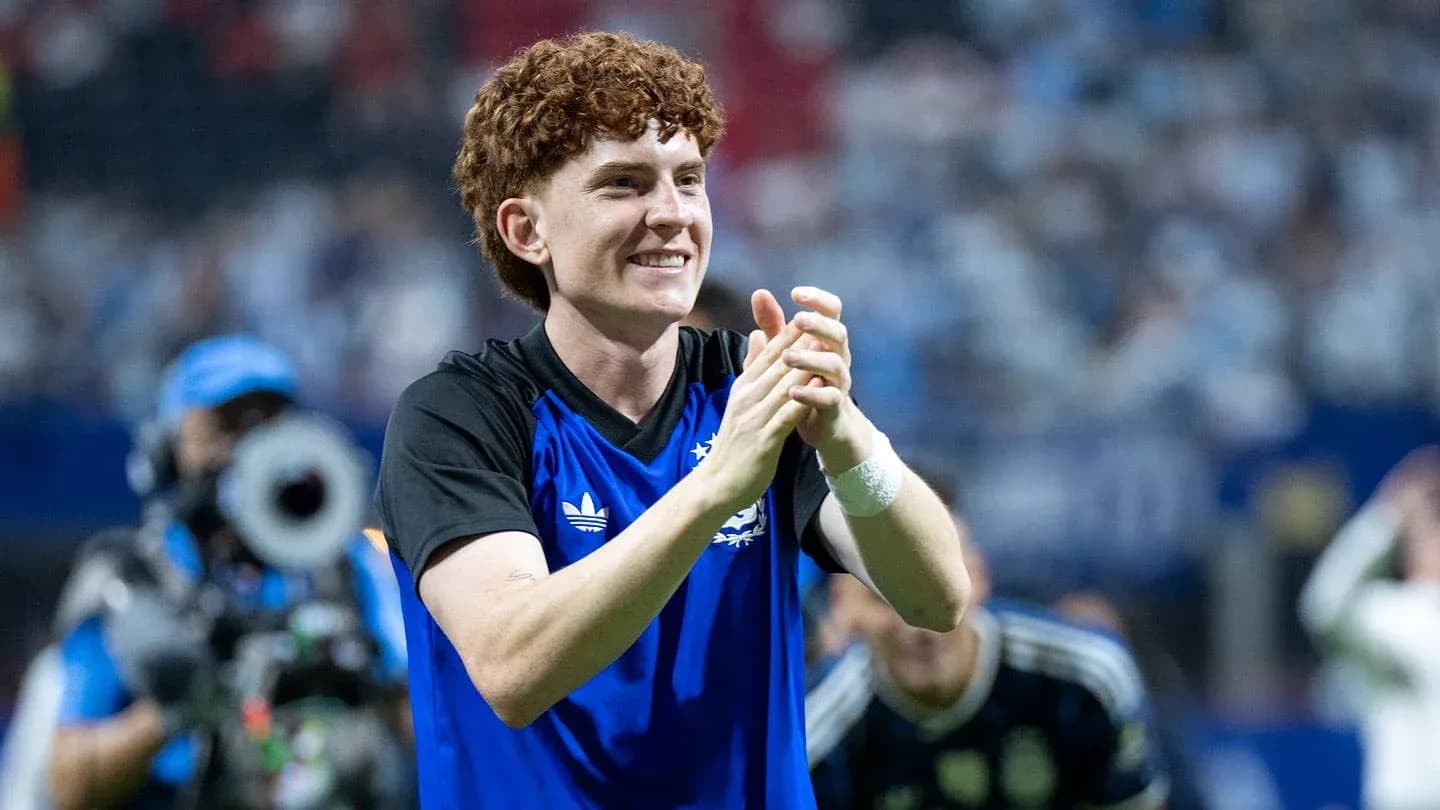
Chelsea's Barco Signing: A New Chapter Under Alonso
Chelsea finally announced on Sunday what had been an open secret for months: Valentín Barco is in the building. The versatile Argentine arrives from Strasbourg, another piece dropped onto a chessboard that Xabi Alonso is still arranging.
Only this one isn’t really his piece.
Alonso has already made his intentions clear since walking through the door at Stamford Bridge. He wanted steel and structure in midfield, pushed hard for Sunderland’s Granit Xhaka, then got the experience of Brentford’s Jordan Henderson. Those are manager-led moves, targeted and obvious in their logic.
Barco is different. Barco is a recruitment signing.
A Deal From the Old Regime
This transfer has been in motion since early April, back when Liam Rosenior still occupied the Chelsea dugout. Reports then suggested Chelsea and Barco had already shaken hands on a summer move. Two days after Alonso’s appointment in May, Barco was already saying his public goodbyes to Strasbourg, even though Chelsea had yet to make anything official.
The timeline tells its own story. While Alonso may have been asked for a final thumbs-up during his negotiations with the club, this is a deal driven by co-sporting directors Paul Winstanley and Laurence Stewart, along with recruitment figures Joe Shields and Sam Jewell.
That group has lived under a harsh spotlight. Years of lavish spending, years of churn, and not nearly enough on-pitch payoff. Their influence has been clipped, shared now with a head coach whose reputation demands a say in squad-building. Many Chelsea fans welcomed that shift. Barco, though, feels like one of the last echoes of the old way.
Why Barco? Because He Can Play
Strip away the politics and the timing, and the core reason is simple: Barco is good.
Premier League viewers might remember a very different version of him. A red-haired youngster at Brighton & Hove Albion in 2023–24, shuffled into seven appearances at left back, struggling to convince and quietly drifting out of the picture. That image is now out of date.
At Strasbourg, from early 2025 onwards, Barco rebuilt himself. No longer just an inverted full-back project, he became a do-it-all midfielder, tasked with knitting play together and still offering protection without the ball. He had to influence both penalty areas. He did it well enough that a big move this summer always felt inevitable.
Some will say Chelsea moved simply to keep him in-house under the BlueCo umbrella, another asset whose value might climb on the books. The cynicism is understandable. It also doesn’t erase the fact that at 22, Barco has earned another crack at the top end of the game.
His biggest selling point is obvious: versatility. As a teenager, scouts framed him as a left back who could tuck inside and help in midfield. Now, the balance has flipped. He looks like a midfielder first, one who can slot in on the left when needed.
That sort of flexibility is gold in the modern game. One player, two positions, genuine depth rather than a stopgap. Chelsea might not be burdened by European football this season, so the squad won’t be stretched to breaking point. But the club is already thinking about 2027–28, about being back in the rhythm of playing twice a week. Barco could matter far more in that world than in this one.
Alonso’s Puzzle
All of which leads to the real question: where does he actually play?
Alonso has targeted reinforcements precisely where Barco looks strongest. Henderson has arrived to anchor and organise in midfield. On the left, Chelsea are closing in on Rayo Vallecano full-back Pep Chavarría, a signing pushed specifically by the new manager.
So Barco walks into a squad where his two most natural lanes are already crowded by players the coach has personally requested. He is good enough to be more than a spare part, yet his role is anything but obvious.
How Alonso profiles him will be one of the more intriguing subplots of Chelsea’s season. Is Barco a rotation midfielder, a tactical wildcard, a left-sided utility option? Or does he become something more central to the project once the dust settles on this window?
The Strasbourg Pipeline: Promise, Then Doubt
Barco is the third player to travel the now-familiar route from Strasbourg to Chelsea. The track record so far hardly inspires confidence.
First came Mamadou Sarr in the summer of 2025. Chelsea signed the centre-back, gave him a taste of the Club World Cup, then sent him back to Strasbourg on loan. There, he flourished. Key player. Regular captain. A young defender growing with responsibility.
Then January arrived. Rosenior wanted a new centre-back at Stamford Bridge. Chelsea cut Sarr’s loan short and brought him back for an instant reunion. On paper, the decision suggested a clear plan.
On the pitch, it never materialised. Sarr played fewer than 300 minutes over the next five months. By the end of the campaign, he struggled even to make matchday squads. The logic behind the recall still hangs in the air.
Next up was Emmanuel Emegha. Chelsea confirmed the striker’s move from Strasbourg in September 2025, and he finally linked up with Alonso’s squad this summer. Before he could even settle, reports emerged that the club were already open to offers.
Emegha now sits in a crowded forward department with João Pedro, Nicolas Jackson and Liam Delap. And that list doesn’t include 17-year-old Dastan Satpayev, who has impressed in preseason and will join permanently once he turns 18 later this month. It is a group long on bodies, short on clarity.
Into that uncertainty steps Barco, the latest export from Strasbourg, the latest to face immediate questions about where he fits and how he’s used.
Chelsea insist they are building for a sharper, more coherent future under Alonso. Barco’s arrival will test whether that future can genuinely coexist with the remnants of an erratic past—or whether another talented young signing becomes just another name in a long, confusing list.