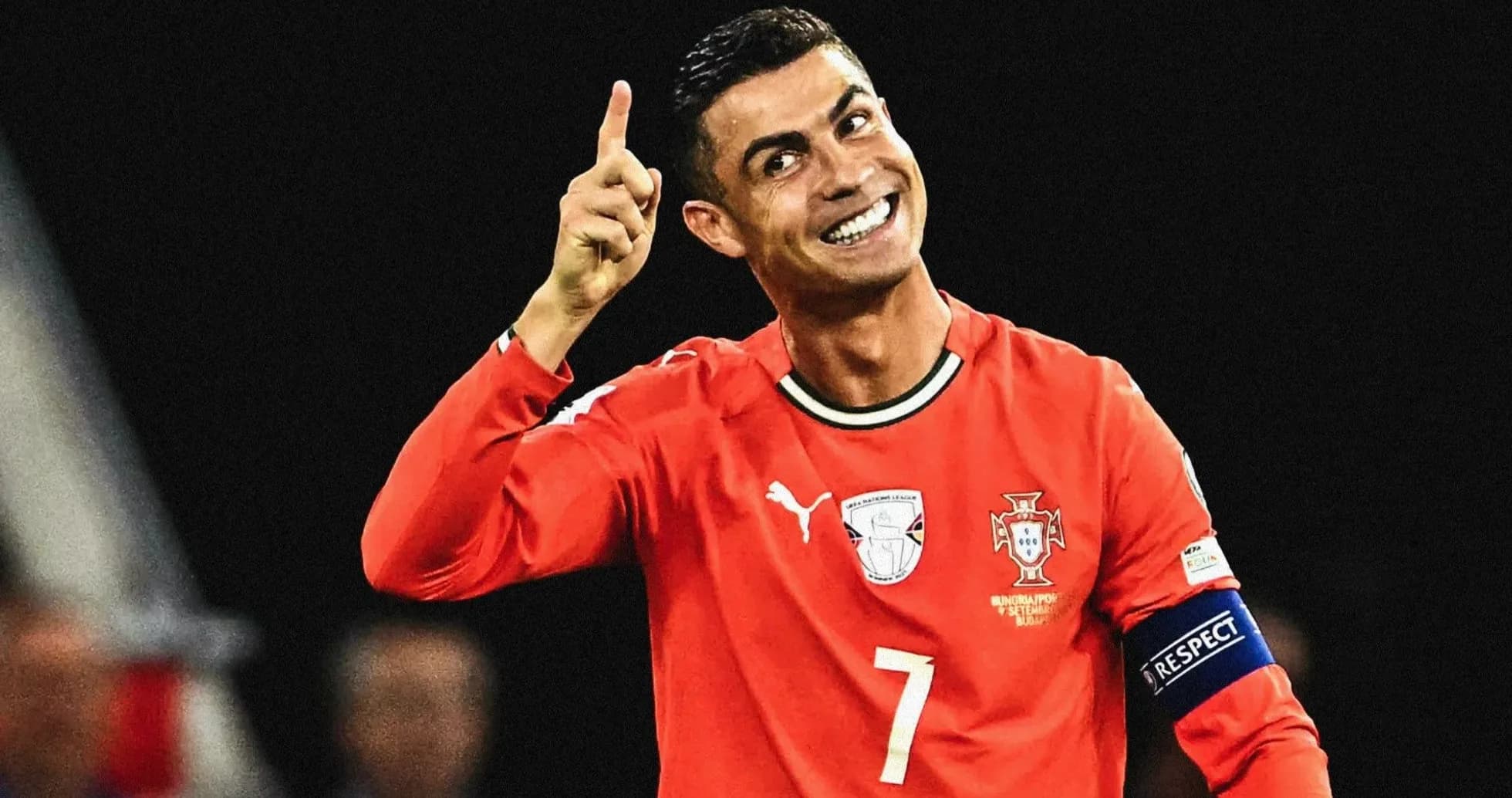
Cristiano Ronaldo's Future with Portugal's National Team
As Portugal looks ahead to co‑hosting the 2030 World Cup, one question keeps circling the conversation: will Cristiano Ronaldo still be on the pitch?
For Fernando Gomes’ successor at the helm of the Portuguese Football Federation, Pedro Proenca, the answer is blunt, if respectful. Speaking at the Bola Branca Conference, the FPF president drew a clear line between romance and reality. A 45-year-old Ronaldo gracing another World Cup? That, he said, would require something close to a biological miracle.
“I’ll say that, physiologically, a huge surprise would have to happen for him to be in another World Cup,” Proenca admitted, cutting through the nostalgia with a dose of sports science.
The European Championship is a different conversation, and Proenca left that door ajar. That decision, he stressed, will rest on form, fitness and the judgement of whoever is in charge at the time. No sentiment, only selection.
“That will depend on who's in charge at the time, how the player is doing, a set of technical factors,” he explained. “With absolute certainty, and I'm fully aware of this, those who are the best players at the time will be in the national team.”
The message was firm: no one, not even Cristiano, sits above the competitive standards of the Seleção. Yet in the same breath, Proenca underlined a truth that defines modern Portuguese football – the national team and the federation are now inseparable from the Ronaldo brand.
“Cristiano Ronaldo will always be inextricably linked to the national team, to the federation,” he said. “Today, the brand of the Portuguese Football Federation, the brand of the national team, is intertwined with the brand of Cristiano Ronaldo.”
That bond will outlast his last sprint, his final goal, his final cap. For Proenca, the end of Ronaldo the player does not mean the end of Ronaldo the presence.
Ronaldo’s Next Role: “Whatever He Wants to Be”
If there was any doubt about the scale of Ronaldo’s influence once he retires, Proenca swept it aside. The five-time Ballon d'Or winner, he insisted, will effectively have his pick of roles in Portuguese football when he decides to stop.
“Cristiano Ronaldo will be whatever he wants to be in Portuguese football. I dare say that,” Proenca declared. It was not flattery. It was recognition of a phenomenon.
He described Ronaldo as an “absolutely extraordinary case” – not just as a global marketing powerhouse, but as a once-in-a-generation sporting project, the ultimate success story of Portuguese talent development.
“Sporting-wise, I dare say it's a unique case of talent development in Portuguese football,” he added. “Cristiano will be whatever he wants to be in Portugal and in world football.”
Coach? Ambassador? Executive? Something entirely different? Proenca refused to box him in. Instead, he framed the future around a simple idea: Ronaldo will choose the path that makes him happiest and, in doing so, will help Portuguese football protect and enhance its current standing.
“We all have time to think about where Cristiano will first feel happy and where he will also help Portuguese football to position itself and maintain the position it has,” he said.
Life After Cristiano
For many Portugal fans, imagining a national team without Ronaldo still feels like staring into a void. Two decades of goals, records and defining moments have made him the reference point for an entire era.
Proenca understands the emotional weight of that transition, but he refuses to dramatize it. The federation, he insisted, cannot afford to treat Ronaldo’s eventual farewell as a catastrophe.
“I say that you prepare yourself not by dramatizing it,” he explained. “Cristiano will always be inextricably linked, not to the federation, but to the country of Portugal. And therefore, there should be no doubt about that.”
Behind the scenes, the FPF has been working to ensure that its future does not hinge on one man, no matter how colossal his stature. Proenca pointed to a deliberate strategy of diversifying revenue streams and reducing dependency on a handful of sponsors or star names.
“The Portuguese Football Federation has always been preparing its present and its future, in terms of revenue, so as not to depend on participating in international competitions solely on one or two sponsors and one or two players,” he said.
The Commercial Magnet Still Pulls
Even as Proenca talked about balance and sustainability, he did not pretend that Ronaldo’s name has lost any of its commercial power. Far from it. The captain remains a magnet for brands and broadcasters, a guarantee of global attention every time he pulls on the Portugal shirt.
Proenca acknowledged that reality openly. Ronaldo still moves markets. Yet he was equally clear that the federation’s budget and long-term planning are not at the mercy of one superstar’s career clock.
“Well, we certainly know how important Cristiano is,” he concluded. “I have to be honest and sincere, there's an appetite to propose contracts to the Portuguese Football Federation both with and without Cristiano. The Portuguese Football Federation's operating revenues are more than assured for a cycle that will naturally and normally occur, which is Cristiano's departure.”
The World Cup in 2030 will arrive with or without Ronaldo on the grass. What Proenca made unmistakable is this: when that moment comes, Portugal intends to be ready – and Cristiano Ronaldo, in one form or another, will still be part of the story.