Cristiano Ronaldo's World Cup Exit: A Legendary Career Concludes
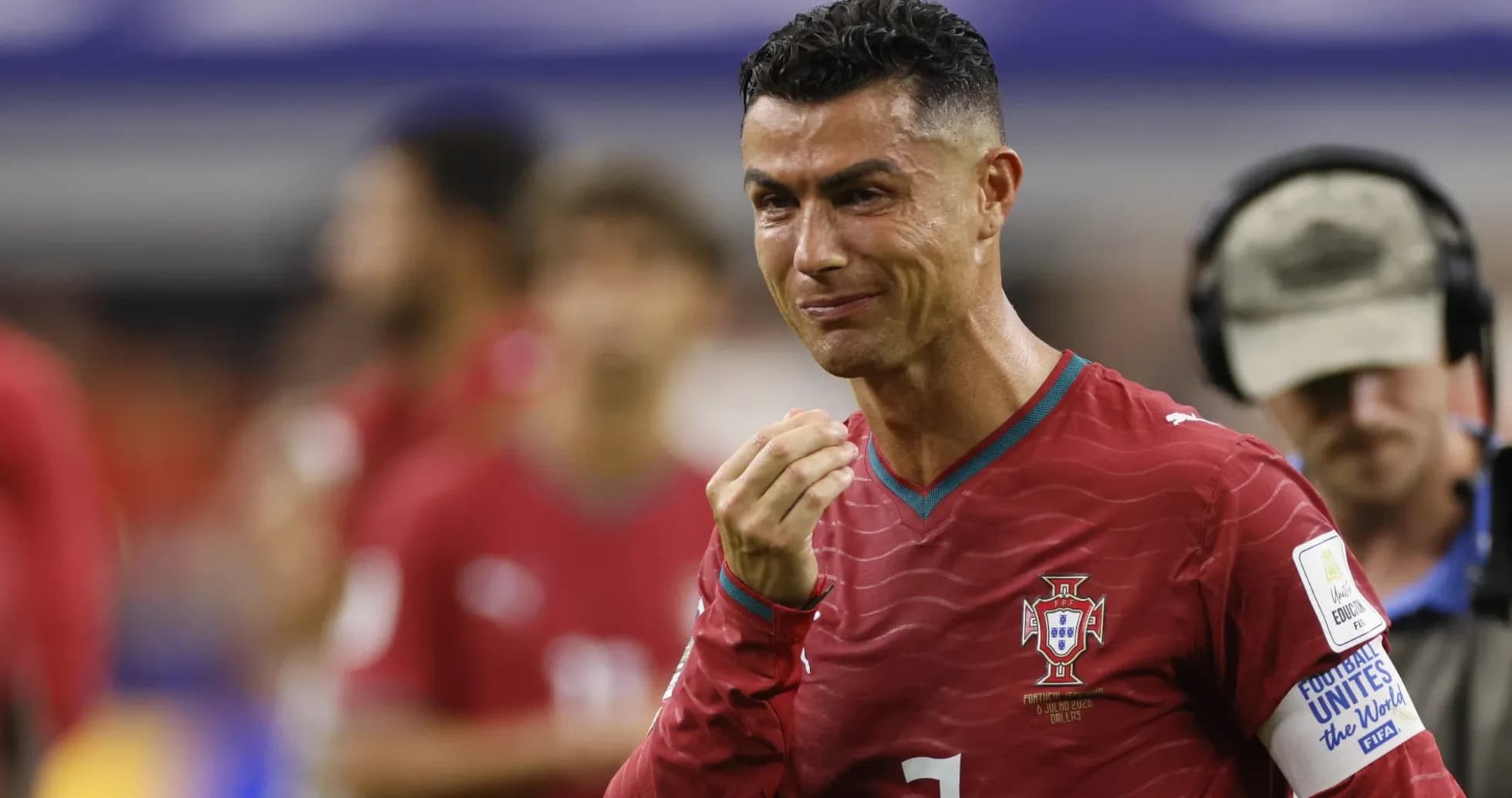
Cristiano Ronaldo walked off alone, head bowed, at the home of the Dallas Cowboys. No wave to the crowd, no grand farewell. Just the slow trudge of a 41-year-old who had spent a career bending football to his will and finally found a stage he could not conquer.
Spain’s 1-0 win over Portugal in Texas ended his World Cup story for good. No late twist. No last roar. Just the cold finality of a last-16 exit and a night when one of the game’s greatest figures looked painfully human.
He fought back tears. His voice, usually booming with certainty, was reduced to something closer to a murmur.
"That's football, that's the life of a footballer," he said, trying to push the words through the disappointment. "Sometimes you win, sometimes you lose, and you have to move on."
He will now step away and think about what comes next. The medals and trophies will keep shining – league titles, Champions Leagues, five Ballon d’Ors, and that cherished Euro 2016 crown with Portugal. But there will be no World Cup winner’s medal among them. That gap will never be filled.
A Giant on the Periphery
This was not the Ronaldo who terrorised defenders, who seemed to sprint at defenders as if time itself had slowed to accommodate him. Those days are gone. In Texas, he was a peripheral figure, stationed through the middle, straining to influence a game that largely passed him by.
Three attempts at goal. No assists. One frustrated gesture, arms flung into the air when a teammate’s pass veered away from him. It summed up his night, and in many ways, his tournament.
He had arrived in North America determined to squeeze one last shot at immortality out of a body that has carried him through two decades at the top. He did find the net three times at this World Cup – twice in a 5-0 demolition of Uzbekistan, once from the penalty spot against Croatia in the last 32. The numbers were respectable. The aura was not what it once was.
His best World Cup run will remain the semifinals, reached 20 years ago in 2026. That in itself is a reminder of how long he has been part of the sport’s top tier, and how much the game has changed around him.
Against Spain, the change was brutally clear. Portugal’s attack misfired. Ronaldo, once the sun around which every move orbited, felt more like a distant planet. The team chased the game; Roberto Martinez threw on fresh legs with two double substitutions late on. Ronaldo stayed. Of course he did. The symbol remained on the pitch, even as the influence faded.
The Relentless Rise
The journey from Madeira to this final World Cup act has always bordered on mythic.
He grew up in a poor family on the island, with an alcoholic father and no guarantees of a way out. Football gave him that escape, but raw talent alone never explained Ronaldo. His rise was driven by obsession – an almost unhealthy thirst for records, a ruthless appetite for self-improvement, and a devotion to his craft that outlasted his youth.
From Sporting Lisbon to Manchester United, he transformed from a wiry winger full of stepovers into a devastating all-round forward. At Real Madrid, he reached something close to footballing perfection, lighting up the Bernabeu and conquering Europe four more times. Juventus followed, then a return to United, and now Al Nassr, where he fronts Saudi Arabia’s ambitious push for football credibility.
Off the pitch, he became something even bigger: the first billionaire footballer, a global brand with 671 million Instagram followers, his "Siuuu!" celebration copied by kids from Lisbon to Lagos. He stopped being just a player and became an era.
A Career Stretched to the Limit
Time, though, does not negotiate. In recent years, the narrative around Ronaldo has shifted from awe to argument.
As his speed faded and that explosive first step deserted him, he drifted from the wings into a classic No 9 role. The penalty-box predator replaced the flying winger. The numbers stayed high for a while, but the debate grew louder: was Ronaldo still elevating his teams, or were they bending too far to accommodate him?
Ronaldo and Roberto Martinez have both faced criticism for stretching his international career beyond its natural end point. Against Spain, those accusations hovered in the Texan air. Portugal needed mobility, pressing, a different kind of chaos. They still looked to Ronaldo.
On the eve of the match, he tried to put the conversation in perspective.
"I am not going to be more Cristiano Ronaldo or less because I win the World Cup," he said.
It was a rare admission that his legacy no longer depends on another medal. His place in football history is secured, with or without the one prize that always escaped him.
Leaving the World Stage
When the final whistle went in Texas, there was no choreographed goodbye. No lap of honour. No emotional embrace at the centre circle. He walked off alone.
He insisted he would leave the World Cup stage "with a clear conscience". He pointed back to Euro 2016 as the defining moment of his international career, calling that title just as significant as a World Cup for him. For Portugal, that night in Paris will forever be Ronaldo’s crowning moment in national colours.
This, by contrast, was the quiet end. No Hollywood finale, no last dance scripted to perfection. Just a 1-0 defeat, a subdued performance, and a legend confronted by the one opponent he could never beat.
He has won it all at club level. He has lifted his country to a continental title. He has broken scoring records that may stand for generations. Yet the World Cup – the stage he craved most – will remain the missing chapter.
So he leaves this tournament not as the unstoppable force of old, but as something more fragile, more human. The billionaire footballer, the global icon, the man who shaped an era, walking down the tunnel in Dallas with only his thoughts for company.
What comes next is his decision. The question now is not what more Cristiano Ronaldo can win, but how he chooses to live with the one dream that finally slipped away.