Crystal Palace vs Everton: Late-Season Premier League Clash
In 2026 this is a late-season Premier League fixture at Selhurst Park in Regular Season - 36, with Crystal Palace 15th on 43 points and Everton 10th on 48 points in the league phase. For Palace, it is a safety‑securing opportunity to push further clear of the bottom group, while for Everton it is a pivotal chance to consolidate a top‑half finish and keep an outside route open towards the European conversation rather than drifting into mid‑table obscurity.
Head-to-Head Tactical Summary
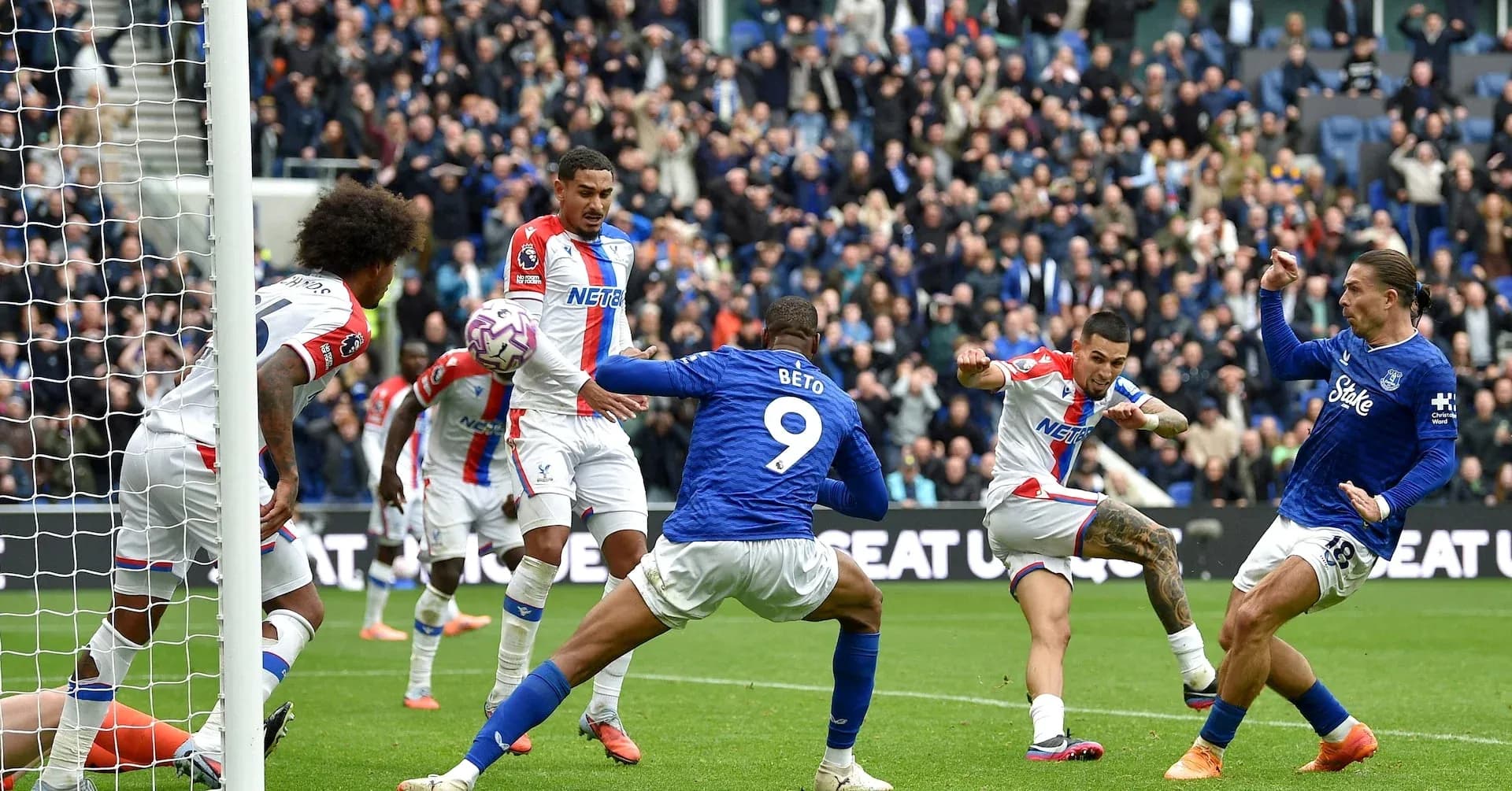
The recent head-to-head pattern is Everton‑leaning and tactically consistent. On 5 October 2025 at Hill Dickinson Stadium in Liverpool, Everton beat Crystal Palace 2-1 in the Premier League (Regular Season - 7), overturning a 0-1 half-time deficit. Earlier in London on 15 February 2025 at Selhurst Park, Everton again won 2-1 in the Premier League (Regular Season - 25), having led 1-0 at half-time. On 28 September 2024 at Goodison Park in Liverpool, Everton recorded another 2-1 Premier League win (Regular Season - 6), also from 0-1 down at half-time. The league meetings in 2024 and 2025 therefore show Everton repeatedly finding solutions after the interval, either protecting or overturning narrow margins. On 19 February 2024 at Goodison Park in the Premier League (Regular Season - 25), the sides drew 1-1 after a 0-0 first half, underlining how tight the margins often are. In cup play, Everton edged a 1-0 FA Cup 3rd Round Replay win on 17 January 2024 at Goodison Park, leading 1-0 at half-time and then managing the game. Across these fixtures, Everton have consistently kept Palace to a single goal and have shown the capacity to adjust in-game, whether defending a lead or chasing the result.
Global Season Picture
- League Phase Performance: In the league phase Crystal Palace sit 15th with 43 points from 34 matches, scoring 36 and conceding 42 (goal difference -6). Their home record is cautious but unstable: 4 wins, 8 draws, 5 losses, with 16 goals for and 19 against at Selhurst Park. Everton are 10th with 48 points from 35 matches, with 44 goals scored and 44 conceded (goal difference 0). Away from home they have 7 wins, 4 draws, 6 losses, with 19 goals for and 20 against, indicating a relatively balanced but low‑margin away profile.
- All-Competition Metrics: Across all phases of the competition Crystal Palace average 1.1 goals for and 1.2 goals against per match (36 for, 42 against over 34 games), reflecting a slightly fragile defensive structure and limited attacking punch. Their 12 clean sheets and 11 matches failed to score show a high-variance, low‑scoring profile. Everton across all phases of the competition average 1.3 goals for and 1.3 against (44 for, 44 against over 35 games), pointing to a more open, trade‑chances style. They have 11 clean sheets and 9 games without scoring, so their attack is marginally more reliable than Palace’s, while their defense concedes at a similar rate. Discipline-wise, Palace’s yellow cards are spread, with notable spikes between 31-45 and 46-60 minutes, suggesting pressure phases around half-time, while Everton’s bookings cluster heavily from 46-90 minutes, hinting at aggressive second‑half defending.
- Form Trajectory: In the league phase Crystal Palace’s form string “LLDWD” shows two straight losses followed by a draw, a win, and then another defeat. That sequence reflects a team unable to build sustained momentum and still vulnerable to being dragged back towards the lower pack if results dip. Everton’s “DLLDW” run shows a defeat, two draws, a win, then another loss – a stalling pattern for a side targeting the top half, with too many dropped points to mount a serious late charge but enough resilience to avoid sliding into danger. Both trajectories point to inconsistency, but Everton’s higher baseline across the season gives them a slightly stronger platform coming into this match.
Tactical Efficiency
Across all phases of the competition Crystal Palace’s output of 1.1 goals scored against 1.2 conceded per match suggests a low‑efficiency attack and a defense that is only marginally more vulnerable than their attack is productive. Their frequent use of a 3-4-2-1 formation (30 matches) and 3-4-3 (4 matches) underpins a back‑three structure that prioritizes central protection but can limit numbers in advanced zones, which aligns with the modest goal return (36) and relatively high count of games where they fail to score (11). Everton, operating primarily in a 4-2-3-1 across 21 matches, produce 1.3 goals per game while conceding 1.3, indicating a more balanced but risk‑tolerant approach. The double pivot gives some defensive stability, yet the equal goals for and against tally shows that they often accept transitions and open phases of play. Without explicit numerical “Attack/Defense Index” values from the comparison block, the season averages imply that Everton’s attacking efficiency is superior – they convert their structure into more goals – while both sides’ defensive efficiency is comparable, with Everton slightly more exposed due to a more expansive style. In practical terms, Everton’s profile is better suited to exploiting tight matches like this, especially given their repeated ability in the head-to-head to either overturn or protect one‑goal margins, whereas Palace’s low‑margin attack leaves little room for error if they fall behind.
The Verdict: Seasonal Impact
This fixture’s seasonal impact is asymmetric. For Crystal Palace, a home win would push them towards the mid‑40s in points in the league phase, effectively closing the door on any late relegation anxiety and giving them a platform to plan forward with their back‑three model, perhaps with an emphasis on adding attacking quality to lift that 1.1 goals‑per‑game ceiling. A draw would maintain a safe but slightly precarious buffer, keeping them reliant on other results but still on course to stay clear of the bottom three. Defeat, however, would leave them stuck on 43 points with a negative goal difference and poor short‑term form, inviting pressure in the final rounds and risking a slide closer to the relegation battle if teams below them find late wins.
For Everton, three points away from home would move them further into the high‑40s and potentially into the low‑50s by the end of the campaign, strengthening their grip on a top‑half finish and preserving a narrative of upward progression. It would also reinforce the psychological edge they have built over Palace in recent meetings, confirming that their 4-2-3-1 structure can consistently out‑punch Palace’s back three. A draw would be adequate but underwhelming, keeping them in the top‑half cluster without truly separating from mid‑table rivals. A loss would likely end any realistic hope of climbing higher, re‑framing the season as one of stagnation rather than progression and raising questions about their ability to convert balanced metrics (44 goals for and against in the league phase) into a more ambitious league position. In strategic terms, this match is a safety‑seal opportunity for Palace and a statement‑making away test for Everton’s top‑half ambitions.