Curaçao's Brenet Faces Germany: A Journey of Talent and Turmoil
On Sunday night in Germany, a tiny Caribbean island will stare down a giant – and one of its most wayward sons will be right at the heart of it.
Curaçao’s Dutch backbone
Curaçao is still formally part of the Kingdom of the Netherlands, but its footballing lifeblood now runs through Europe. Decades of migration have turned the Dutch leagues into a talent reservoir for the island. That pipeline now feeds a World Cup squad recognised by FIFA only since 2010.
Of the 26 players in this tournament group, just one was actually born on Curaçao. Fittingly, he’s the most recognisable name: Tahith Chong. Once the great hope at Manchester United, Chong managed 16 competitive appearances for the club before a flat six‑month loan at Werder Bremen in 2021. He now turns out for Sheffield United, another stop on a career that never quite matched the early hype but still carries the sheen of elite education.
He is not alone in knowing German football up close. Curaçao’s squad carries a distinct Bundesliga footprint.
- Gervane Kastaneer passed through 1. FC Kaiserslautern.
- Riechedly Bazoer, once one of the brightest prospects in Dutch football, wore the green of VfL Wolfsburg.
- Roshon van Eijma played for Preußen Münster.
- Jürgen Locadia and Joshua Brenet both landed at TSG Hoffenheim.
For Locadia, it was another chapter in a nomadic career. For Brenet, it became a turning point – and not in the way anyone expected.
Brenet: from Nagelsmann’s project to problem case
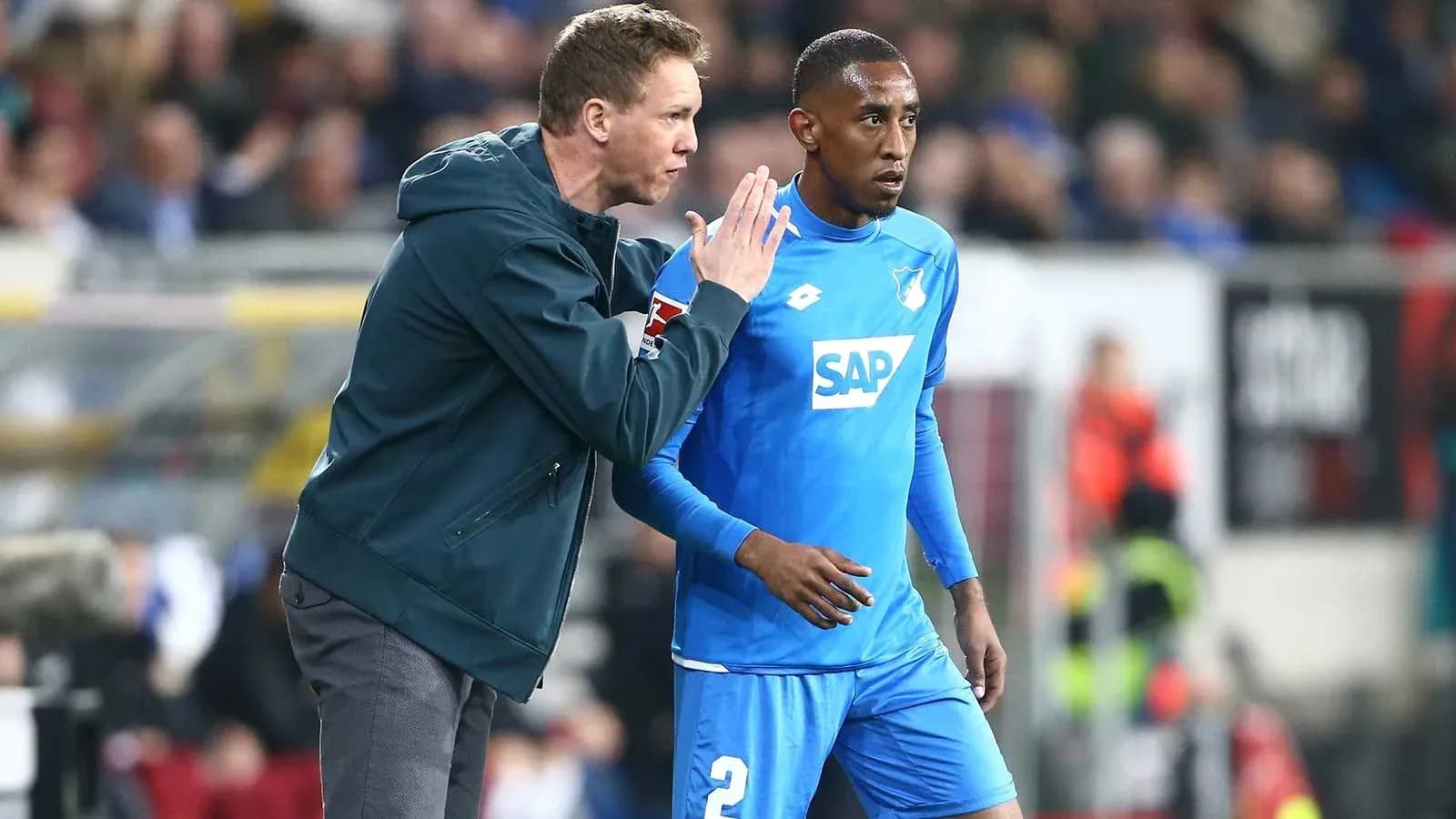
When Hoffenheim paid €3.5 million to prise Brenet away from PSV Eindhoven in 2018, the move looked logical, even smart. He arrived as a three-time Eredivisie champion, a modern full-back with two senior caps for the Netherlands. Julian Nagelsmann, already marked out as one of Europe’s sharpest young coaches, had pushed for the deal.
On paper, it was a perfect fit. On grass and in meeting rooms, it unraveled quickly.
Brenet began life in the Bundesliga on the bench. Then came the flashpoint. Ahead of Hoffenheim’s first-ever Champions League match, against Shakhtar Donetsk, he skipped a video session. Nagelsmann responded by cutting him from the squad entirely.
The message was clear. The relationship never truly recovered.
Nagelsmann did bring him back into the fold, but only on the fringes. Brenet’s appearances became sporadic, his influence negligible. When Nagelsmann left, the door did not swing open. It slammed shut.
Alfred Schreuder, now Nagelsmann’s assistant with Germany, barely looked his way. Sebastian Hoeneß went further, sending Brenet down to the reserves in the fourth-tier Regionalliga Südwest. The demotion underlined what insiders already knew: the issues were no longer just tactical.
Chronic lateness and repeated disciplinary problems stained his reputation. Hoffenheim tried to move him on, but interest never matched his wages or his baggage. Only in 2022, when his contract ran down, did a path clear. He left for Twente Enschede on a free.
A career on repeat: brilliance, then self-sabotage
On the pitch at Twente, the old talent resurfaced. Brenet drove forward from right-back, defended aggressively, and rebuilt his value. For a while, it looked like the comeback was on.
Off the pitch, the same patterns returned.
In January 2023, he was caught driving without a licence twice in two weeks. He had already lost that licence in 2020 after a drink-driving offence. The court’s patience snapped.
“He clearly has no regard for authority. It seems to me as though he is continuing to play football after receiving a red card,” the presiding judge said, before handing down a one‑month prison sentence in 2024. Three years earlier, in 2021, Brenet had already received a suspended sentence that included a fine and community service for domestic violence.
The prison term for driving without a licence was later converted to community service on appeal. The damage, though, was done. Twente terminated his contract.
His career scattered. He moved to Al-Rayyan in Qatar and played just six matches in the 2024/25 season. Then came a short spell with Livingston FC in Scotland. By the second half of the campaign, he was in Turkey with Kayserispor. The CV grew longer. The sense of a settled home never came.
New flag, old coaches
Now, at 32, Brenet wears different colours and sings a different anthem. After representing the Netherlands at youth level and even debuting for Oranje in the 2016 World Cup qualifiers, he secured FIFA permission to switch allegiance to Curaçao, the country of his parents.
Since his debut for the island in 2024, he has scored six goals in 17 appearances – a remarkable return for a right-back. In the final warm-up match before this World Cup, against Aruba, he started on the right of defence and scored again. The talent that once seduced PSV and Nagelsmann still breaks through the noise.
On Sunday at 7 pm, he will walk out to open Curaçao’s World Cup campaign against Germany. On the opposite bench will stand Nagelsmann and Schreuder, the coaches who once tried – and failed – to harness him at Hoffenheim.
For Curaçao, it is a meeting with a four-time world champion. For Brenet, it is something sharper: a collision with his own past, with the managers who saw both his ceiling and his self-destruction from point-blank range.
The island will chase the upset. Brenet will chase something more elusive – the performance that finally defines his story for what he does with the ball, not what he does without a licence.