Declan Rice on Burnout: Built for Elite Football Demands
Declan Rice has brushed aside fears over burnout at Arsenal, insisting his body – and his mindset – are built for the relentless demands of elite football.
The midfielder is coming off a draining year that stretched from north London to the United States and on to the World Cup, a campaign that ended with England’s run to the semi-finals and a staggering 69 games for club and country. By the end, he looked heavy-legged in an England shirt. The schedule had bitten hard.
Rice isn’t hiding from that. He just refuses to be defined by it.
“I think for the last six seasons, even since my West Ham days when it was in Europe, I've played 60 plus every season,” he said. “So I think it is sustainable because I've shown that I can do it.”
This is not bravado. It’s a statement of how he wants to live as a footballer. Rice has become the heartbeat of Arsenal’s midfield and a pillar for England, and he knows the price that comes with that status.
“It's just about maintaining it, maintaining the level and the consistency of the performances,” he explained. “For me, that's the main thing, showing up every week, giving a good account of myself and helping the team win. I've been lucky enough to be able to do that. So I'm really hungry to be able to do that again this season."
From World Cup frustration to renewed edge
The hunger comes from more than just trophies. It comes from frustration.
At the World Cup, Rice was battling more than opponents. A neural hamstring problem nagged away at him, stripping him of the freshness that usually defines his game. The issue followed a gruelling Premier League campaign and a Champions League charge with Arsenal, then collided with the intensity and heat of a major tournament.
“Yes, it was tough," he admitted. "I think everyone knew I had an issue with a neural hamstring. But also on the top of the Premier League season, which was so demanding, the Champions League, to then play a World Cup in that heat really does take its toll. I'm a player that goes on the pitch, wants to be fresh and give 100 per cent every time I put on an England shirt.”
The standard he sets for himself is unforgiving. When he dips below it, he feels it sharply.
“And yes, there were stages where I felt really, really good and stages where I didn't feel I was good,” he said. “And obviously I had the illness going into the Norway game, which didn't really help. So there were a few things that frustrated me, just with myself, just not feeling 100 per cent. But there were games where I felt really good, like Congo. So it's one of those things I just had to manage.”
The answer, in the end, was brutal simplicity: stop. Rice took complete time off in the summer, stepping away from the churn of training pitches and travel. That reset, he believes, has given him the platform to attack another long season.
Arsenal’s driving force again
The early signs for Arsenal are exactly what Mikel Arteta would want. Rice has gone straight back into the rhythm of club football, anchoring a side that has already carried its domestic authority into Europe.
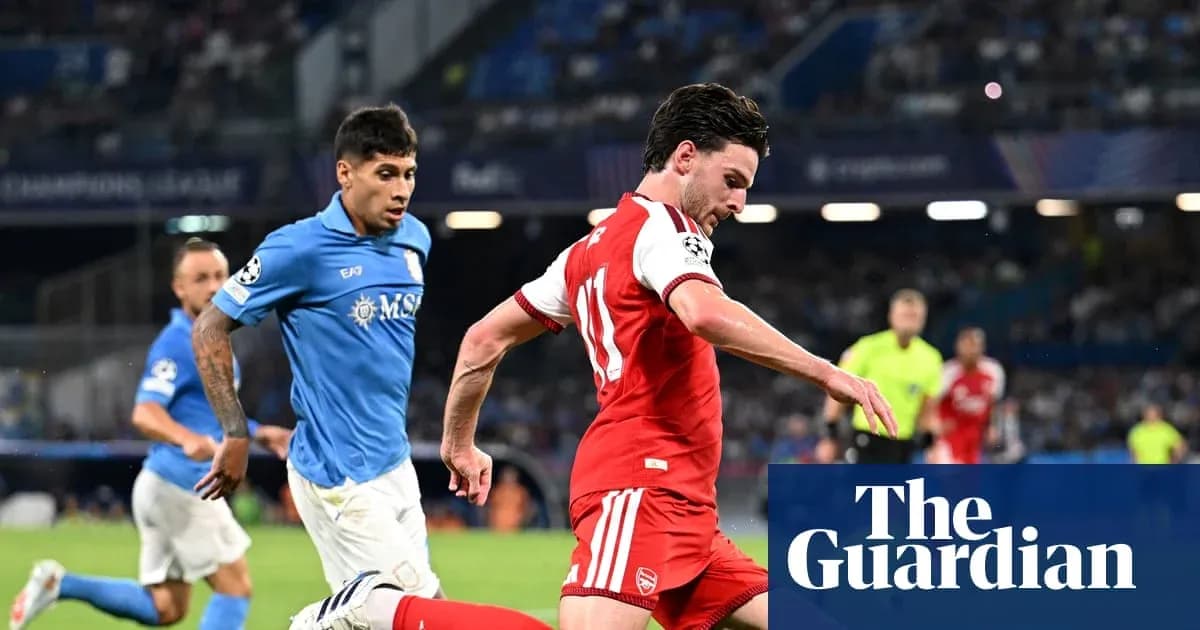
Arsenal opened the league phase of their Champions League campaign with a hard-fought 1-0 win over Napoli, settled by a precise Martin Odegaard strike. It was the kind of tight, tactical contest where Rice’s presence matters most: screening, stepping in, recycling, setting the tempo when legs and minds start to tire.
And this time, there is no grimace, no obvious physical limitation.
He is “thrilled”, in his own words, to be beyond the niggle that shadowed him under Thomas Tuchel in the United States and through that World Cup spell. The hamstring issue that once dulled his edge has loosened its grip. The miles are still in his legs, but the weight of them no longer feels the same.
Rice knows the calendar will not ease up. Arsenal will push deep in multiple competitions if they match their ambitions. England will lean on him again. Sixty games? Seventy? The numbers will climb.
He has made peace with that. Now he wants to prove, all over again, that his engine can carry the load.