Defoe's Management Stint at Woking Ends Abruptly
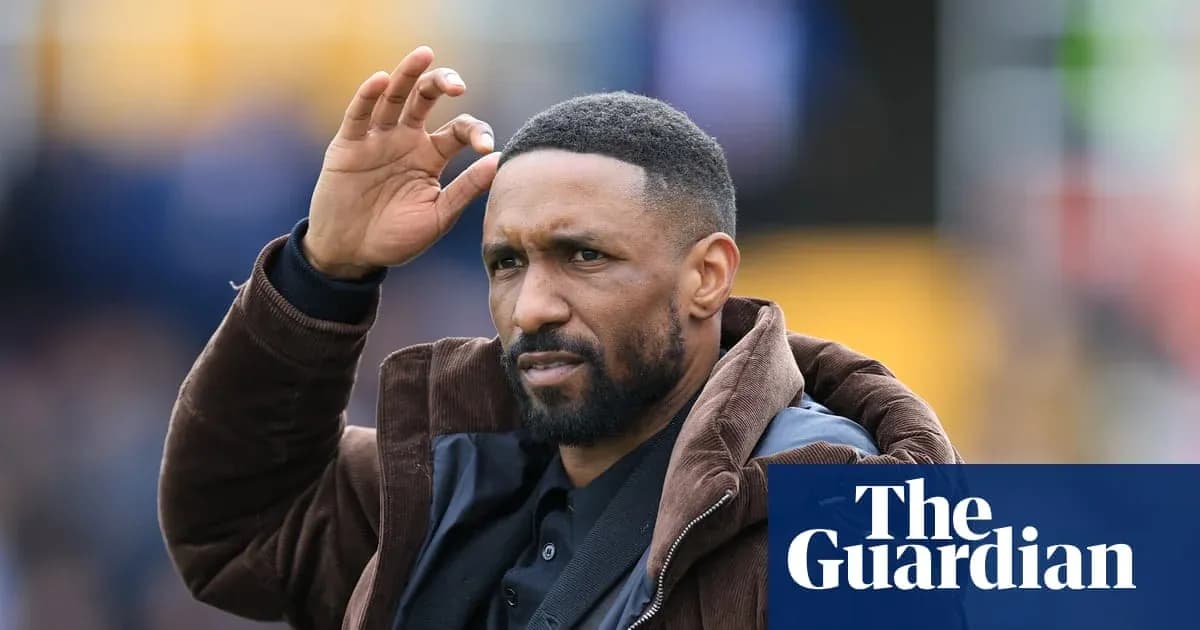
Jermain Defoe’s first step into management has ended abruptly – and now acrimoniously – with Woking’s director of football, Jody Brown, claiming the former England striker failed to attend training and ignored repeated requests for key planning documents.
Defoe left the National League club on Thursday by mutual consent, just four months into his debut job in the dugout. His short spell produced two wins and one defeat in six matches, a small sample that hinted at promise on the pitch but masked deeper tensions behind the scenes.
When he walked away, the 43-year-old framed the decision as his own, calling it “impossible for me to continue” and describing his time at the Surrey club as an “eye-opening” experience. That sounded like a clean break. It has not stayed that way.
Woking hit back on Saturday with a pointed club statement and a detailed explanation from Brown, who made clear he had personally driven the move to appoint Defoe.
“The recommendation to appoint Jermain as manager was mine, and I take full responsibility for it,” Brown said. “After meeting with him on several occasions, I believed he was the right person to lead the club into an exciting new era.”
Those early meetings had sold a vision. Defoe, with his Premier League pedigree and England caps, was supposed to be the figurehead of a new project, a high-profile name to energise a club fighting to re-establish itself in the upper reaches of non-league football.
The reality, Brown suggested, became more troubling as the weeks went on.
“However, in recent weeks there had been feedback from across the club, including players, staff and other departments, regarding growing concerns,” he said.
The pressure built internally. Concerns were not limited to results or tactics, but to how the operation was being run day to day. Brown outlined one flashpoint: he had asked Defoe and his assistant, Paul Bracewell, to submit a short report on the state of the squad and their plans.
“To better understand the situation, I asked Jermain and Paul for a brief report outlining the squad’s current depth, recruitment targets and any operational challenges, so we could provide the support required and accelerate preparations for the season,” Brown explained. “That report was requested on more than one occasion but was never received.”
For a club gearing up for a long National League campaign, those documents are basic building blocks – the kind of internal planning that shapes budgets, signings and staffing. Woking say they were left waiting.
Brown went further, claiming Defoe did not turn up for training, a serious allegation that strikes at the heart of any manager’s responsibilities and will raise eyebrows across the game. While the club did not release a blow‑by‑blow account of those absences, the implication was clear: the relationship had broken down well before Thursday’s announcement.
Defoe’s own comments painted a very different picture, hinting at structural frustrations and disillusionment with the realities of non-league management. Woking’s response has now publicly challenged that version of events and placed the emphasis on professionalism and preparation.
For a player whose career at the top level was built on reliability, sharp instincts and an almost obsessive focus on finishing, this first foray into management has ended in a way few would have predicted. The numbers on the pitch were modest but respectable. The fallout off it is anything but.
Where Defoe turns next – and how much this episode colours the appetite of other clubs to hand him a second chance – will be one of the more intriguing subplots of the coming months.