Diomande: The Vertical Bullet Madrid Needs
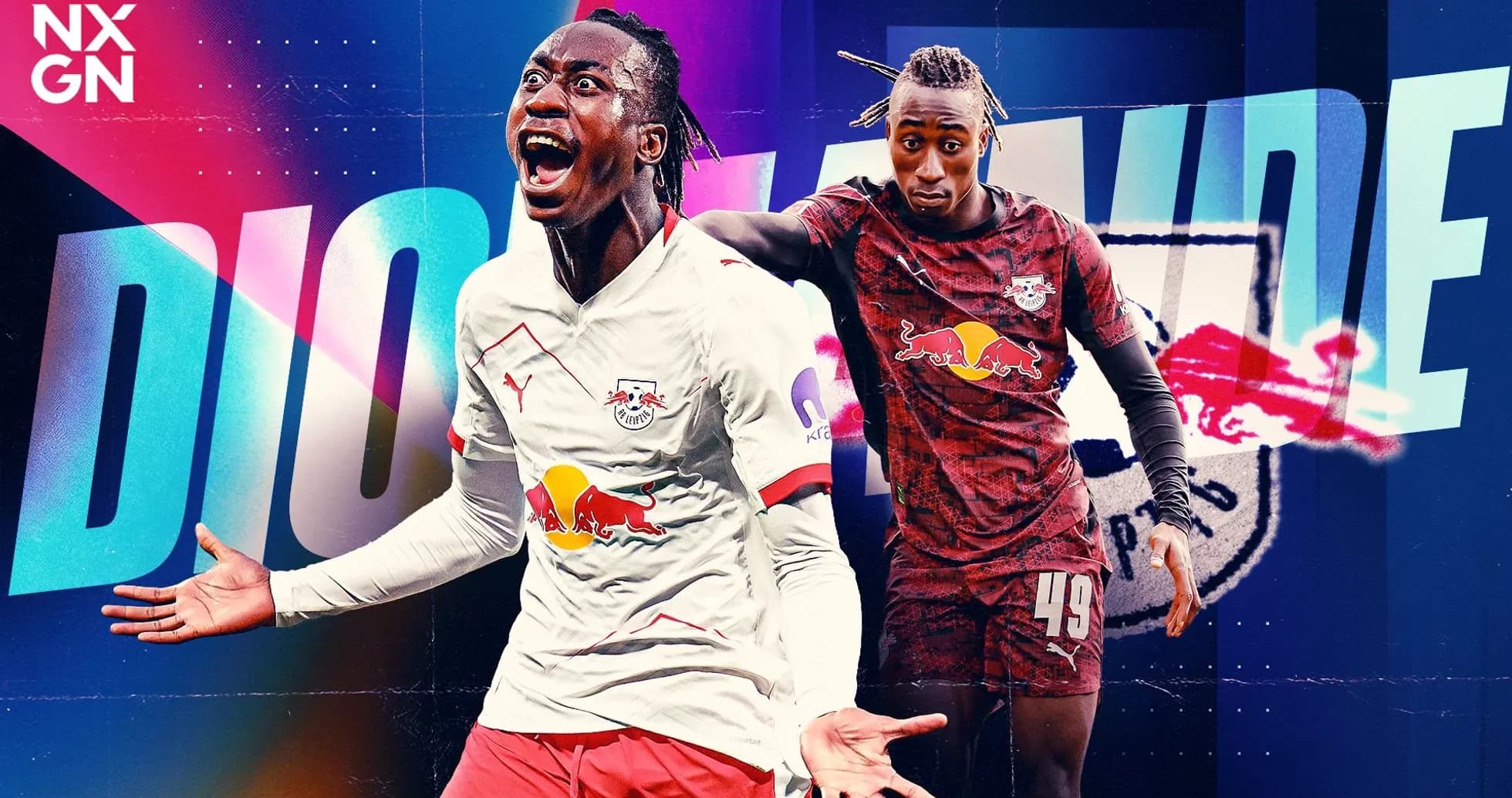
Diomande, the Vertical Bullet Madrid Want to Unleash
Real Madrid have chased wingers of every flavour over the years: the poets, the dribblers, the wide No 10s who knit attacks together. Diomande is none of that. He is something far more direct – a straight-line weapon built for a team that still lives off space and speed.
Marca’s breakdown of his game strips away the lazy comparisons. He is not Vinicius. He is not a touchline showman who slows the game to dance over the ball or stitch passes between the lines. What defines the Ivorian is impact. Vertical, violent impact.
At the last World Cup, he hit 34.7 km/h. In almost any other era, that would sound freakish. In this one, it still leaves him chasing Kylian Mbappé’s 37.6 km/h, but the point is clear: when Diomande opens his stride, defenders panic.
And then there is the dribbling. In the Bundesliga last season, he completed 118 successful dribbles from 213 attempts. No one else came close. Michael Olise, second on the list, finished with 65 from 149. Diomande didn’t just top the charts – he almost doubled the field.
Two wings, two versions of the same threat
What separates him from Vinicius is not just style, but range. Naturally right-sided, Diomande can handle both flanks without fuss. For Leipzig last season, he logged 1,591 minutes on the right and 478 on the left, and Marca went to work dissecting both versions of his game.
On the right, he plays like a classic winger – at least at first glance. He receives wide, often with his boots on the paint, ball to feet, body square to his marker. There is patience in his approach. He takes, waits, tempts, looks again. If the picture is not clear, he recycles and resets, then comes back.
From there, his game leans on his physical profile. He prefers to find room down the outside, hit the byline and pull the ball back. He can beat defenders from a standing start or while already in full flow, but the key is how he does it: not through endless feints, but through power, balance and sudden changes of pace. It is less samba, more sprint relay.
What he does not yet have on that side is the natural diagonal incision of a left-footer like Olise. His left foot is still more tool than weapon. It served him well enough last season – several goals came from shifting the ball onto it at the last second on the edge of the box – yet it remains a complementary option. When he drives inside from the right, his runs are often long and winding, using that weaker foot as a means to keep the ball moving rather than to finish the move.
That is where his ingenuity kicks in. If rivals shut down the outside lane and drop deep to crowd his path, he has developed an “escape route”: dragging defenders across, then attacking the front post or weak side with a cross. He forces the block to tilt, then punishes the gap.
The numbers on the right back up the eye test. Per 90 minutes, Diomande creates more chances from that flank. He attempts more dribbles (4.41 versus 3.23 on the left), completes more crosses (0.91 versus 0.67) and plays more passes into the box (2.21 versus 1.48). He shoots more often (1.7 versus 1.48) and generates higher expected goals (0.21 versus 0.16). The trade-off is clear: he also loses possession more frequently (2.21 versus 1.48). The right is his volume side – more actions, more risk, more chaos.
Shift him to the left, though, and something changes.
On the left: chaos, confidence and cutting inside
With fewer minutes there, the sample is smaller, but the pattern is unmistakable. Diomande looks freer on the left, almost unshackled. He still starts wide, but he does not live on the touchline in the same way. The data shows it: he records more touches inside the opposition box from the left, 7.8 per 90 compared to 6.51 on the right.
Out there, he stops obsessing over the outside lane. He no longer leans on brute strength to power past his full-back. His right foot becomes the star. From the left, it lets him cut inside to shoot or cross, and that single shift in angle unlocks his confidence. He goes at defenders more directly, trusting his dribble rather than just his engine.
Two metrics jump off the page. From the left, his expected goals rise to 1.17 from 0.84, and his expected assists climb to 0.43 from 0.21. Same player, different wing, sharper end product.
Put simply: the right side turns him into a relentless generator of actions – take-ons, crosses, repeated bursts that batter a defence into mistakes. The left turns him into an influencer, a player who wants to bend the game towards chaos in the final third.
Despite the reduced minutes on that flank, one habit keeps reappearing. He is constantly hunting empty spaces away from the ball. If he has to receive with his back to goal in a tight pocket, he often draws a foul or pressure. His solution is quick and simple: a sharp lay-off, a one-two, then a sprint into the gap behind. Once he has space to attack and grass in front of him, he becomes almost impossible to stop.
Relentless without the ball
Whichever wing he occupies, one thing barely shifts: his defensive work. Energy defines him as much as acceleration. When possession is lost, he springs into the press with purpose, not just enthusiasm.
The numbers are ruthless. Among forwards with at least 1,000 Bundesliga minutes, Diomande leads the league in ball recoveries with 148. He ranks second for pass interceptions (16) and fourth for successful tackles (19). These are not vanity stats. They paint a picture of a forward who treats the first seconds after losing the ball as a personal challenge.
At set pieces, he is less proactive, more disciplined, happy to hold position and wait. The instant his team regains the ball, though, he explodes into life.
On the counter, he often drifts into central zones. There, his dribbling becomes lethal, especially when he can sprint into space behind a high defensive line. He does not need to be on the ball at the start of the move; he just needs to see the lane open.
For Madrid fans of a certain age, the blueprint is familiar. Under José Mourinho, this club built an era of counterattacks that tore teams apart, with Cristiano Ronaldo and Ángel Di María flying into space at frightening speed. Diomande carries the raw tools to attack those same corridors, to turn a clearance into a chance in three touches and 60 metres.
The only real question for the Bernabéu is not whether he fits that identity, but where he should start his run: from the right touchline, or slicing in from the left?