Dusan Vlahovic: A Prime-Age Striker in Limbo
Every summer has its stragglers: the late free agents, the veterans waiting for a call, the squad players hoping someone somewhere still needs a body.
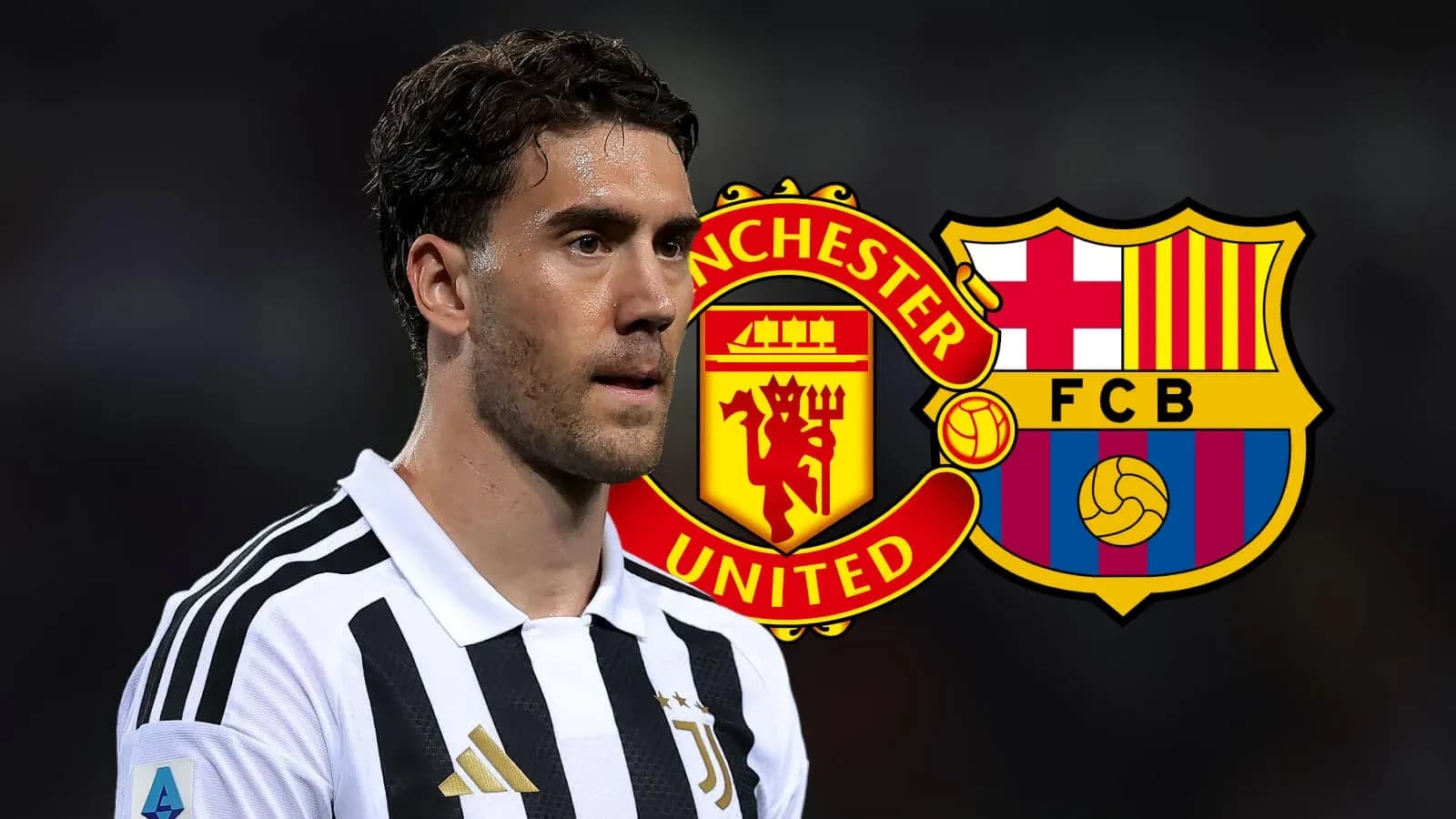
This year, the standout name on that list is not a fading 33-year-old or a perennial back-up. It’s Dusan Vlahovic, 26 years old, eight full Serie A seasons behind him, and still without a club as August looms.
For a player once sold for up to €80m, that is a jarring sight.
A prime-age striker in limbo
Vlahovic has just closed the book on four and a half years at Juventus, after three and a half at Fiorentina. Eight consecutive campaigns in Serie A, six of them with double figures in league goals. On paper, this is the profile that usually never hits the free-agent market.
He should be walking into his prime. Instead, he’s waiting by the phone.
Transfermarkt rates him as the most valuable free agent available, tagging him at around £30m in market value. Yet the market itself is strangely quiet. Manchester United have been loosely linked. His name has been mentioned around Barcelona. Nothing more than that. No agreements. No medicals. No rush.
The silence tells its own story.
The player he is – and the one he isn’t
There is plenty to like. Vlahovic is a proper centre-forward, the kind coaches used to build teams around. Tall, strong, a genuine presence in the box. He can finish with either foot, attack crosses, score from headers, even step up over a free kick. He can run with the ball, he can pin defenders, he can be a focal point.
But he is not the complete modern striker.
His link-up play can be loose. His pressing doesn’t always match the intensity demanded at the very top. His performances drift. The consistency that separates the good from the elite has never fully arrived.
That gap between expectation and reality is the heart of the issue. The player Vlahovic is. The player he looked like becoming at Fiorentina. The player he might still become, if someone takes the gamble.
At Fiorentina, he looked like the next big thing. Arsenal circled. Juventus pounced, betting up to €80m on a forward just turning 22. They thought they were buying a future 25-goal-a-season monster.
He never quite turned into that.
His best full-season return in Turin was 18 goals in 2023-24. Last season he dropped to 10. Across his Juventus stay, he averaged around 15 goals a season. Respectable, but not what you pay superstar money for. Juventus wanted a guaranteed 20-plus every year. They got something short of that.
The numbers underline the uncomfortable truth: Vlahovic has not yet reached the elite bracket. He might still climb there, but the clock is ticking. And it’s hard to evolve without a team, a pre-season, and a clear role.
The wage problem
The biggest obstacle is not his talent. It’s his salary.
Last season, Vlahovic was not only Juventus’ highest earner, he was the best-paid player in all of Serie A. Twenty-two players on lower wages outscored him. That imbalance has stuck in the minds of sporting directors.
His wage packet reflects the star he was supposed to become. His output reflects the player he currently is.
Top clubs see that gap and hesitate. When his name came up at Barcelona, a club openly searching for a striker, there was caution. They could see the upside. They could also see the risk of tying big money to a forward who has never consistently delivered at the very top level.
Teams on the rung just below the elite – ambitious but not in the absolute top tier – are wary for different reasons. Manchester United, for example, sit squarely in that bracket. They need goals. They need presence. But they have been burned before by big wages for players who never quite justify the investment. Vlahovic fits both the need and the fear.
Even Juventus might have kept him if the numbers were different. According to Tuttosport, he wanted €8m a year, roughly £132,000 a week. For a club trying to reset its finances, that figure was too heavy for a striker who never truly became their attacking reference point.
Giorgio Chiellini, now a Juventus director and once Vlahovic’s team-mate, put it bluntly: “With these figures, he won’t remain in Italy, so it is only fair and legitimate that he is seeking a different type of salary.” The logic is clear. The market response is not.
Premier League clubs can handle that wage band. Many already do for players far less proven. The question is value. Is Vlahovic at €8m a year a clever play or an expensive compromise?
Until someone is convinced, the stand-off continues.
Pride, compromise, and the shrinking window
There is a straightforward way out of this stalemate: Vlahovic drops his demands.
Reports suggest he is prepared to do exactly that – but only for the right badge. He would reportedly accept less from a Barcelona than from a Besiktas, one of the other names hovering around his situation. That logic is easy to follow. Trade salary for stage, money for prestige.
Clubs, though, see the compromise from the other side. If they lower their standards on quality, even slightly, they want guarantees that the player will pay them back. With Vlahovic, there are no such guarantees. Just a mix of promise, frustration, and the nagging sense he should have been more by now.
The irony is that the scarcity of top-level strikers should be working in his favour. There are only so many truly elite No 9s in world football. Even fewer are available. Fewer still can be prised away from clubs who know exactly how hard they are to replace.
In that context, a “good but not great” striker like Vlahovic ought to be gold dust. A free agent with a track record in a major league, still young enough to improve, hungry enough to prove people wrong. As the window edges towards its frantic final weeks, logic says someone will blink.
And if they don’t, Vlahovic still has one advantage: free agents are not bound by the deadline. He can sign after the window shuts, step into a squad that panicked late or lost a striker to injury, and become the emergency solution.
But that’s not the plan he would have imagined at 22, when Juventus paid the big money and the road ahead looked straight and bright.
Right now, he is staring at the start of a new season without a club, a contract, or a clear next step. For a player of his age, profile and pedigree, that is more than a curiosity.
It is a warning about how quickly a career can drift when expectations, wages and reality fall out of sync – and about how long Dusan Vlahovic can afford to wait before someone finally decides he is worth the risk.