Everton's Season Review: From European Dreams to Mid-Table Stagnation
For much of last season, Everton’s gaze was fixed upwards.
Jack Grealish arrived on loan and lit the place up. Kiernan Dewsbury-Hall kept deciding tight games. Thierno Barry and Beto, once clumsy and short on confidence, began to look like proper Premier League forwards. On 21 March, a 3-0 dismantling of Chelsea at Hill Dickinson Stadium sent Everton up to eighth, three points off the Champions League places with seven to play.
Europe didn’t just feel possible. It felt close.
Then the season fell apart.
Everton did not win another match. It was their longest run without a victory since David Moyes walked back through the door in 2025. A 2-2 draw at Brentford on 11 April, a result that looked harmless enough at the time, marked the start of a collapse that left them ranked in the bottom three on form over the remainder of the campaign.
They were one of only three clubs who failed to win a single game in that spell. The other two were Burnley and Wolves, both relegated.
The pressure finally told in the most jarring way. Everton went into their final home game of 2025-26 against promoted Sunderland still clinging to hopes of Europe. In his programme notes, chief executive Angus Kinnear described himself as “happily dissatisfied” with the season – an awkward, almost self-conscious phrase at a moment that demanded clarity.
Ninety minutes later, after a 3-1 defeat, it sounded tone-deaf. Sunderland surged on to finish seventh and book European football for the first time in 53 years. Everton trudged off to another 13th-place finish.
Same position as the previous year. Very different mood.
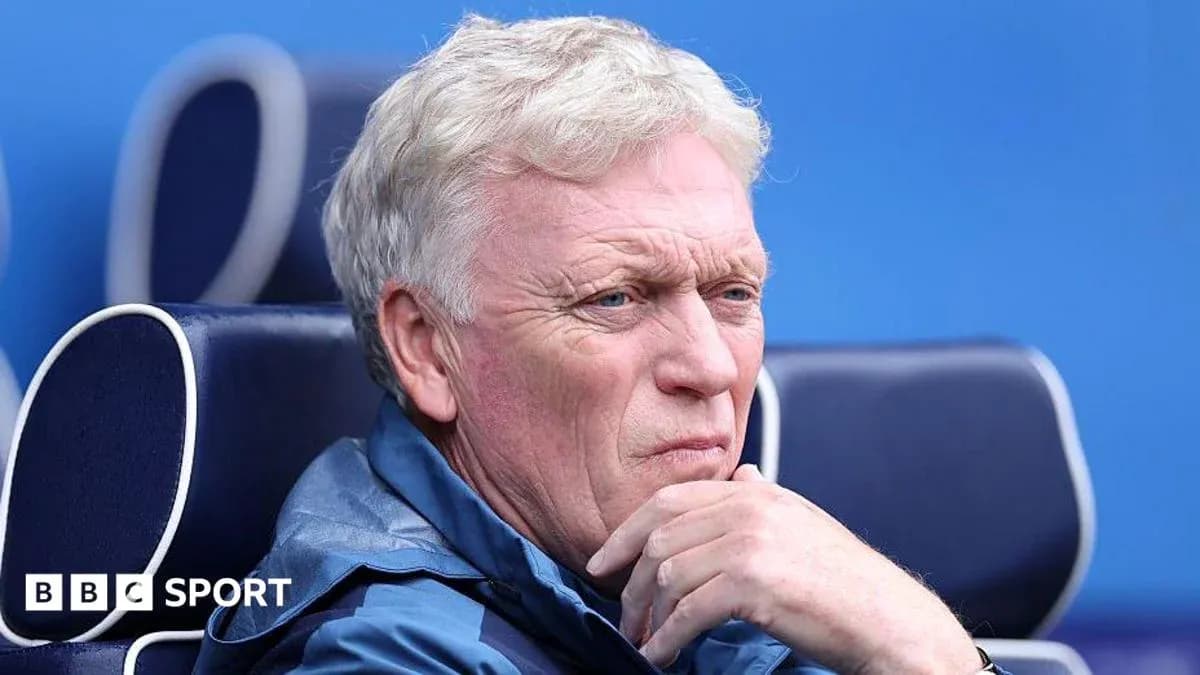
When Moyes returned 18 months ago, Everton were a point above the relegation zone and staring at yet another fight at the bottom. He dragged them clear, finishing 23 points above the drop and restoring a degree of calm after years of financial breaches, points deductions and existential anxiety.
Last summer the club pushed hard. A record £97m net spend in one window underlined the ambition of the Friedkin Group. The league table, though, was unforgiving: 13th again, only a single point better off.
To some, that looks like stasis. To others, it’s a platform.
Former Everton midfielder Leon Osman, who knows exactly what a Moyes side looks and feels like, sees progress in the sameness. Two consecutive mid-table finishes, he argues, represent stability after chaos. “When David Moyes first came in, we flew out the blocks and had a great start,” he said. That surge lasted well over a year before the first real slump arrived at the end of last season. For Osman, the direction of travel still matters more than the final placing.
Moyes, 63, has been open about the financial realities. Over the past five years Everton rank only 15th among current Premier League clubs for net spend. They cannot, he insists, trade blows with the division’s biggest spenders.
The league table offers an uncomfortable counterpoint. Bournemouth spent less than anyone last summer, actually making an £81m profit on transfers, and finished sixth. Brighton banked £41m and still came eighth. While Everton talked about constraints, others turned prudence into an advantage.
The new Hill Dickinson Stadium was supposed to reset the club’s story. Instead, it exposed fresh fault lines. Everton’s home return of 1.2 points per game was the worst by any side starting life in a new Premier League stadium. Away from home, they looked like a top-seven team. At home, they looked lost.
Osman believes context matters. Bournemouth and Brighton, he says, are “further along in their development” with settled models and clearer identities, while Everton are still adjusting to a new ground and recovering from years of upheaval. The loss of Grealish in January, to a stress fracture in his foot, also ripped out much of their attacking structure.
The numbers back him up. With Grealish in the side, Everton won 45% of their matches and took 1.6 points per game. Without him, the win rate dropped to 22% and the points return halved to one per game. One injury, one player, and the season’s momentum drained away.
Moyes’ intensity, so often a strength, became a strain. A small squad ran out of legs and, perhaps, belief. “By the end of the season, a small squad couldn't quite last,” Osman said. The manager’s demands did not change. The players’ ability to meet them did.
That tension now bleeds into the summer. Bournemouth and Brighton have built their rise on sharp, joined-up recruitment. Everton’s transfer strategy still feels like a work in progress, shaped by a new ownership group but haunted by old mistakes.
Under Farhad Moshiri, eight players signed for at least £20m left the club for nothing. Years of waste were followed by years of restraint. The Friedkin Group’s first full window brought nine arrivals and a clear tilt towards youth, but the payoff has been slow.
Grealish and Dewsbury-Hall justified the investment. Others are still waiting to do so. Tyler Dibling, a £35m winger from Southampton, started only six league games. Left-back Adam Aznou, signed from Bayern Munich, is yet to make his Premier League debut. Barry, 23, dominated in the air – no player won more aerial duels in their first Premier League season – but his finishing veered between ruthless and raw. Merlin Rohl, 24, barely featured before finally impressing with four starts in May.
There are green shoots. They just haven’t grown fast enough for a fanbase that tasted the edge of the European places and then watched it vanish.
This window may define how quickly that changes. BBC Radio Merseyside’s Giulia Bould reports that Grealish is expected to return on loan later in the window as he completes his rehab, with his wages still around £200,000 a week. It would be a statement of intent, but also a heavy financial commitment for a club still repairing its balance sheet.
Iliman Ndiaye, another key attacking piece, has been linked with a move to Saudi Arabia. Osman is clear: bring Grealish back, but only on Everton’s terms. Ndiaye, he believes, should be protected almost at all costs, unless a fee arrives that can be turned into two or three players without lowering the ceiling of the team.
Experience is draining away. Seamus Coleman and Idrissa Gueye have gone, taking more than 600 Premier League appearances with them. That helps explain the club’s interest in a profile like Christian Norgaard. At the same time, James Garner’s groin surgery means Moyes will start the new campaign without his most dependable central midfielder.
So the manager finds himself in a familiar Premier League paradox: he may have to lean on younger players he has so far been reluctant to trust.
Tyler Dibling. Aznou. Others like George. They have been on the fringes. Now they may have to step through the door. “They need to show they're capable and deserve to play,” Osman said. A year into their Everton careers, they know the physical and mental demands. The excuses shrink from here.
Moyes has 12 months left on his contract. Osman expects him to see it out. Relegation is no longer part of the weekly conversation around Everton, which in itself is a measure of how far the club has come from the brink. The question now is whether mid-table security is a staging post or a ceiling.
Hill Dickinson Stadium was built for bigger nights than 13th place. The next season will reveal whether Everton are edging towards them, or simply learning to live with the view.