Everton vs Liverpool: Premier League Derby Stakes in April 2026
Hill Dickinson Stadium in Liverpool hosts one of English football’s fiercest fixtures in April 2026 as Everton welcome Liverpool in a Premier League clash with European qualification on the line. The table adds extra edge to the derby: Everton sit 8th on 47 points, while Liverpool are 5th on 52 and currently in the Champions League spots “across all phases.” With only a handful of games left in the regular season, the gap between them could shrink to two points or stretch to eight by full time.
Stakes and context
In the league, Everton’s season has been one of gradual upward momentum. Thirteenth wins from 32 and a positive goal difference of +2 (39 scored, 37 conceded) underline a side that has become harder to beat and more efficient in both boxes. Their recent league form of “DWLWW” hints at resilience and an ability to respond quickly to setbacks.
Liverpool, meanwhile, are chasing a return to the Champions League. Fifth place with 52 points and a goal difference of +10 (52 for, 42 against) paints the picture of a more explosive but also more volatile team. Their form line “WLDLW” shows inconsistency: three defeats in their last five in the league but enough wins to keep them in the top-five pack.
This derby, then, is not just about local bragging rights. For Everton, it is a chance to drag a direct rival back into the Europa League fight. For Liverpool, it is about protecting their position and reasserting authority over the city.
Tactical outlook: structures and styles
Data across the season suggests a clear structural identity for both sides.
Everton have lined up predominantly in a 4-2-3-1 (21 league matches), occasionally flirting with a 4-3-3. That double pivot has been key to their balance: they score at a steady 1.2 goals per game and concede at the same rate (1.2). At home in the league, they average 1.3 goals for and 1.2 against, with six wins, four draws and six losses from 16 matches.
Their strengths are built on organisation and discipline. Eleven clean sheets “across all phases” (six at home) show that when they get their structure right, they can shut teams down. They have also failed to score in nine matches, which underlines that this is not a high-volume attacking side; they often rely on narrow margins and set-piece or transition moments.
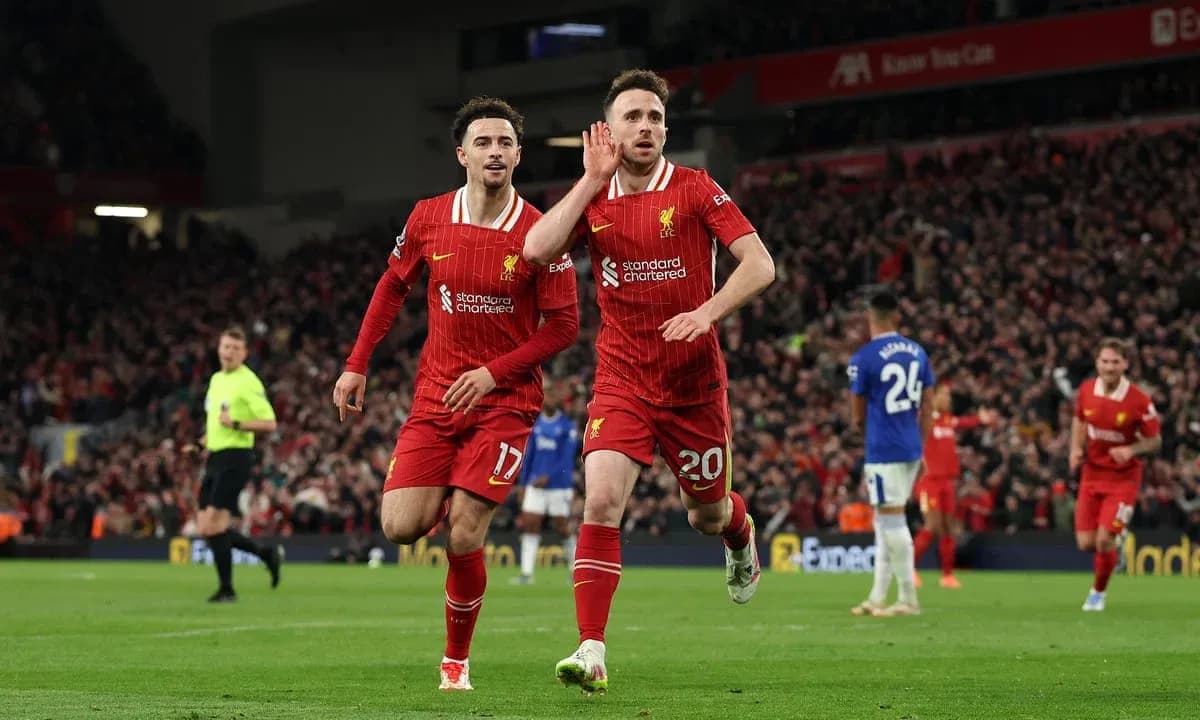
Liverpool, by contrast, are a more expansive version of a similar base shape. They too have leaned heavily on 4-2-3-1 (29 matches), with occasional switches to 4-3-3 and other attacking variants. Their output is notably higher: 1.6 goals scored per game, with 1.3 conceded. Away from home they score 1.4 and concede 1.6 on average, reflecting a more open, high-risk approach on their travels.
The visitors’ offensive potential is clear: 52 league goals “across all phases,” with a season-best home win of 5-2 and away victories up to 0-2. But their away record – six wins, three draws, seven defeats – confirms that they can be got at, especially when they commit numbers forward.
Expect Everton’s 4-2-3-1 to be compact without the ball, with the double pivot shielding the back four and the “3” line working hard laterally to block central progression. Liverpool’s own 4-2-3-1 is likely to be more aggressive, with full-backs pushing high, the No.10 finding pockets between the lines, and wide forwards attacking the half-spaces.
Key players and attacking threats
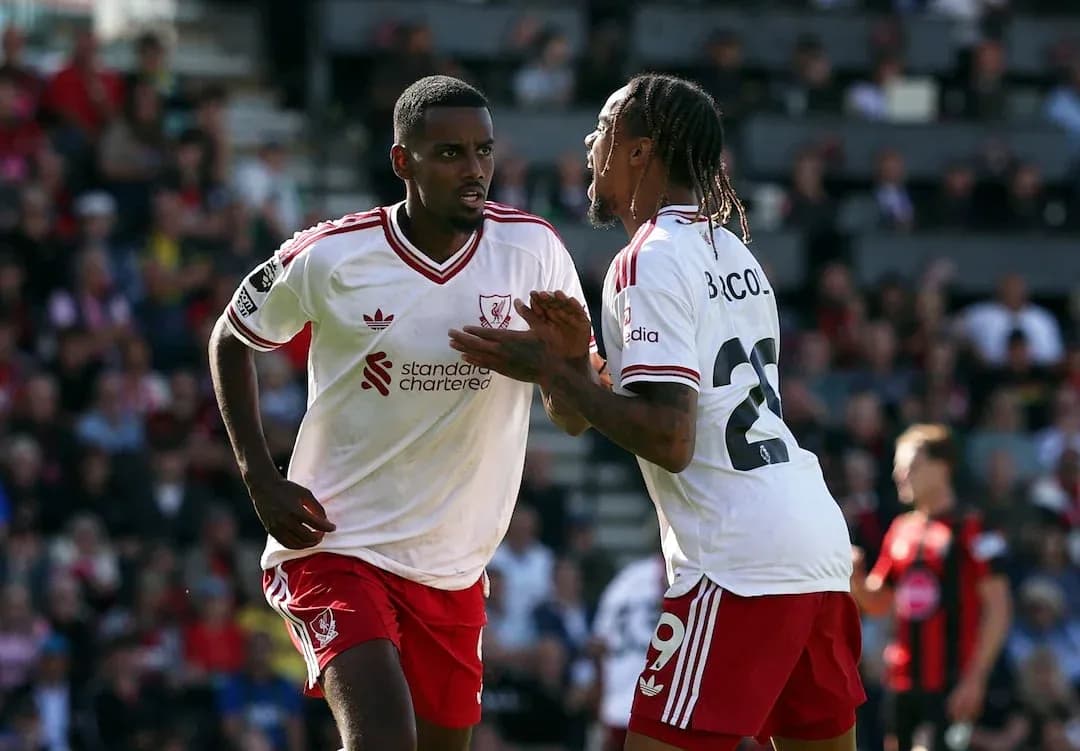
The standout data-backed threat belongs to Liverpool: Hugo Ekitike. The French forward has 11 league goals and 4 assists this season from 28 appearances, making him one of the division’s most productive attackers. His shot volume (48 attempts, 19 on target) and dribbling numbers (72 attempts, 38 successful) underline a player who both initiates and finishes attacks.
Ekitike’s movement between centre-backs and full-backs could be decisive against an Everton defence that has generally been solid but is not immune to lapses. His 21 key passes and decent passing accuracy (76%) suggest he can also link play and create for runners from deep.
Everton’s attacking output is more evenly spread, with no top-scorer data supplied, but their season profile hints at a side that wins through collective effort rather than one talisman. Their biggest win at home (3-0) and the fact they have reached three goals in both home and away matches show they can spike offensively when the game state suits them, especially if they score first and can counter into space.
Set pieces and second balls around the box may be Everton’s best route to goal, particularly given Liverpool’s away record of 25 goals conceded and an away worst defeat of 3-0. If Everton can force Liverpool into defending deep and dealing with sustained pressure, they have the structure to capitalise.
Discipline, intensity and game flow
Derbies are often decided by discipline as much as quality. Everton’s card profile is revealing: yellow cards spike late (24.56% of yellows between minutes 76–90), and they also show a tendency to pick up red cards in the final stages (two reds in that 76–90 window). That suggests potential late-game volatility if the match is tight.
Liverpool collect a significant chunk of their yellows late as well (28.57% between 76–90), but they have only one red all season, coming in stoppage time (91–105). Both sides like to play with intensity, but Everton’s data hints at a slightly higher risk of losing control under pressure.
Penalty-wise, both teams have been flawless this season when given the chance: Everton are 2/2, Liverpool 1/1. There is no individual penalty-taker data here, but if a spot-kick arrives, the numbers suggest a strong probability of conversion.
Head-to-head: recent competitive history
Looking only at competitive matches in the Premier League (no friendlies), the last five derbies offer a balanced, if slightly Liverpool-leaning, picture.
- In September 2025 at Anfield, Liverpool won 2-1, having led 2-0 at half-time.
- In April 2025 at Anfield, Liverpool edged a tight 1-0.
- In February 2025 at Goodison Park, the sides drew 2-2 in a more open contest.
- In April 2024 at Goodison Park, Everton produced a statement 2-0 home win.
- In October 2023 at Anfield, Liverpool won 2-0.
Over these five league derbies, Liverpool have three wins, Everton one, and there has been one draw. Anfield has largely belonged to Liverpool; Goodison Park has been more even, with one Everton win, one draw and one Liverpool victory in that run.
That pattern matters for this fixture at Hill Dickinson Stadium: while officially a different ground name, Everton are designated the home team, and recent “home” derbies have not been one-way traffic. Everton have shown they can both shut Liverpool out (2-0 in 2024) and trade blows (2-2 in 2025).
The verdict
The underlying numbers suggest a finely poised derby. Liverpool are the more potent attacking side “across all phases,” with a higher scoring rate and a genuine top-end finisher in Hugo Ekitike. Their league position and overall goal difference also support the view that, at their best, they have a higher ceiling.
Yet Everton’s defensive structure, home resilience and improved recent league form make this far from straightforward for the visitors. Eleven clean sheets, a balanced goals for/against record, and a proven capacity to take points off Liverpool at home in recent seasons all point to a tight contest.
Liverpool’s away vulnerability – seven defeats and 25 goals conceded on the road – opens the door for Everton, especially if the hosts can drag the game into a physical, stop-start battle and exploit set pieces.
On balance, Liverpool’s superior attacking data and slightly deeper squad profile tilt the probabilities marginally in their favour, but the margins look slim. Expect a high-intensity, tactical derby where one moment of quality – perhaps from Ekitike or a well-worked Everton set play – could decide it. A narrow Liverpool win or a score draw feels the most logical outcome given the numbers and the recent head-to-head record.