FAI Scraps Aligned Football Calendar Amidst Controversy
The fog around Gianni Infantino’s war with world football was still hanging low on Friday when the FAI slipped out a statement of its own. On the face of it, it was the usual corporate fare: “key priorities”, “strategic planning”, “boosting development”. Familiar jargon. Familiar glaze.
Halfway down, beneath the buzzwords, sat the real story.
The plan to put all of Irish football on the same calendar has been scrapped.
Or, in the new Abbotstown dialect: “Following the strategic planning process, the Aligned Football Calendar has been reprioritised and will not be considered a deliverable within the Football Pathways Plan or the FAI’s current 2026–2029 Strategic Plan.”
Reprioritised. Not failed. Not dropped. Just gently nudged out of existence.
It is a luxury of the executive class in football to talk like this. A manager can’t tell a player he’s been “reprioritised” out of the team. He’s dropped. Out. Gone. Ireland’s many route-one managers might at least admire the FAI’s willingness to leather this particular political football into the long grass.
A grand plan, sold as a blueprint
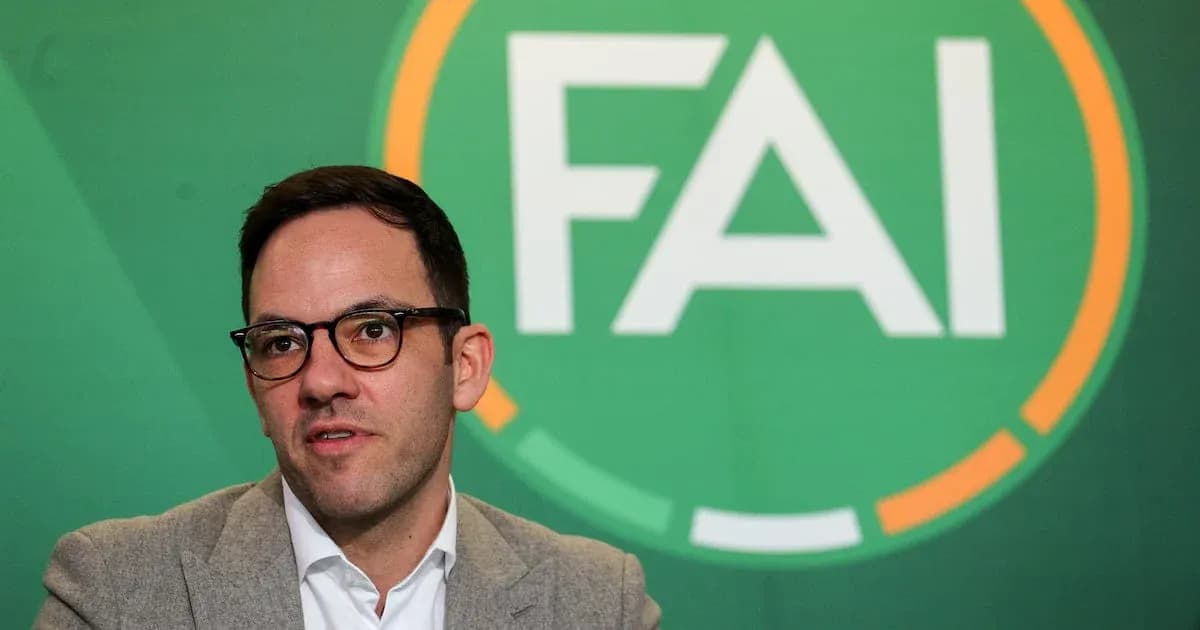
The Aligned Football Calendar was the centrepiece of the Football Pathways Plan, the brainchild of former director of football Marc Canham. He was the man entrusted with the long, meandering search to replace Stephen Kenny, arriving from the Premier League with a polished CV and a PowerPoint for every occasion.
The FAI said the final plan came from 11,000 hours of consultation, most of it delivered via roadshows around the country. Not everyone was dazzled. At one such event in Cork, Canham was asked a simple, pointed question: did he know anything about silage?
Because that, in the end, was the heart of it. The central idea in Canham’s plan was to move the entire Irish football calendar to silage season.
Ireland is the only one of Uefa’s 55 members running different calendars at different levels of the game. The proposal was stark: bring everyone into line with the League of Ireland schedule by 2028. One calendar. One rhythm. From underage to senior.
The reasoning sounded straightforward. Irish football, Canham concluded, was underperforming. Kids weren’t playing enough. Seasons ran for roughly 30 weeks a year. Pitches flooded and cut up in winter. Vast stretches of the year lost to rain and mud.
Play more football in the sun. Simple.
Except it wasn’t.
Backlash, rebellion and a narrow mandate
The proposal detonated at grassroots level. Some leagues erupted. They said there hadn’t been enough consultation. They said it would rip up long-standing local structures. They said it would cost them players.
The FAI board had already unanimously backed Canham’s blueprint, but still sought a mandate from the membership. The entire pathways plan – aligned calendar included – went to a vote at the General Assembly.
It scraped through by a slim majority. The result was quickly framed as a partisan one, with the League of Ireland and professional wing of the game voting it home. Still, a vote is a vote, and FAI president Paul Cooke stood up and hailed those in front of him for “changing the face of Irish football”.
On paper, the revolution had passed.
On the ground, the rebellion rolled on. Some elected directors felt the heat. Canham walked away in April last year, saying he would never again work in grassroots football. The FAI then blinked, allowing leagues to apply for a two-year delay before switching their seasons.
By the time his successor John Martin met the media earlier this year, the tone had changed completely. He wasn’t going to mandate anything, he said. No big stick. No forced march to summer football.
Last week’s statement merely confirmed what everyone in the game already knew. The plan was dead.
Fears, facts and the summer that never was
A lot of the opposition to the aligned calendar came from a genuine place. The main anxiety was clear: lose the winter season and you lose players to Gaelic games. Entire squads, some argued, would drift off to the GAA.
Those fears ignore a few awkward truths. Local co-operation between clubs can manage those clashes. In fact, 22 of the 69 FAI-affiliated leagues already run calendar-year seasons. The sky has not fallen in on any of them.
The plan also allowed for flexibility. Leagues could pause competitions during peak holiday periods, run alternative formats, or reshape fixtures to suit local needs. It would have been messy at first. There would have been friction. But the prize was obvious: more football for more kids, on better pitches, for longer.
There were other, softer objections. Some didn’t want to disturb the old rhythm of football returning with the school year, that sense of September boots and autumn evenings. Yet plenty of current winter leagues actually played in summer before the GAA scrapped the Ban. Tradition, in this case, is not as ancient as some would like to believe.
Once, Irish football could point to the GAA and complain about cultural imperialism. Not now. Not on this.
A family at war with itself
The aligned calendar didn’t sink because of the weather, or the GAA, or the school year. It went down under the weight of the FAI’s own factionalism.
This time, it was the amateur side of the house roaring back. The plan, they said, had been driven by “that lot” in the League of Ireland. The Leinster FA wrote to the FAI board to condemn a “flawed voting procedure”, arguing that the professional game – which wouldn’t be directly affected – had pushed it through. Their own representative on the FAI board had endorsed the plan, but that only deepened the internal split.
Strip away the language and the outcome is stark. The FAI commissioned a plan. It backed that plan unanimously. It then sought, and received, a mandate from its members to implement it.
Now, under pressure, it has abandoned the plan’s key recommendation.
This is a governing body still at war with itself. It cannot hold a line it has already agreed, signed off and sold as the future. It also leaves the General Assembly process looking flimsy. That same mechanism was recently cited as proof that Irish football stood behind the decision not to boycott fixtures against Israel. When a vote can be undone this easily, what does a mandate really mean?
The winter ahead
So the fog thickens again. The strategy documents remain. The statements keep coming. The pathways plan lives on, minus its most radical and impactful element.
On the ground, the reality is simpler.
When the rain lashes against the windows this winter and your kids sit inside, weekends swallowed by bad weather and unplayable pitches, remember this: Irish football has decided that this is in their best interests.
Better, it seems, that nobody plays at all than risk some of them choosing to play something else.