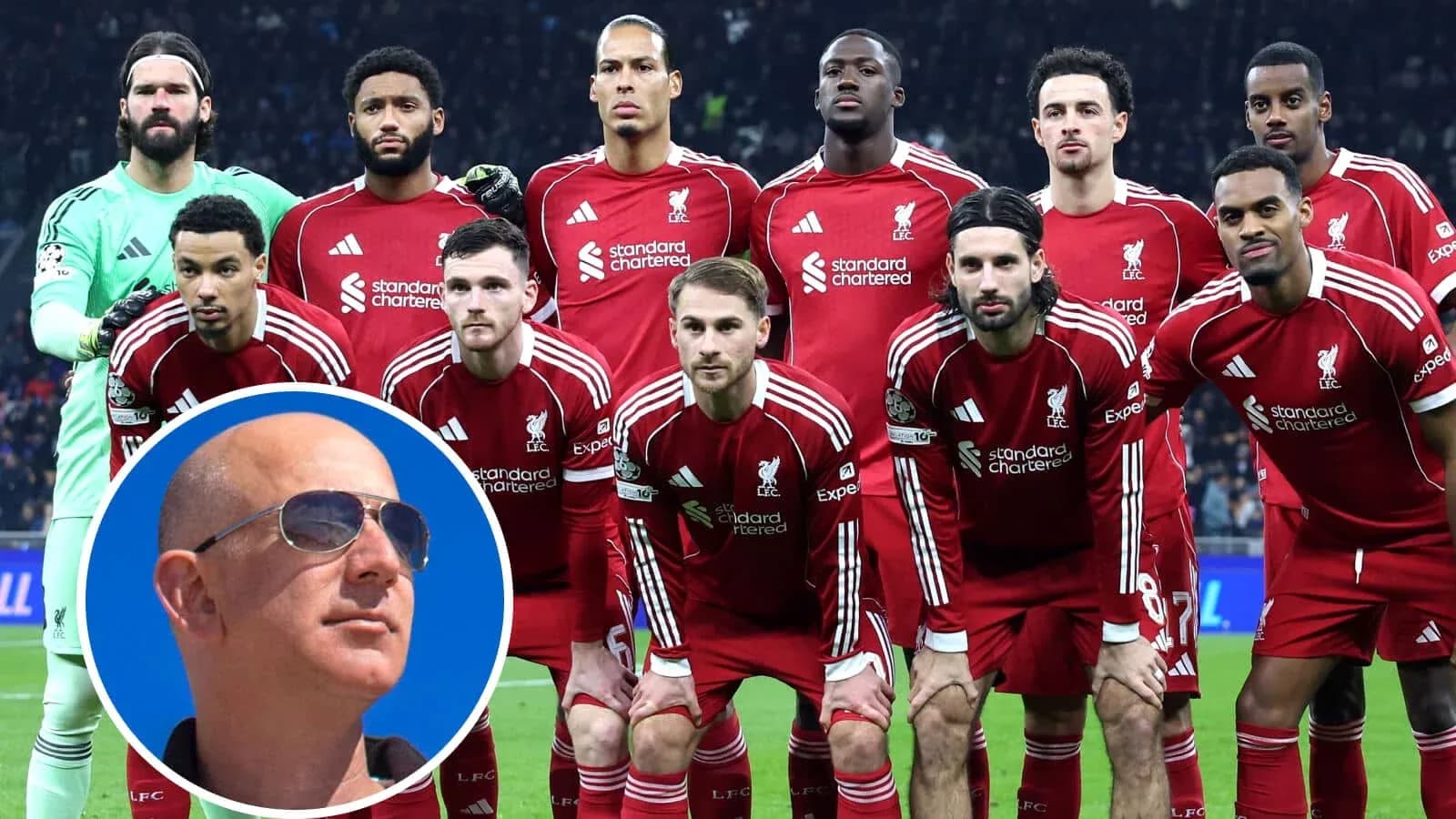
Fenway Sports Group's Commitment to Liverpool: No Sale in Sight
Fenway Sports Group are not for selling. Not now, not in the medium term, and not despite the noise swirling around Liverpool’s ownership.
Amid renewed speculation and whispers of billionaires circling Anfield, sources have made it clear to TEAMtalk that FSG’s stance is firm: they want strategic partners, not a way out. The message from inside the group is consistent. John W. Henry and Tom Werner remain “as committed as ever to Liverpool” and still see the club as a “long-term cornerstone” of their portfolio.
This is not the language of owners dressing the shop window. It is the language of a group that believes it has unfinished business on Merseyside.
Investment, not an exit
The recent spike in reports about outside money has triggered the usual questions: is this the start of a sale? Is Liverpool about to follow the path of other Premier League giants and change hands entirely?
Those close to the talks insist that is not the case. FSG’s focus is on what they describe as “strategic investment” – minority stakes that add value and muscle, on and off the pitch, without threatening control.
The ownership group’s view is simple. Any new money must sharpen Liverpool’s competitive edge, not signal the beginning of an exit strategy. They want investors who can help Liverpool fight at the very top of European football, while reinforcing the club’s commercial and infrastructural strength.
It is a stance rooted in the journey since 2010, when FSG bought Liverpool from George Gillett and Tom Hicks for £300million and began reshaping the club.
From rebuild to refinement
Across their tenure, FSG have poured money into the bones of Liverpool. The redevelopment of Anfield has turned the stadium into a modern fortress without stripping away its character. The AXA Training Centre has given the first team and academy a state-of-the-art base. Football operations have been upgraded to the point where, internally, there is a belief that Liverpool now rank among the best-equipped clubs in world football.
That work, FSG argue privately, is the platform. Strategic investment is the next layer.
TEAMtalk understands that discussions have been held with several high-profile figures as FSG test the market for the right kind of partner. These are not fire sales or rushed negotiations. They are exploratory conversations, designed to map out who can bring more than just a cheque.
Among those to have spoken with FSG is former Queens Park Rangers co-owner Amit Bhatia. Sources confirm talks have taken place, but stress they sit within a broader process of sounding out potential investors, not a specific move to offload a controlling stake.
The same applies to conversations with other major business names, including Amazon founder Jeff Bezos, who has also been linked with a possible involvement. The interest is real enough for discussions to happen. The interpretation, though, is where FSG are pushing back.
They are adamant: talks with wealthy suitors should not be read as a prelude to them walking away.
The LeBron blueprint
Inside FSG, there is a clear reference point for what they want this next phase to look like.
In 2011, NBA icon LeBron James and his business partner Maverick Carter acquired a small minority stake in Liverpool. It was not just about capital. FSG saw it as a strategic move to supercharge the club’s global profile, particularly in the United States and across basketball’s huge fanbase.
A decade later, in 2021, James increased his involvement and became a major partner in the club. That evolution – from minority investor to influential partner, adding reach, visibility and commercial clout – is the model FSG are keen to replicate.
They are open to minority investors, but only on their terms. Any new partner must bring something tangible to Liverpool’s continued growth, whether that is market access, brand power or expertise. Money alone is not enough.
Sources are adamant there is “no appetite” within FSG to relinquish control. They believe Liverpool are well positioned for sustained success and are determined to keep the club anchored among Europe’s elite.
Backing Iraola, reshaping the squad
All of this boardroom manoeuvring feeds into one key priority: the team on the pitch.
Inside the club, the focus is on giving Andoni Iraola the tools to build a squad capable of going toe-to-toe with the best in Europe and dragging Liverpool back into serious trophy contention after a flat, frustrating season under Arne Slot.
A new winger sits at the top of the recruitment list. On Thursday, it emerged that Bradley Barcola has the ability to force Paris Saint-Germain into a sale, opening the door to what has been described as an “absolutely outrageous” move to Anfield. If that deal gathers pace, it would be precisely the kind of ambitious, statement signing FSG want strategic investment to help enable.
Liverpool have also been mentioned in connection with a supposed hijack attempt for Maghnes Akliouche, but sources have poured cold water on that angle. The Monaco midfielder’s next club, they insist, lies elsewhere, and the noise around Anfield is just that – noise.
The real story sits above the transfer gossip. FSG are staying. They are inviting partners in, but only through the side door, never the front. The question now is not who will own Liverpool, but how much extra firepower those chosen investors can bring to the club’s next assault on the summit of European football.