FIFA's Infantino Faces U-Turn Amid Backlash Over Billion-Dollar Plan
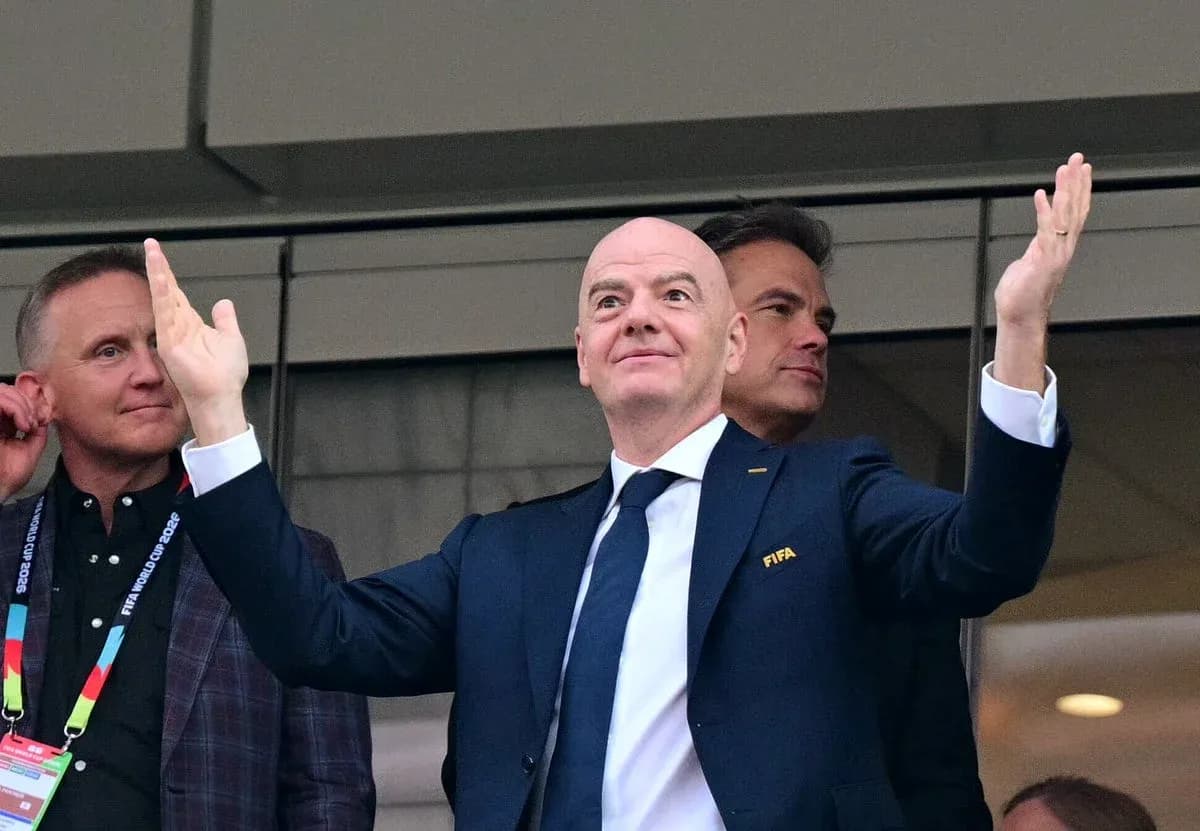
Gianni Infantino walked into this week as the all‑powerful president of a FIFA flush with World Cup cash. He ends it forced into a public climbdown, his flagship project scrapped and his authority openly questioned across the football world.
The U-turn was brutal, and it was complete.
A billion‑dollar vision collapses
Late on Friday night, FIFA confirmed it was abandoning plans to sell a minority stake in a new commercial and events arm, FIFA Forward Enterprises (FFE). The proposal would have carved off 21 per cent of FIFA’s commercial and event operations — including World Cups and Club World Cups — and sold it to outside investors, led by Joshua Kushner’s venture capital firm Thrive, for a reported $4.2 billion.
The money was already earmarked. FIFA had trumpeted a new funding stream, the FIFA Fast‑Forward Programme (FFFP), promising to push total development funding beyond $10 billion over the next four years. Every one of FIFA’s 211 member associations had been told what that could mean for their balance sheets.
Infantino framed it as a project to “unite and improve.” By Friday night, he was admitting it had done the opposite.
“Having listened carefully to all the views, it has become clear that the project has created divisions of a nature that, regardless of the level of support, are no longer in the interest of the objective set out in the first place,” he said in a statement. “Our purpose has always been — and will always be — to unite and improve. As a result, this proposal will not proceed.”
The pressure finally told.
Confederations revolt
The backlash had been building all week. UEFA came out first and came out swinging. The European confederation said all 55 of its members would boycott FIFA competitions — including the World Cup — if the plan stayed on the table.
That was not a warning FIFA could shrug off. Yet in the early hours of Friday morning in Europe, the governing body tried to stand its ground. It released a statement insisting “nobody is selling football” and stressing it “acknowledges and respects feedback and concern aired in public,” while making clear it intended to press on and “reaffirms its commitment to an open and democratic consultation.”
Any hope of riding out the storm evaporated within hours.
The Asian Football Confederation issued its own statement, aligning itself with UEFA and Concacaf, the North and Central American confederation. Between them, those three bodies speak for 137 of FIFA’s 211 member associations. Enough to outvote the president. Enough to threaten his future.
CONMEBOL, South America’s confederation, stopped short of outright rejection but still drew a firm line, saying financial and commercial decisions “must always serve the interests of football and never take precedence over its essence.”
The political ground beneath Infantino’s feet was moving.
Money on the table, trust off it
The numbers were designed to be irresistible.
Under the FFE and FFFP plan, FIFA promised development payments that would dwarf previous cycles. Even if an association opposed the project, FIFA said, it would still receive $20 million in the 2027‑30 cycle, rising to $22 million in 2031‑34 and $24 million in 2035‑38, regardless of whether any stake in FFE was sold.
If an association backed the proposal, the offer doubled to $40 million in 2027‑30, with the later payments unchanged.
The message was clear: vote for the project and your reward comes sooner and bigger; vote against and you still get paid, just not quite as handsomely. For many smaller federations, that kind of guaranteed income can shape entire national programmes.
But the revolt was not about the size of the cheques. It was about who controls the game.
FIFA needed a majority of its 211 member associations and the backing of its 37‑strong Council — including Infantino and eight vice presidents — to advance the proposal. Instead, it watched major confederations line up against it, and then something even more damaging happened.
Infantino’s inner circle began to break.
Allies turn, project crumbles
First came Carlos Cordeiro. A close adviser to Infantino and a former U.S. Soccer president, he resigned his advisory role and shredded the proposal on the way out, calling it “a bad deal for FIFA’s Member Associations, a bad deal for football, and a bad deal for the long-term future of the game.”
Then Kevin Lamour, FIFA’s chief operating officer, went public. Speaking to The Associated Press, he accused Infantino of having “deceived” staff over the project. Lamour said he would sleep better after speaking out, even if it cost him his job.
“It is the project of one person,” he said. “Not only must this project not go ahead… but the time has now come for football political leaders to ask themselves the right questions and make the right decisions.”
When senior figures inside FIFA start using that kind of language, the issue stops being about a commercial vehicle. It becomes a test of leadership.
By Friday night, Thrive had not formally withdrawn from the deal. It no longer needed to. FIFA leadership killed the project itself with its late statement, pulling the plug on FFE and, with it, on the $4.2 billion sale.
A president exposed
This was supposed to be Infantino’s era of consolidation. He presided over a men’s World Cup that delivered $15 billion in revenue over the summer. Many within the game had long assumed he would cruise into another term at the March 2027 election, unopposed and unthreatened. Several federations had already filed letters pledging support.
Instead, this week has stripped away the aura of inevitability around his rule.
The Athletic reported that his leadership came under direct scrutiny in meetings of UEFA and Concacaf on Thursday. The boycott threat was one thing; the sense that confederations were now openly weighing his future was something else entirely.
Lise Klaveness, president of the Norwegian Football Federation, did not sugarcoat her view when speaking to VG. “My clear impression at the moment is that he has lost a great deal of trust,” she said. “We didn’t vote for him last time, and we’ve been sceptical about this. There are many good things about FIFA, but if you take a lax approach to governance principles and rules, you quickly lose trust.”
That word keeps returning: trust. Not revenue, not expansion, not broadcast deals. Trust.
For years, Infantino has positioned himself as the reforming president after the Sepp Blatter era, the man who would modernise FIFA while spreading wealth more evenly across the game. This week, he found himself accused of centralising power, sidelining governance principles and trying to push through a project that even his own executives described as “the project of one person.”
The battle over FFE ended with a statement and a retreat. The battle for his job may only just be starting.
Nominations for the 2027 FIFA presidential election must be submitted by November. After this week’s revolt, who will step forward?