FIFA Eases Water Bottle Ban for 2026 World Cup Amid Fan Outcry
FIFA has rowed back on one of its most controversial off‑pitch decisions for the 2026 World Cup, softening a ban on outside water that had enraged supporters and alarmed health experts ahead of a tournament likely to be played in punishing heat.
Two days after confirming that refillable bottles would be barred from stadiums, world football’s governing body moved to “clarify” its position. The new line: fans will be allowed to bring in one disposable bottle of water – but only under tightly controlled conditions.
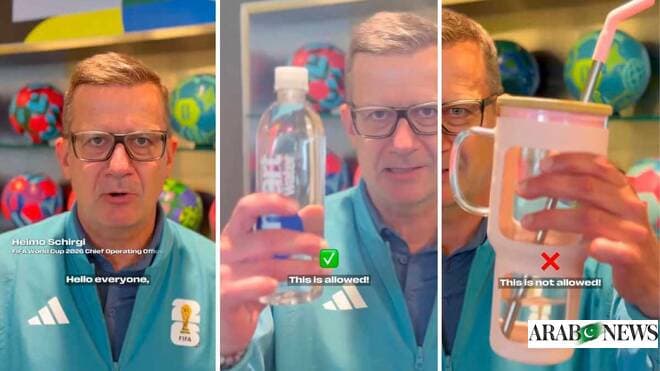
In a video message posted on FIFA’s X account, World Cup chief operating officer Heimo Schirgi spelled out the revised rule.
“All fans will be permitted to bring in one, soft, plastic 20 ounces (590ml), factory sealed disposable water bottle into any FIFA World Cup 2026 match in the USA and Canada,” he said.
The shift comes after a wave of criticism that the original stance would leave supporters at the mercy of stadium prices for something as basic as drinking water, at a tournament staged across the United States, Canada and Mexico, where several open‑air venues are expected to bake in extreme temperatures.
Safety vs. Comfort
FIFA has anchored its policy in security concerns. In a statement to AFP earlier in the week, it argued that outside bottles are already banned at several host venues and that the organization is simply applying a consistent standard “to prevent risk and injury to players and attendees.”
On Friday, Schirgi underlined that those safety fears still drive the policy. Hard‑sided, reusable bottles remain prohibited. During his video, he held up examples of which types of containers will be turned away at the gates and which will be waved through.
The message was clear: one soft, factory‑sealed disposable bottle per fan is the limit. Anything sturdier stays outside.
Heat Risk Looms
The timing of the row is no coincidence. Meteorologists and climate researchers have been sounding the alarm over conditions at the 2026 tournament, which will stretch across vast distances and multiple climate zones.
A report from the World Weather Attribution research group last month estimated that 26 of the 104 matches are likely to be played when the Wet Bulb Global Temperature (WBGT) exceeds 26 degrees. That metric blends temperature, humidity, wind and sunlight to gauge how hard heat hits the human body. Once it crosses certain thresholds, the risk of heat stress and dehydration rises sharply.
Fans have seen this movie before. At last year’s FIFA Club World Cup in the United States, supporters complained of searing temperatures while being blocked from bringing their own water into stadiums. The images of sweltering crowds and long lines at concession stands have lingered.
With that backdrop, the idea of banning all outside water for 2026 struck many as tone‑deaf.
Stadium Promises Under Scrutiny
FIFA insists spectators will not be left to wilt. The organization has pointed to a suite of measures inside what it calls the “stadium footprint”: misting stations, fans, hydration points and cooling tents designed to give people a chance to recover from the heat.
Bottled water, it says, will be sold at prices that “remain consistent with other events held at each stadium” – a phrase that offers little comfort to regular attendees who know how steep those prices can be in North American arenas.
The governing body’s partial climbdown – allowing one soft disposable bottle, but still blocking sturdier reusable containers – tries to thread the needle between security and supporter welfare. It may not end the debate.
With a record‑breaking World Cup on the horizon, spread across three countries and 16 host cities, the question now is whether a single 590ml bottle and a few misting stations will be enough when the mercury starts to rise.