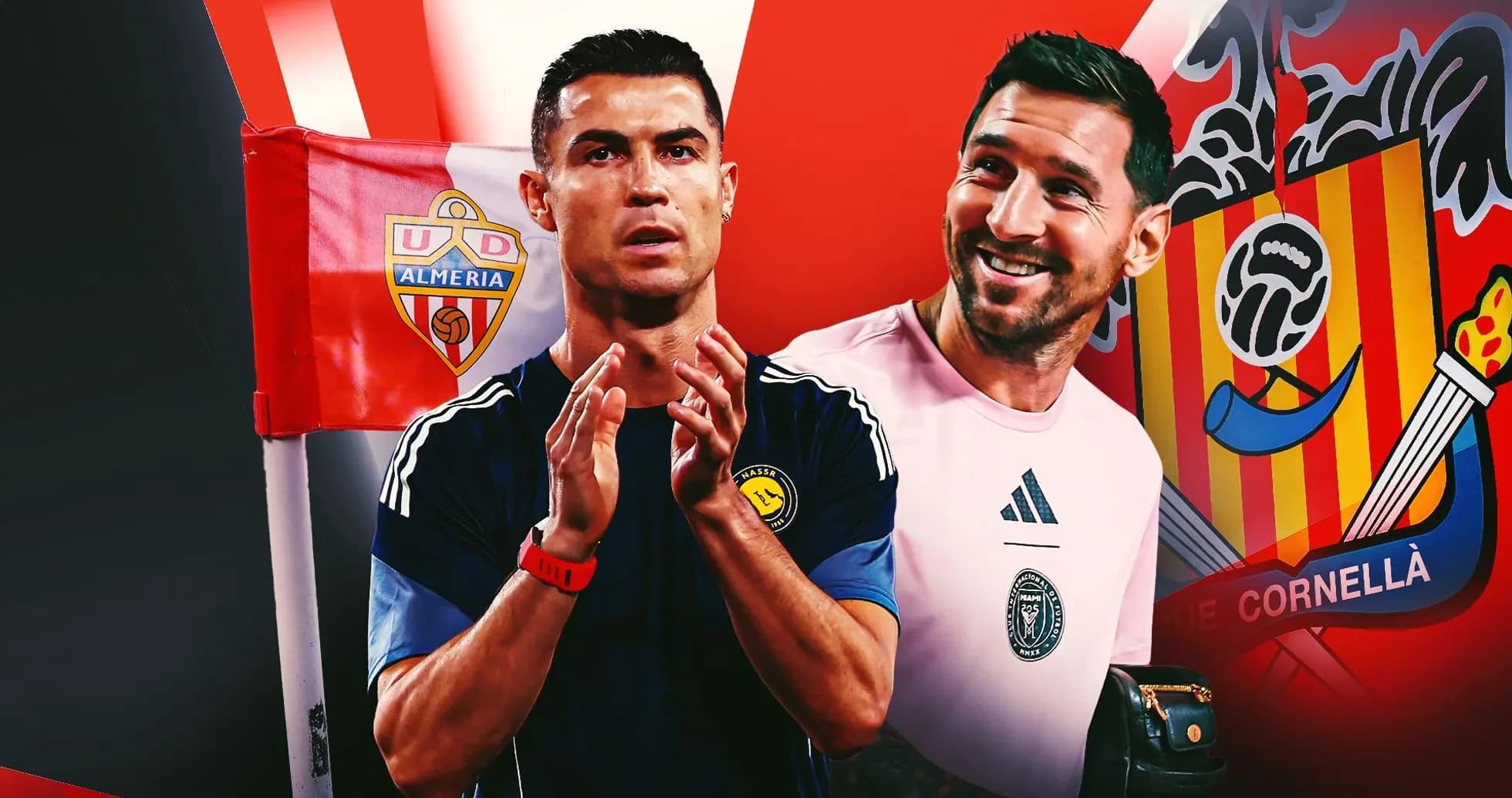
Football Stars Transitioning to Club Ownership
Lionel Messi, Cristiano Ronaldo, Kylian Mbappe, Luka Modric, Vinicius Junior, Thibaut Courtois. For two decades they have shaped the game on the pitch. Now they are quietly trying to reshape it from the boardroom.
This is not about vanity projects or post-career hobbies. It is about control, legacy, and the next great power play in football: owning the clubs instead of just carrying them.
Messi comes home – through Cornella
In April, deep in Spain’s fifth tier, UE Cornella dropped a bombshell. Lionel Messi had completed a 100 percent takeover of the club.
No grand stadium unveiling. No fireworks. Just a statement that landed with the weight of his name.
Cornella sit in the south-west of Barcelona, in the same city where Messi ruled for 17 years at FC Barcelona. The club framed the deal as a natural extension of that bond, saying it “reinforces Messi’s close ties to Barcelona and his commitment to the development of sport and local talent in Catalonia”.
Messi didn’t just sign the papers and disappear. He recorded a video message to players and staff, formally introducing himself and backing their promotion push. They fell short in the playoffs, but the effect of his arrival was instant in other ways.
Cornella’s Instagram exploded into the hundreds of thousands. A modest Catalan club suddenly had a global footprint. Behind the noise, there is substance: a respected academy already in place and a clear intention from Messi to funnel more investment into local talent.
This is the club that helped shape Jordi Alba, current Barcelona player Gerard Martin and Arsenal goalkeeper David Raya. It also stunned Spain in 2021 by knocking Atletico Madrid out of the Copa del Rey. Now it has the greatest player of his generation as owner.
Cornella is Messi’s first European club, but not his only venture. In Uruguay, he and Inter Miami team-mate Luis Suarez created Deportivo LSM, a new professional side in the fourth tier. The message is clear: Messi is building, not just reminiscing.
Ronaldo trades touchline for boardroom at Almeria
Cristiano Ronaldo has never hidden his ambition. Even his retirement plan sounds competitive.
“If I can be a club owner, why would I be a manager, sporting director or CEO?” he said after turning 40, outlining his desire to one day own “several” clubs.
The first step came in February. Through CR7 Sports Investments, Ronaldo bought a 25 percent stake in UD Almeria, a Segunda Division club with a recent taste of La Liga and a clear path for growth.
“It has been a long-held ambition of mine to contribute to football, beyond the pitch,” he said in a statement. “UD Almeria is a Spanish club with strong foundations and clear potential for growth.”
Almeria’s main ownership remains with a Saudi-led consortium fronted by Mohammed Al-Khereiji, who called Ronaldo “the greatest to ever play the game” and praised his knowledge of Spanish football after nine record-breaking years at Real Madrid.
The potential is obvious. Almeria last played in La Liga in 2024 and narrowly missed promotion in June, losing 2-1 on aggregate to Malaga in the playoff final. They reacted aggressively: hiring García Pimienta, a coach steeped in Barcelona’s La Masia, and signing seven new players to chase automatic promotion in 2026-27.
Ronaldo, now 41, even found himself in a surreal situation in August. In Lisbon, on a post-World Cup break, he watched from the stands as his current team, Al-Nassr, lost 2-0 in a pre-season friendly to the club he now co-owns. The ultimate split loyalty.
For Ronaldo, this is not a sentimental link to his past. It is a calculated investment in his future.
Vinicius and the rebirth of Alverca
Vinicius Junior chose a very different route. No former club. No emotional homecoming. Instead, he stepped into a story of survival and reinvention in Portugal.
In February 2025, the Brazilian winger joined a group of investors to buy between 70 and 80 percent of Alverca for a reported €10 million. The timing could hardly have been better. Three months later, Alverca secured a second straight promotion and returned to the top flight for the first time since 1998.
This is a club that actually folded in 2005 after relegation from Liga Portugal. It reformed a year later and clawed its way back up through the regional divisions. When the Vincintin family, who also owned Santa Clara, were forced to sell due to league rules on dual ownership, Vinicius and his partners pounced.
He is not the hands-on type. His agent, Thassilo Soares, is now the majority shareholder, while Vinicius sits more in the background. “Our relationship with Vinícius is remote,” sporting director Fernando Malta told The Guardian via Get French Football News. “We say he is the club’s most famous fan.”
Still, that “fan” status carries weight. Alverca’s Complexo Desportivo welcomed Vinicius for the first time early last season for a match against Benfica. The club then finished 10th in its first year back among the elite, helped by a remarkable 35 signings.
Malta is realistic. He does not expect Alverca to start hunting down Porto, Sporting CP or Benfica for titles. The objectives are clear: stay in the top division, sell players smartly, and out-think richer rivals through data and creative scouting.
Star power helps. Eduardo Camavinga, Vinicius’ Real Madrid team-mate, and American rapper Travis Scott are also involved, providing communication and marketing muscle. Alverca may not become a giant, but it suddenly feels like a club people will notice.
Mbappe’s Caen experiment turns turbulent
Kylian Mbappe’s ownership story has been far less smooth.
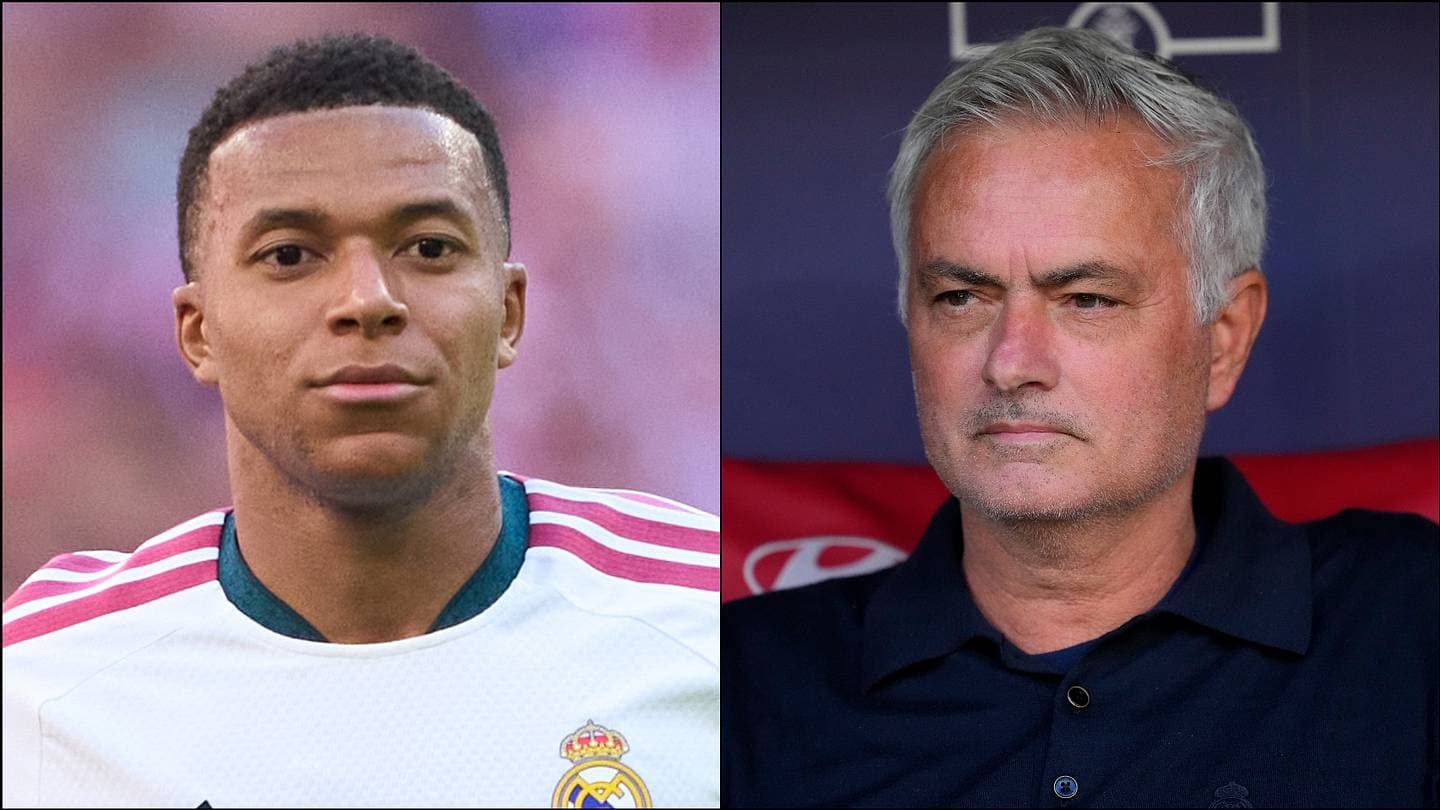
In June 2024, his company Interconnected Ventures, via its investment arm Coalition Capital, bought a majority stake in SM Caen. Mbappe reportedly invested €15 million of his own money, returning to a club he nearly joined as a youth player in 2012 before choosing Monaco.
Caen called the deal “a significant step in the club's strategic development” and said it reinforced their ambition to remain among the historic names of French football. At that moment, they were in Ligue 2 and pushing for promotion.
The slide was brutal. Caen finished the 2024-25 season in 18th and were relegated to the Championnat National, their first drop to the third tier in 41 years.
As results worsened, so did the mood. Popular manager Nicolas Seube was sacked. Supporters unfurled a banner reading “SMC is not your toy” after a damaging defeat to Clermont Foot. The Mbappe era, sold as a bold new dawn, had turned sour.
Balancing Real Madrid and France duties with the demands of owning a professional club has proved harder than expected. Yet Mbappe has not walked away. Late last year he appointed former Arsenal and France defender Gael Clichy as head coach, a bold move that has at least stabilized the team.
Clichy missed the playoffs in May but restored some order. This summer, Mbappe also approved the appointment of former Caen and Paris Saint-Germain midfielder Mathieu Bodmer as director of football. L’Equipe reported the pair did not even speak beforehand, an unusual detail that underlined the distance between star owner and day-to-day operations.
Still, Caen now look upwards again, eyeing a quick return to Ligue 2. Mbappe’s first big ownership test has been unforgiving. How he responds will shape his reputation far beyond the Bernabeu.
Modric bets on Swansea – and learns the business
Luka Modric’s move into ownership carried a different kind of shock value.
Shortly before ending his 13-year Real Madrid career last summer, he became a minority investor and co-owner at Swansea City. His greeting to supporters in the club’s press release sounded almost surreal: “Hi Swansea fans, I’m Luka Modric and I’m excited to be part of the journey. My goal is to support the club’s growth in a positive way and to help to build an exciting future.”
For Swansea’s American owners – Andy Coleman, Brett Cravatt and Jason Cohen – landing the 2018 Ballon d’Or winner was a coup. Inspired by the Wrexham phenomenon under Ryan Reynolds and Rob McElhenney, they had long targeted a high-profile partner.
Modric knew the club from his Tottenham days, having faced Swansea home and away in 2010-11. According to The Guardian, the decision was driven by a desire to understand the business side of football, not just to lend his name.
He has thrown himself into it. Modric has studied Swansea’s growth strategy and even volunteered to speak directly with transfer targets. For now, he remains largely in the background at the Swansea.com Stadium while continuing his playing career with AC Milan. That will change when he finally retires at 40.
The impact is already visible. Snoop Dogg joined as an investor a couple of months after Modric, followed by Martha Stewart in December. Chief executive Tom Gorringe summed it up simply: “It puts us in a different league in terms of some of the things that we are able to do.”
Swansea’s ambitions are equally clear. They want back into the Premier League after nine years away, having missed the Championship play-offs in 2025-26 by nine points. If Modric can transfer even a fraction of his on-pitch intelligence into the boardroom, the timing could be perfect.
Courtois builds a network, not just a story
Thibaut Courtois may be the most strategic of them all.
At 34, still one of the world’s elite goalkeepers, he has already spread his influence across three clubs in two countries in the space of a few months. This is not nostalgia. It is a plan.
In February, Courtois joined an all-star ownership group at Le Mans, a club that already counted Novak Djokovic and Felipe Massa among its investors. He invested via NxtPlay Capital, the company he co-founded with Gonzalo Vilar. Le Mans promptly celebrated promotion back to Ligue 1 for the first time since 2010.
Three months later, Courtois and NxtPlay became co-owners of CD Extremadura. The Spanish club has surged through four straight promotions since 2022 to reach the Primera Federacion, Spain’s third tier. It is the kind of upward curve investors dream about.
Then came the emotional move. On June 1, Genk announced Courtois’ return as a minority investor. This is where his professional career began. Now he has become the club’s first external corporate shareholder after their transition to a limited liability company.
“I have pursued excellence all my life. At KRC Genk, I feel that same fire and ambition,” he told the club’s website. “This investment truly feels like coming home. Through this commitment, I want to help the club continue to grow and strengthen its sporting ambitions. From Limburg to the top of Europe.”
NxtPlay now holds a seat on Genk’s board, with Vilar handling the role while Courtois focuses on Real Madrid. Even from a distance, the goalkeeper is helping to shape commercial strategy and long-term planning.
The pattern is unmistakable. Le Mans, Extremadura, Genk: three clubs with room to grow, three platforms that could one day form a multi-club model. Courtois is following a path already trodden by the City Football Group, Red Bull and BlueCo – but with a player’s eye for opportunity.
From Messi in Barcelona’s shadows to Mbappe under pressure in Normandy, from Ronaldo’s push in Andalusia to Courtois’ carefully drawn network, the sport’s biggest stars are no longer content to be just employees.
They have spent their careers deciding games. Now they want to decide what football looks like next.