Franco Baresi's Funeral: A Civic Tribute in Milan
Milan does not stop for many people. It did for Franco Baresi.
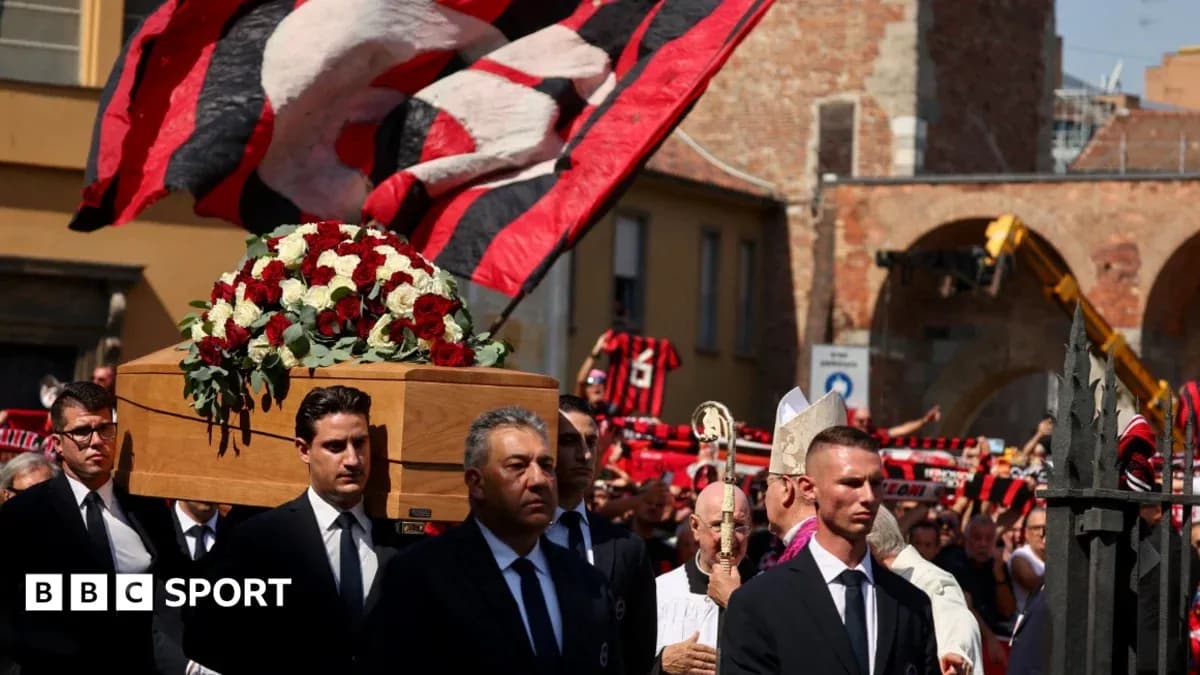
On Tuesday, thousands lined the streets of the city to say goodbye to the defender who came to define an era, a club and, in many ways, an entire way of playing the game. At 66, Baresi died last week after a period of ill health. The response since has underlined what he meant to Milan and to Italy: this was not just a funeral, it was a civic event.
The corteo moved towards the Sant'Ambrogio Basilica, a setting steeped in history for a man who spent his entire career writing it. Inside, the pews filled with greatness. Paolo Maldini, Marco van Basten, Clarence Seedorf, Roberto Baggio, Alessandro Costacurta – giants of different generations, united in grief for the captain they once followed or admired.
Outside, the crowd waited, scarves raised, many wearing that famous red and black with the number 6 on the back. A number no Milan player will ever wear again. The club retired Baresi’s shirt when he ended his playing days, a rare honour that now feels even more permanent, almost sacred.
Baresi’s legacy is carved in numbers as well as memories. He captained Milan for 15 seasons, a span that covers the club’s rise from domestic contenders to European superpower. Across that time he made 719 appearances and scored 33 goals, but his influence was never about statistics. It was about control. About timing. About a defender who seemed to understand danger a second earlier than everyone else.
His honours list reads like the history of modern Milan. Six Serie A titles. Three Champions Leagues. Four Italian Super Cups. Three Uefa Super Cups. Two Club World Cups. He stood at the heart of some of the most formidable defensive lines the sport has ever seen, organising, cajoling, setting the line and setting the standard.
Italy felt his presence just as strongly. Baresi earned 81 caps for the national team and was part of the squad that lifted the 1982 World Cup, a triumph that helped restore the Azzurri to the summit of the international game. Twelve years later, he walked out as captain in the 1994 World Cup final against Brazil, carrying the weight of a nation into one of the most tense showpieces the competition has known. Italy lost that day, but Baresi’s status did not dim.
His bond with Milan never loosened. In 2020, the club named him honorary president, a formal title for a man who had long been its spiritual reference point. His image, his standards, his story were woven into the club’s identity well before any official role was announced.
The current AC Milan squad could not be there in full. They are in Australia on a pre-season tour, their preparations for the new campaign already underway. Yet even from a distance, the connection remained. Some first-team players not involved in the tour attended the service, including USA forward Christian Pulisic, representing the dressing room of today in front of the legends of yesterday.
Inside Sant'Ambrogio, past and present converged. On the streets outside, fans of all ages shared stories. Many had never seen Baresi play live, yet spoke of him as if they had grown up in the Curva Sud in the late 1980s, watching him marshal the back line. That is the measure of his reach: his reputation has been passed down like family folklore.
The tributes will not end with the funeral. On Wednesday, AC Milan will honour their former captain ahead of their friendly against Inter, a derby fixture played on foreign soil but carrying a very local emotion. For once, the result will feel secondary. The game will be another stage for remembrance, another chance for a club to acknowledge the man who set its defensive bar so high that it still casts a shadow.
Milan will move on. Seasons roll, squads change, new heroes arrive. Yet for anyone who watched Franco Baresi patrol a back line, or has grown up on tales of how he did it, one truth remains: some standards are not meant to be surpassed, only respected.