Frenkie de Jong's Injury: Barcelona's Midfield Dilemma
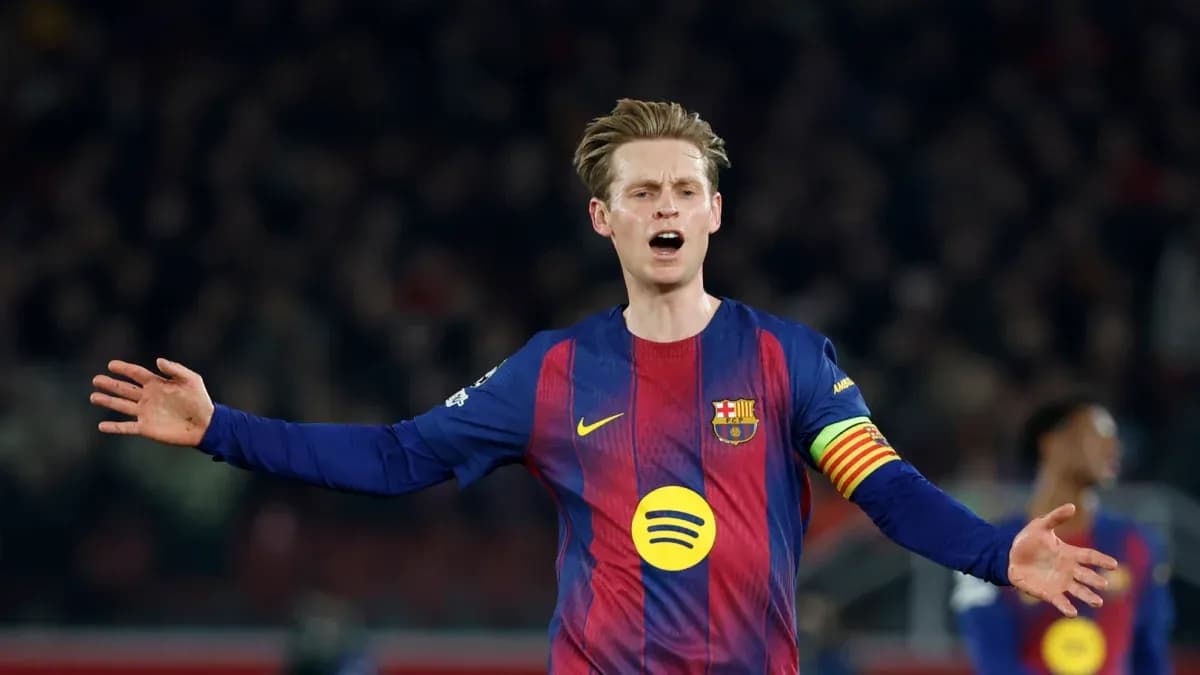
Barcelona walk on a tightrope with Frenkie de Jong.
The Dutch midfielder, once the symbol of stability in the centre of the pitch, has become a source of deep unease at the club. His latest setback, suffered during the last World Cup, has opened a worrying chapter that stretches far beyond a single season.
A complex injury, an uncertain path
When De Jong returned to Barcelona after the tournament, medical tests in the city confirmed a ligament injury. The club chose silence. No official recovery time, no public roadmap, only the vague outline of a “conservative treatment” plan.
That plan was set for two months, with the expectation that he would then need several more weeks before he could return to competition. Right now, he is only halfway through that process. Every session, every response from the injured area, is being monitored with almost forensic attention.
Because the margin for error is tiny.
The treatment is demanding and delicate. Everything has to evolve perfectly for De Jong to avoid the operating room. If the ligament does not respond as hoped, surgery moves from threat to necessity. And that would change everything.
A conservative estimate inside the club places a potential post-surgery absence at four to five months. For a player of his importance, and at this stage of the cycle, that is not just a medical issue. It is a structural one.
Plans torn up in midfield
This scenario collides head-on with the plans drawn up by the Sporting Directorate.
The original idea for the coming season was clear: no reinforcements in midfield. Barcelona believed they were well stocked in that area, both in terms of quality and depth, and preferred to invest resources in other lines of the team.
So firm was that conviction that, even with De Jong already injured, the club have maintained their willingness to sell Marc Casadó, a player who operates in a similar zone of the pitch. The message was that the squad, as constructed, could absorb the loss.
Now that stance looks increasingly exposed.
If De Jong is forced into surgery and faces almost half a year out, the entire balance of the midfield comes under scrutiny. Rotations, roles, and long-term planning all begin to fray. What was once a position of apparent abundance starts to resemble a potential fault line.
A worrying pattern, not an isolated blow
The concern inside the club is not limited to the possibility of five months without De Jong. The real alarm comes from the pattern forming around his fitness.
Over the last three seasons, the Dutchman has already missed 56 matches due to various physical problems. That is a full campaign’s worth of games lost, spread across different interruptions, rhythms broken, momentum halted.
Add to that the fixtures he is already set to miss, and potentially those at the start of the 2026/27 season if surgery becomes unavoidable, and the picture darkens further. This is no longer about one injury; it is about durability, reliability, and planning around a player whose body is asking questions his talent never did.
Hansi Flick and Deco are both watching the situation with growing unease. For the coach, it complicates his tactical blueprint. For the sporting director, it challenges the long-term design of the squad and the financial logic built around De Jong as a cornerstone.
The club have started sounding out the market. Not with the urgency of panic, but with the seriousness of an institution that knows one key decision on De Jong’s treatment could reshape its entire midfield for the next year.
Barcelona’s next move will say a lot about how they see their present. De Jong’s next scan may say even more about their future.