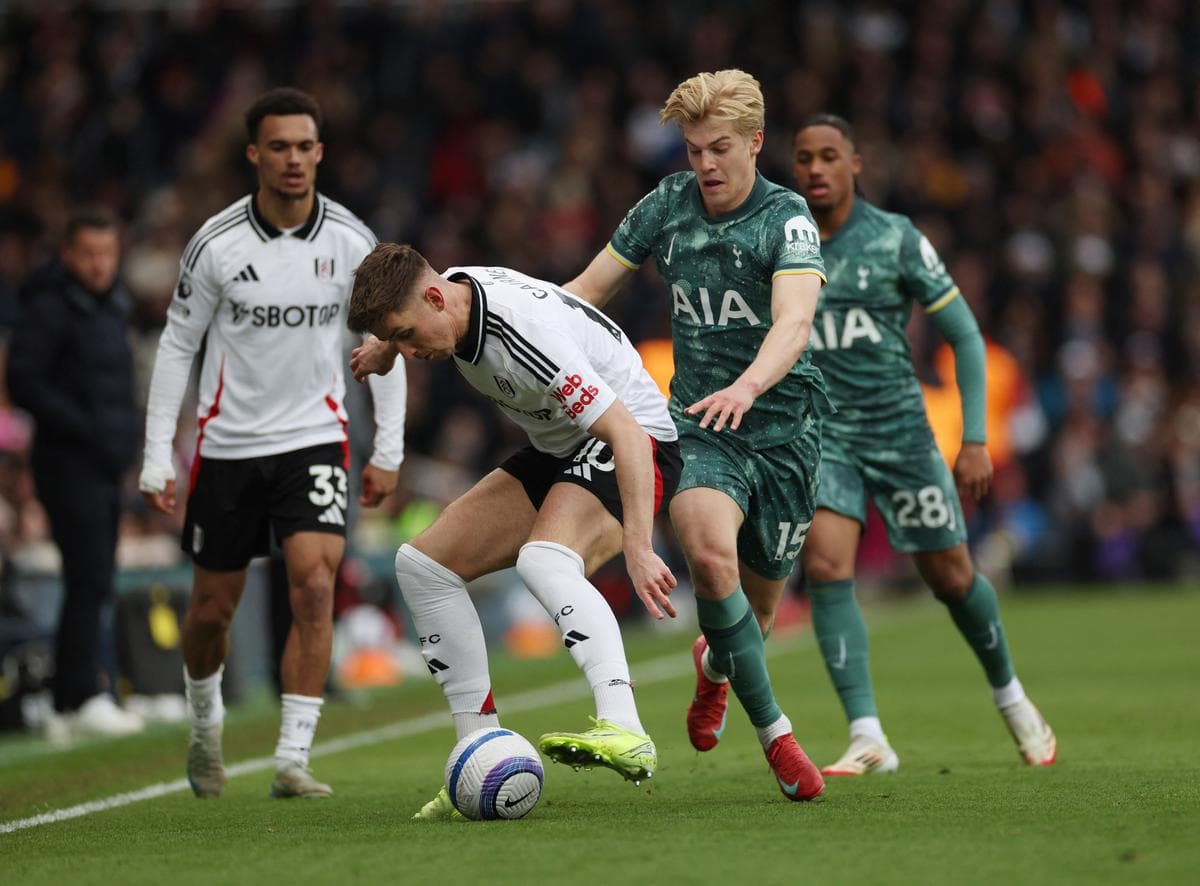
Fulham vs Tottenham: Strategic Battle Analysis
At Craven Cottage, Fulham’s 54% share of the ball translated into purposeful control rather than sterile domination. Marco Silva’s 4-2-3-1 used the double pivot to circulate possession (480 passes, 80% completion) and keep Tottenham’s 4-4-2 pinned back. Spurs, with 46% possession and slightly sloppier distribution (395 passes, 74% completion), were set up for vertical transitions but rarely turned them into sustained pressure. Fulham’s early two-goal cushion allowed them to manage tempo, alternating between structured buildup and controlled retreats into a mid-block, while Tottenham only truly imposed phases of pressure after the hour, once changes were made up front and in wide areas.
Offensive Mechanics & xG Analysis
Fulham’s attacking plan was volume and box occupation. They generated 18 shots, with a striking 15 from inside the area and an xG of 2.28, perfectly aligned with their two goals from open play. The 4-2-3-1 created consistent central overloads: H. Wilson and E. Smith Rowe (before his substitution) drifted inside, while R. Jimenez pinned the centre-backs, explaining both the high shot count and the quality of chances.
Tottenham’s back line was repeatedly forced into emergency defending, evidenced by their 7 blocks against Fulham efforts. That number underlines how often Fulham managed to work shooting positions inside the box and how deep Spurs were defending for long stretches. Fulham’s 5 corners also reflect sustained territorial pressure rather than sporadic breaks.
By contrast, Tottenham’s 13 shots produced only 1 on target and a modest 0.88 xG. Even though 10 of their attempts came from inside the box, the lack of clear, uncontested looks at goal suggests crowded shooting lanes and rushed finishes against a compact Fulham shape. Spurs’ 8 corners show they did eventually force territory, particularly after the 58th-minute attacking substitutions, but they struggled to convert these set-piece platforms into genuine threat.
Defensive Intensity & Game Management
Fulham’s defensive approach combined an organised block with selective aggression: 11 fouls and 3 yellow cards point to a side willing to break rhythm when Tottenham threatened central spaces. Despite conceding once, Fulham’s goalkeeper recorded 0 saves, which underlines how few accurate efforts Spurs produced and how well the defensive line protected the box.
Tottenham committed 14 fouls and also collected 3 yellows, many coming in emotionally charged moments (e.g., Richarlison and Pedro Porro booked for arguments). These cards speak to frustration as much as tactical fouling. Spurs’ negative goals-prevented figure and only 2 saves from G. Vicario suggest that when Fulham broke through, the chances were high quality and not always well dealt with.
Fulham’s structured possession, heavy box occupation, and xG-consistent finishing outperformed Tottenham’s reactive 4-4-2. Spurs’ late territorial push and set-piece volume could not compensate for their lack of accuracy and reliance on last-ditch blocks against a disciplined Fulham side.