Germany's Striker Hierarchy Under Klopp: Havertz Leads the Charge
Jürgen Klopp has wasted no time reshaping Germany’s attacking hierarchy. Behind the scenes, the national team coach has drawn a clear, and at times ruthless, internal ranking of his centre-forward options – and it starts with a name that would have raised eyebrows a year ago.
Havertz, the undisputed reference point
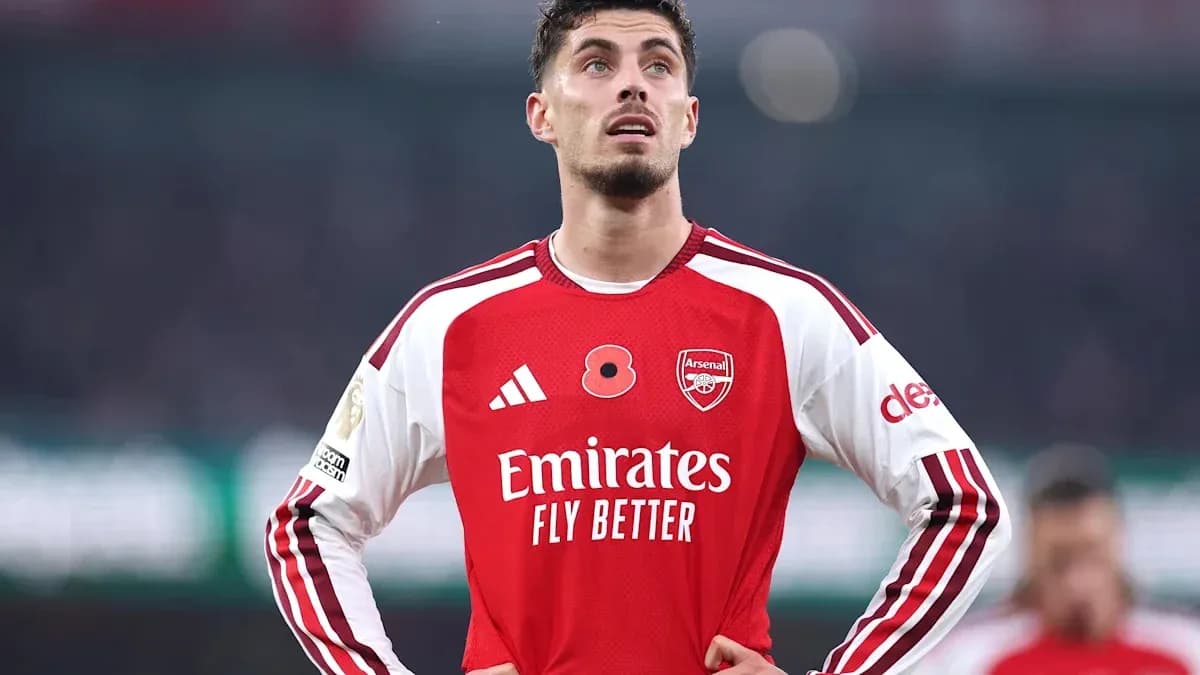
At the top of Klopp’s list sits Kai Havertz, “the clear #1 up front” in the coach’s current thinking. Not because he is the most traditional No 9 in the pool, but precisely because he isn’t.
Klopp values Havertz’s tactical intelligence, his ability to interpret space, and his calm in high-pressure games at the very highest international level. The Arsenal forward has become central to Klopp’s attacking blueprint: a mobile focal point who can drop in, combine, and still arrive in the box at the right moment. In Klopp’s mind, Havertz is not simply another option – he is the structural pillar around which the rest of the attack is built.
Ebnoutalib’s rapid rise
Behind him, the big climber: Younes Ebnoutalib.
The 23‑year‑old did not exactly light up his first outings for Germany. Those early games were more about adaptation than explosion. But his season with Eintracht Frankfurt has changed the conversation. His club form has driven him sharply up Klopp’s internal pecking order, to the point where he now stands as the primary alternative to Havertz.
It is a classic Klopp move: trust the player whose club performances burn hottest, even if his international résumé is still thin. Ebnoutalib’s rise underlines a simple message – national team status is not a lifetime appointment.
Füllkrug, the numbers man off the bench
Then comes Niclas Füllkrug, ranked third.
On pure statistics, Klopp knows he has a heavyweight. Füllkrug is currently the most prolific German striker, and that data forced the coach’s hand. Despite his age, Klopp called him up because goals still matter more than reputations.
Yet in this new order, Füllkrug is seen more as a weapon from the bench than as a guaranteed starter. He offers a different profile: a classic penalty-box presence, a target for crosses, a reference point when Germany need to go more direct. If Havertz and Ebnoutalib give fluidity, Füllkrug brings blunt force.
Burkardt on standby, but not forgotten
Jonathan Burkardt finds himself in a more delicate position.
His form in the lead-up to November’s fixtures simply did not meet Klopp’s threshold, and the coach left him out of the squad. That decision was not a closing of the door, though. Burkardt remains on what is effectively a standby list – close enough to be called in quickly, but far enough away to know that every club performance now counts double.
If he lifts his level in the coming months, the route back is clear. If not, others are already circling his place.
Woltemade pays the price at Juventus
Nick Woltemade has slipped even further.
For the first time since June 2025, he has been omitted from the squad altogether. Klopp’s reasoning is blunt: at the moment, he does not see enough goal threat from the Juventus forward. The national team manager is not in the business of carrying strikers who do not look like scoring.
Still, the verdict is not permanent. Klopp has left the door ajar. A resurgence in Turin, a return to the sharpness that once made him a regular call-up, and Woltemade can force his way back into the conversation. For now, though, he watches from the outside.
Undav battling fitness and form
Deniz Undav’s situation is more physical than tactical.
Klopp spoke to him in September and delivered a clear message: get back to 100 percent fitness. At present, Undav is a long way from his best scoring rhythm, with only two goals in 15 appearances. That combination – limited sharpness and modest output – has pushed him down the list.
In Klopp’s Germany, there is little room for half-fit strikers searching for rhythm. The standard is unforgiving: either you arrive in camp ready to decide games, or you make way for those who can.
A hierarchy with a warning
The ranking tells its own story. Havertz as the strategic centrepiece. Ebnoutalib as the fast-rising challenger. Füllkrug as the statistical hammer off the bench. Behind them, a trio who now live on the edge of the squad, their futures tied to every touch at club level.
Under Klopp, Germany’s No 9 shirt is no longer a status symbol. It is a moving target. Who can actually keep hold of it when the real pressure starts?