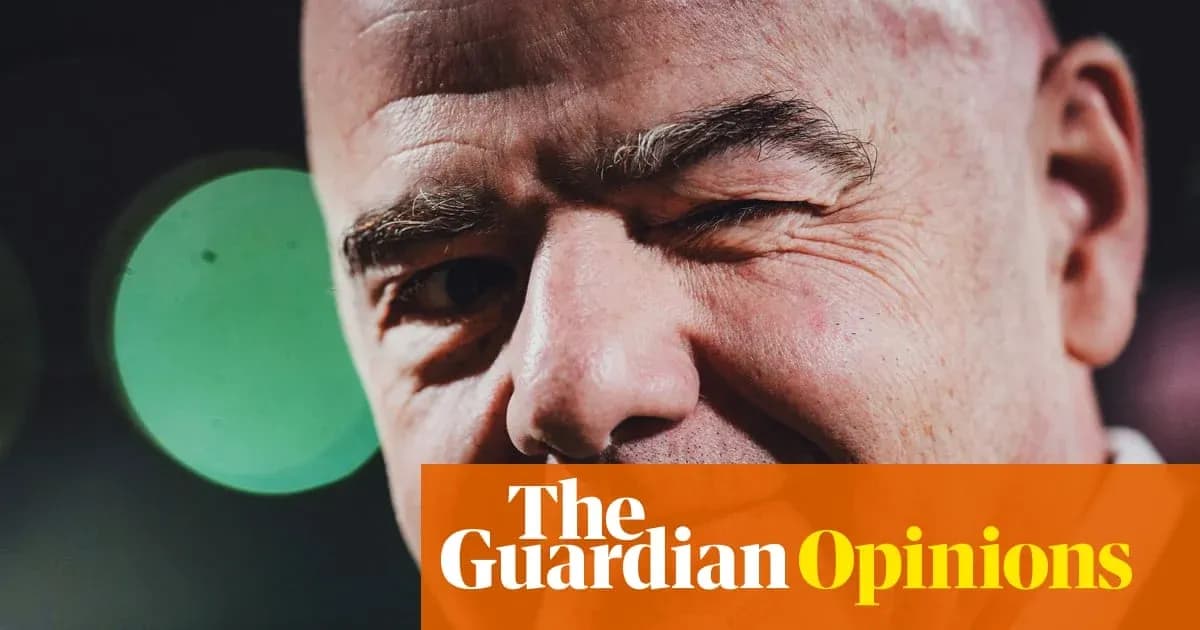
Gianni Infantino Must Resign: A Call for Change in FIFA
There is no room left for euphemism. Gianni Infantino has to go – either by resignation or by force of law. The Fifa president has shattered what remained of trust in football’s governance, stripping bare the credibility of the organisation that presumes to guard the world’s most cherished sport.
His climbdown on Saturday morning was as public as it was humiliating. Infantino accepted that his grand design – the Fifa Forward Enterprise (FFE), a plan to sell off chunks of the World Cup to private investors – had failed. He spoke of resuming dialogue on football’s growth “in the spirit of shared interest in our game”. The words were calculated, the tone conciliatory. The intention was obvious: survival.
It should not work. Every day he stays in office deepens the stain on an institution whose reputation already lies in ruins.
A presidency at war with its own rules
The sheer audacity of unilaterally launching the FFE project, effectively inviting venture capitalists to grip the sport’s future, would topple most leaders. For Infantino, it is only another entry on an already swollen charge sheet.
He has treated Fifa’s statutes and governance rules as optional guidelines, not binding obligations. No one should feign surprise that patience has finally snapped in the corridors of power around the globe. “Football unites the world,” Fifa’s slogan insists. Under this presidency, it has rarely sounded more hollow.
Article 10.3 of Fifa’s own regulations spells out the president’s duty: to ensure that “Fifa’s objectives, mission, strategic direction, policies and values are sustainably pursued, protected and implemented, and that a positive image of Fifa is fostered”. It also demands the promotion of “friendly and peaceful relations within Fifa”.
That last line now borders on parody. In recent days, federations and senior officials have rushed to distance themselves from Infantino. The house is divided, and the man charged with uniting it is the cause.
Nothing in those rules grants licence to pursue a string of private projects, many of them aligned with the current US administration or its allies, pushed forward with minimal oversight and scant explanation. Yet that has become the pattern of this regime.
Flashpoints, one after another
Where to start with the damage? The Folarin Balogun saga pushed many senior figures in the game, particularly in Europe, to the brink. It landed on top of already simmering anger.
There was the bafflement and disgust when Infantino handed a newly minted Fifa peace prize to Donald Trump in December. Little was disclosed about how the award was conceived, how the decision was made, or why Trump’s “achievements” were deemed worthy. The information that did emerge was fiercely contested.
Stakeholders were also left fuming by the lack of consultation over “hydration breaks” at this summer’s World Cup. These stoppages, introduced without proper debate, toyed with the rhythm and fabric of the game’s biggest showpiece.
Then came the 2034 World Cup bidding process. It was rushed, opaque, and ended with Saudi Arabia’s candidature effectively waved through in December 2024. The criticism was immediate and widespread.
All of that covers only the past 20 months. The controversies keep coming. On Friday, revelations emerged that plans for a 64‑team World Cup are already in full swing. Another expansion, another upheaval, another decision pushed forward from the top.
So when Uefa issued a blistering statement on Saturday, demanding an end to “secret schemes on fast track timescales, cooked up by faceless individuals and of dubious benefit to the game”, it was not just taking aim at the FFE project. It was calling out a pattern of governance that sidelines Fifa’s own decision-makers and treats the game as a private laboratory.
Uefa’s line in the sand
A critical mass has now formed. After more than a year of angry words, Uefa finally moved from rhetoric to action. It pledged to boycott future Fifa tournaments if Infantino did not drop his World Cup sell‑off plan.
That threat mattered. It helped force his retreat and handed Aleksander Ceferin, the Uefa president, a potentially defining victory of his tenure.
Yet this is no time for self‑congratulation. The danger is that Infantino, who has reportedly engaged a major consultancy firm in recent days to soothe relations with federations, uses the breathing space to offer new promises, patch up old alliances and quietly steer the game back to its discredited “normal”.
Inside Uefa and across other confederations, there is a clear recognition: the pressure cannot ease. Senior figures insist Infantino must not survive this scandal. For them, the next crucial step lies with the member associations.
Most of those associations had already submitted formal letters backing Infantino’s re‑election next March. Many did so under intense lobbying from Fifa. Recalling those letters would require a request to Fifa, but if enough associations act, it would amount to a de facto vote of no confidence.
The politics are awkward. Many FAs would be deeply embarrassed if their earlier pledges of loyalty became widely known now. Yet the alternative – silence and inaction – is worse.
A fork in the road for the sport
Member associations cannot shrink from this moment. Their responsibility is to protect the game from existential threats, not to hide behind procedure or past promises. If they step back now, they leave the job half done.
Uefa, for its part, has already outlined a different path. It has promised to design a new model for distributing Fifa’s vast wealth, tapping into multibillion‑dollar reserves without “selling the family silver”. Behind the scenes, it is working with other confederations to identify credible candidates to replace Infantino, ready to stand in the election if he clings on until then.
There is an opportunity here to reshape football’s governance for the better – to restore some measure of accountability, transparency and sanity to an organisation that has lurched from scandal to scandal for too long.
But that opportunity only exists if Infantino is no longer in the room when the decisions are made.
The alternative is brutally clear. Fifa, and with it the global game, will continue stumbling from one self‑inflicted disaster to the next, trapped in a cycle where every conversation about football’s future begins and ends with one man, his ego and his latest grand venture. How much longer can the sport afford that?