Greenville Triumph's Statement Win Against Loudoun United
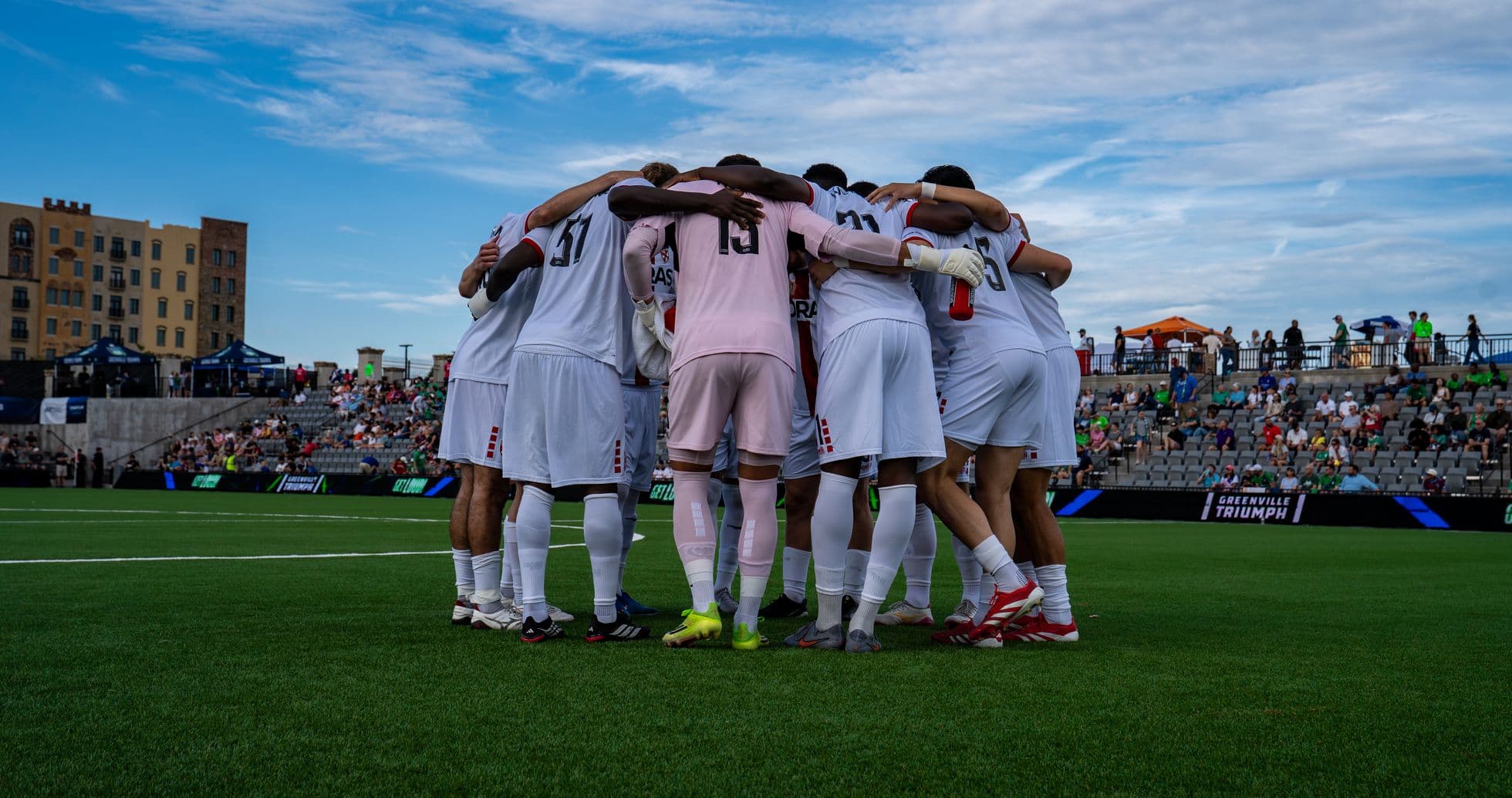
On a humid night at Paladin Stadium, Greenville Triumph’s 3–1 win over Loudoun United felt less like a routine group game and more like a statement about identity in the USL League One Cup. Heading into this game, both sides had worn the scars of early inconsistency, but it was Greenville who bent the narrative back in their favour.
I. The Big Picture – Group 6 reshaped at Paladin Stadium
This was a Group Stage tie in the USL League One Cup, and the stakes were already tangible. Greenville arrived with 1 win and 1 defeat in total, their overall goal difference at -1 from 3 goals for and 4 against. Loudoun, slightly busier, had played 3 times in total with 1 win and 2 losses, also on -1 overall with 4 scored and 5 conceded.
At home, Greenville’s profile was sharply split: they had played 1 match at Paladin Stadium before this, winning it 3–1. On their travels they had been thrashed 3–0, a reminder that their campaign was built on home ferocity and away fragility. Loudoun’s pattern was more balanced but no less volatile: at home they had played 2, winning 1 and losing 1, with 3 goals for and 2 against; away, they had played 1, losing 3–1 with 1 goal scored and 3 conceded.
Following this result, Greenville’s home numbers in the competition deepen the sense of a fortress: at home they have 3 goals for and 1 against, an average of 3.0 goals scored and 1.0 conceded. Loudoun’s away campaign remains harsh: on their travels they have 1.0 goals for on average and 3.0 against.
II. Tactical Voids and Discipline – Edges at the margins
There were no listed absentees in the data, so both coaches, Dave Dixon for Greenville and Anthony Limbrick for Loudoun, had the luxury of full squads. That makes the selection choices and the way the match unfolded even more revealing: this was about tactical conviction rather than patchwork survival.
Greenville’s disciplinary profile across the competition hints at a team that lives on the edge late in games. Their yellow-card distribution shows that 75.00% of their bookings have come between 76–90 minutes, with only 25.00% in the 16–30 window and none in other ranges. They have not seen a red card. That late spike in cautions speaks to a side that is willing to foul to protect leads or disrupt rhythm as the clock runs down.
Loudoun’s yellow-card pattern is more spread but still clustered around key phases. Across their matches, 12.50% of their yellows arrive between 31–45 minutes, 37.50% between 46–60, 12.50% between 61–75, 25.00% between 76–90 and 12.50% in added time from 91–105. Again, no reds. This paints a picture of a team that often has to react to game-state swings after half-time, using tactical fouls to stem transitions or break pressure.
In a match that finished 3–1 to Greenville, those patterns matter: Greenville’s willingness to take late cards dovetailed with a need to protect a multi-goal cushion, while Loudoun’s habit of collecting cards across the second half hinted at a side chasing the game and stretching themselves defensively.
III. Key Matchups – Hunter vs Shield, and the engine room battle
With no explicit top scorers listed, the “Hunter vs Shield” narrative has to be drawn from structural tendencies rather than individual numbers. Greenville at home in this competition average 3.0 goals for and 1.0 against. Loudoun away average 1.0 goal for and 3.0 against. This match-up was always going to be about whether Loudoun’s back line could withstand the cumulative pressure of Greenville’s home attack.
For Greenville, the attacking axis of W. Akio and A. Liadi, supported by the energy of C. Evans and the guile of C. Herrera, formed the spearhead. Akio, wearing 10, is the natural reference point between the lines, while Liadi, in 19, stretches defences and forces centre-backs into uncomfortable channels. Behind them, D. Boyce’s presence in midfield offered vertical running and the capacity to join the front line, turning Greenville’s shape into a fluid, front-loaded unit whenever they attacked.
The shield for Loudoun came through their central defenders and holding midfielders. J. Erlandson and S. Mazzaferro formed the core of the defensive structure, with B. Akinyode sitting in front of them as the enforcer. His role was to cut passing lanes into Akio and Liadi, and to prevent Greenville from turning second balls into immediate chances. J. Murphy and J. Panayotou added legs and passing angles, but the burden of screening transitions fell primarily on Akinyode.
In the engine room, the duel between Greenville’s C. Herrera and Loudoun’s Murphy and Panayotou defined tempo. Herrera, wearing 8, is the nominal connector, tasked with linking back line and attack. His ability to find Akio early and to release Evans or Boyce into half-spaces forced Loudoun’s midfield to collapse centrally, which in turn opened room for Greenville’s full-backs like T. Polak to advance.
For Loudoun, the attacking burden fell on R. Aman and T. Ulfarsson. Their capacity to pin back Greenville’s defenders like B. Fricke and A. Patti was crucial; if they failed to hold the ball up, Loudoun would be trapped in a cycle of defending waves of pressure. In a match that ended 3–1, the evidence suggests Greenville’s back line, anchored by Fricke, managed the duels well enough to keep Loudoun’s forwards from dictating terms.
IV. Statistical Prognosis – Why 3–1 felt logical
Even without explicit xG data, the season-long numbers offer a clear prognosis that aligns with the final scoreline. Heading into this game, Greenville in total averaged 1.5 goals for and 2.0 against, but that split was heavily skewed by venue: 3.0 scored and 1.0 conceded at home versus 0.0 scored and 3.0 conceded away. Loudoun, in total, averaged 1.3 goals for and 1.7 against, but away they were at 1.0 for and 3.0 against.
Overlay those profiles, and a home win with multiple Greenville goals was the statistically favoured outcome. Greenville’s inability to keep clean sheets (0 in total) suggested Loudoun would likely find at least one moment, which they did. But Loudoun’s away defensive average of 3.0 goals conceded pointed to a structural vulnerability under sustained pressure that Greenville, with their home scoring rate, were perfectly placed to exploit.
The disciplinary patterns add another layer: Greenville’s late yellow-card surge between 76–90 minutes matches a team that often defends a lead with intensity and tactical fouls. Loudoun’s spread of cards across the middle and late phases mirrors a side forced to chase and overstretch. In a 3–1 match, that is exactly the game-state arc you would expect: Greenville strike, Loudoun respond and open up, Greenville punish the space, and then manage the closing stages with controlled aggression.
At Paladin Stadium, the numbers and the narrative converged. Greenville Triumph leaned into their home identity, Loudoun United carried their away frailties, and over 90 minutes the tactical balance tilted decisively toward the hosts.