Guillermo Ochoa Retires: A Legendary Career in Soccer
Guillermo Ochoa has finally done what Mexico never quite believed he would. He has walked away.
On Tuesday, one of the most recognisable faces in Mexican football announced his retirement from elite soccer, ending a career that stretched across continents, eras, and six World Cups. He had long pointed to 2026 as his last dance, but there was always a lingering hope he might squeeze in one more short-term deal, one more season, one more miracle save.
That hope is gone now. The gloves are on the hook for good.
“I gave it my all; I left everything on the field for my clubs and the national team, and today I hang up my gloves,” Ochoa wrote in an emotional message on social media, drawing a clear line under the rumours that had followed him since the final whistle of Mexico’s World Cup campaign.
“Being a goalkeeper means knowing you might wait 90 minutes for a single moment when everything depends on you. And when that moment arrives, you cannot hesitate.”
For two decades, he rarely did.
A career measured in World Cups
Ochoa’s greatest statistic is not a clean sheet or a trophy. It is time.
He stands in the most exclusive company the sport can offer: six World Cups, a number shared only with Ronaldo and Messi. At first he was a passenger, the eager youngster absorbing everything around him. Then the gloves became his, and Mexico’s goal belonged to him at the peak of his powers.
He started three straight tournaments — Brazil 2014, Russia 2018, Qatar 2022 — and turned each into a personal showcase. Reflex saves, impossible angles, the kind of sprawling, elastic stops that burn into a nation’s memory. For a generation of Mexican fans, the World Cup soundtrack includes the thud of the ball against his gloves and the roar that followed.
From the youth fields of Mexico City to the world’s biggest stages, the journey never lost its sense of wonder for him.
“I never imagined how far a dream could take me. Today, I can only look back with pride and say: Thank you,” he wrote. “I take with me the affection of millions and the peace of mind that comes with knowing I gave everything for Mexico.”
A farewell written at the Azteca
By 2026, Ochoa’s role had changed. The veteran who once carried the national team on his shoulders spent the tournament largely in the shadows, backing up Raul Rangel. But even as the minutes dwindled, respect did not.
Javier Aguirre understood what this moment meant. In Mexico’s final group-stage match against Czechia, with the result settled and the clock ticking down, the manager turned to his bench and called for his old No. 1.
Thirteen minutes. That was all. Thirteen minutes for a stadium and a country to say goodbye.
The Estadio Azteca rose. It roared for the boy who debuted there, the man who had become its guardian, and the legend taking his final bow on the same turf where it all began. Every touch, every simple catch, felt like a tribute.
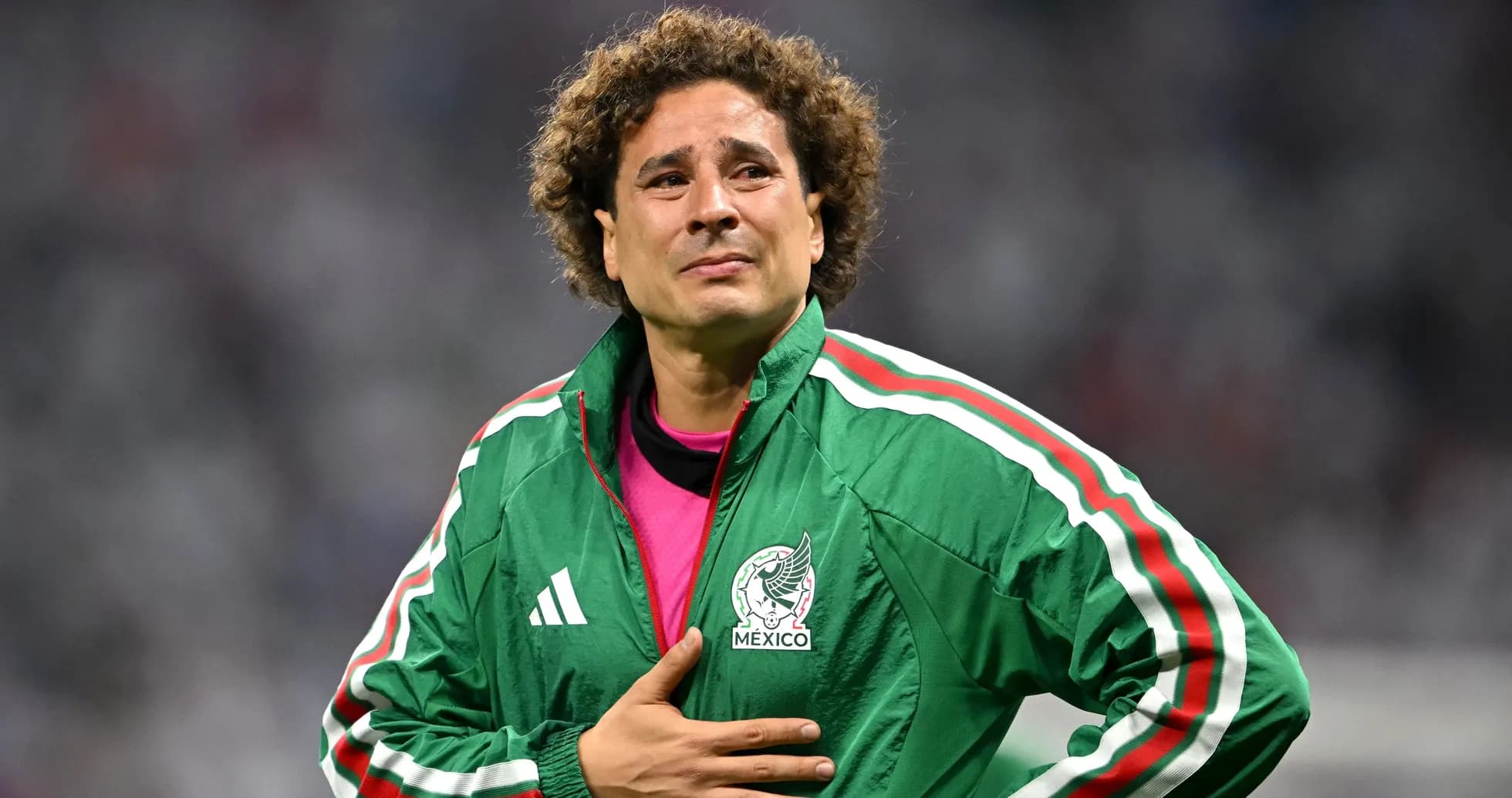
When the whistle blew, Ochoa lingered. He kissed each goalpost in turn, a private ritual in a very public farewell, then dropped to his knees as teammates surrounded him in a tight, emotional embrace. The noise faded, but he stayed.
Long after the stands emptied and the floodlights began to dim, he walked alone to the centre circle. One last slow turn. One last look at the pitch that had defined his life.
From Club América prodigy to European pioneer
The story started simply enough: a teenager thrown into the deep end with Club América in February 2004. He did not ease his way into the elite; he burst in. Quick off his line, with sharp reflexes and a fearless streak, Ochoa locked down the starting role and never truly let go of the spotlight.
By 2005, he had his first major trophy — a league title in the Clausura with América — and a reputation as the next great Mexican goalkeeper. The domestic stage quickly proved too small.
In 2011, he crossed the Atlantic and made history, joining French side Ajaccio and becoming the first Mexico-born goalkeeper to play in Europe. It was not a glamorous move to a giant, but it was a statement. A barrier had been broken.
His European years became a patchwork of challenges and reinventions. Ajaccio, then Malaga. Granada. Standard Liege, where he lifted the Belgian Cup. Later Salernitana, AVS Futebol, AEL Limassol. Different leagues, different languages, the same acrobatic figure between the posts.
The journey was not linear, and that was part of its weight. He had to prove himself again and again, often behind unfamiliar defences and under intense scrutiny. He kept finding ways to matter.
Coming home, then letting go
For all the stamps in his passport, one place always pulled him back. In 2019, Ochoa returned to Club América for a second spell that lasted three years. It was less about reinvention and more about reaffirmation. The prodigy had become the icon, the kid from the academy now the benchmark for everyone who followed.
He did not need that chapter to secure his status, but it cemented it. The bond between player and club, between goalkeeper and crowd, felt complete.
Now it is over. He leaves with a career that backs up every accolade: a league title with América, a Belgian Cup with Standard Liege, and a World Cup record that places him alongside the game’s greatest names.
The gloves are off, the posts are kissed, the Azteca has had its final glimpse of him in full kit.
The question now is not what more he could have done. It is who dares to follow the path he carved.