Controversial Handball Decision Shapes Champions League Semi-Final
The handball that lit the fuse came in a blur.
A low cross from Ousmane Dembélé, a desperate block from Alphonso Davies, the ball ricocheting off hip and then hand. No time to think, barely time to react. Yet within seconds, the entire trajectory of a Champions League semi-final tilted.
Referee Sandro Schärer initially let play go. Then the call came from the booth. Video assistant referee Carlos del Cerro Grande sent him to the screen. Slow-motion took over, the stadium held its breath, and the whistle finally pointed to the spot.
The decision split the football world straight down the middle.
On one side stood Lutz Wagner, the leading refereeing analyst, firmly behind the officials. “The left arm extends and increases the defensive surface area. The left arm comes out and increases the blocking surface. In my view, it is definitely a punishable handball because the body surface area is widened. Based on these images, the decision was correct,” he argued, leaning on the letter of the law.
On the pitch, Joshua Kimmich saw something very different.
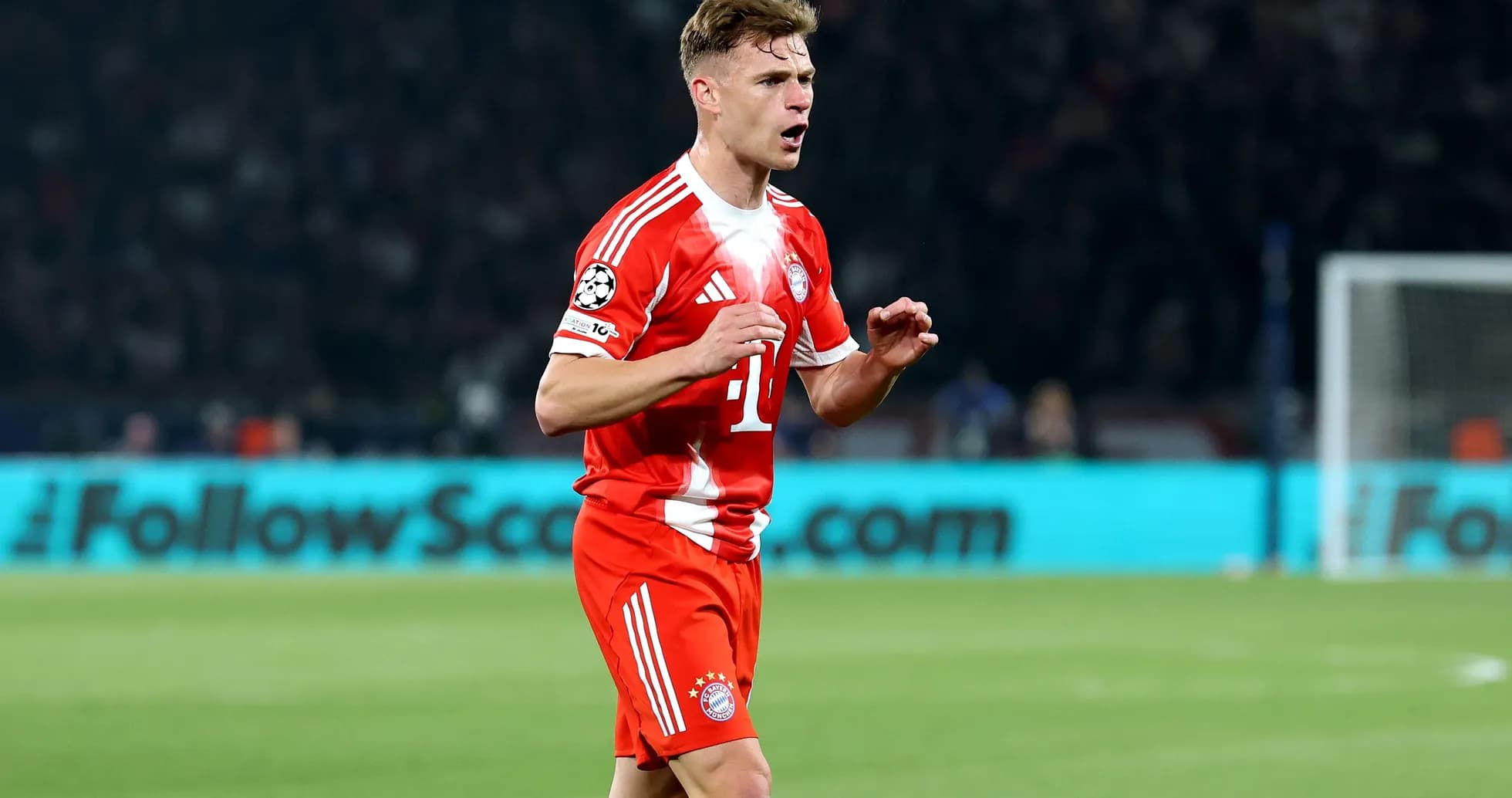
“That’s really frustrating, because there’s no opponent behind him who could have scored. The rule could use a tweak,” the Bayern Munich midfielder said, voicing a frustration that has simmered for years around modern handball interpretations. The 31-year-old went further, calling for a system in which not every accidental touch in the area carries the weight of a penalty, hinting at a lesser sanction for incidents like Davies’ misfortune.
Vincent Kompany chose his words carefully but left no doubt about his stance. The Bayern manager labelled the incident “highly debatable”, while sporting director Max Eberl, speaking in the mixed zone, struck a resigned tone.
“There’s plenty to discuss. The ball hits the body first, then the hand, so perhaps it shouldn’t have been given. But what’s the point of getting worked up now? Unfortunately, he blew the whistle,” Eberl said, encapsulating the sense of injustice and inevitability that often follows such VAR calls.
They were not alone. Two former internationals and now Prime experts, Christoph Kramer and Mats Hummels, lined up on the side of the sceptics. For them, the problem lay not just in the wording of the law, but in the way the technology is used.
“It’s that super slow-motion again; that’s the worst thing in football, it makes everything look much worse,” Kramer complained, taking aim at the forensic replays that strip incidents of speed and context. Hummels echoed him: “After the shot, the hand flails away, which makes it look worse. The ball bounces off the hip; I always thought that shouldn’t be a penalty.”
While the debate raged, the scoreboard kept spinning.
By half-time, Paris Saint-Germain and Bayern had already produced the highest-scoring first half ever seen in a Champions League semi-final, PSG leading 3–2 after a wild, open 45 minutes that felt closer to a playground shootout than a continental chess match.
The chaos didn’t stop there. The Parisians came out after the break with a ruthlessness that threatened to end the tie before the return leg had even been mentioned. Khvicha Kvaratskhelia struck in the 56th minute, Ousmane Dembélé followed just two minutes later. In the space of 120 seconds, Bayern’s world tilted again. 5–2 to PSG. The Parc des Princes roared; Bayern stared into the abyss.
“You all saw what happened after the 5–2. You’re standing on the pitch thinking, what on earth is going on? We weren’t three goals worse than them,” Kimmich admitted later, describing that dizzy spell just after the hour mark. “It was important to stay relatively calm. The dilemma is clear: do you throw caution to the wind to get back into it, or do you try to avoid the worst-case scenario?”
Bayern chose defiance.
Dayot Upamecano rose in the 65th minute to power home a header that dragged the Germans back to 3–5 and, crucially, kept the tie breathing. The goal changed the mood instantly. PSG, so slick and sharp going forward, suddenly looked less secure. The visitors sensed it.
The outstanding Luis Díaz then carved the deficit down to a single goal, making it 4–5 and turning what had threatened to become a humiliation into a salvage operation with real hope attached. The scoreline stayed there until the final whistle, but the feeling around it had changed entirely. Bayern left Paris beaten, but not broken.
“We always knew it would be a back-and-forth contest, but not quite this open,” Kimmich reflected on a night that shredded defensive reputations on both sides. “It feels odd to be losing by only one goal. We were three down, fought back, and still needed to equalise. Paris were clearly tiring at the end.”
That detail will not have been lost in the Bayern dressing room. Nor will the memory of the handball that helped push them to the brink.
On 6 May at the Allianz Arena, Kompany’s team will try to turn noise, anger and a one-goal deficit into a place in the final in Budapest. Waiting there will be Arsenal or Atlético Madrid, who open their own semi-final battle on Wednesday.
The law said penalty in Paris. Bayern now need the laws of momentum, pressure and home advantage to swing just as decisively in Munich.